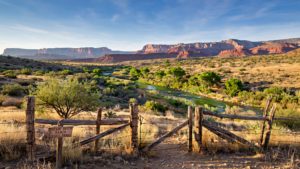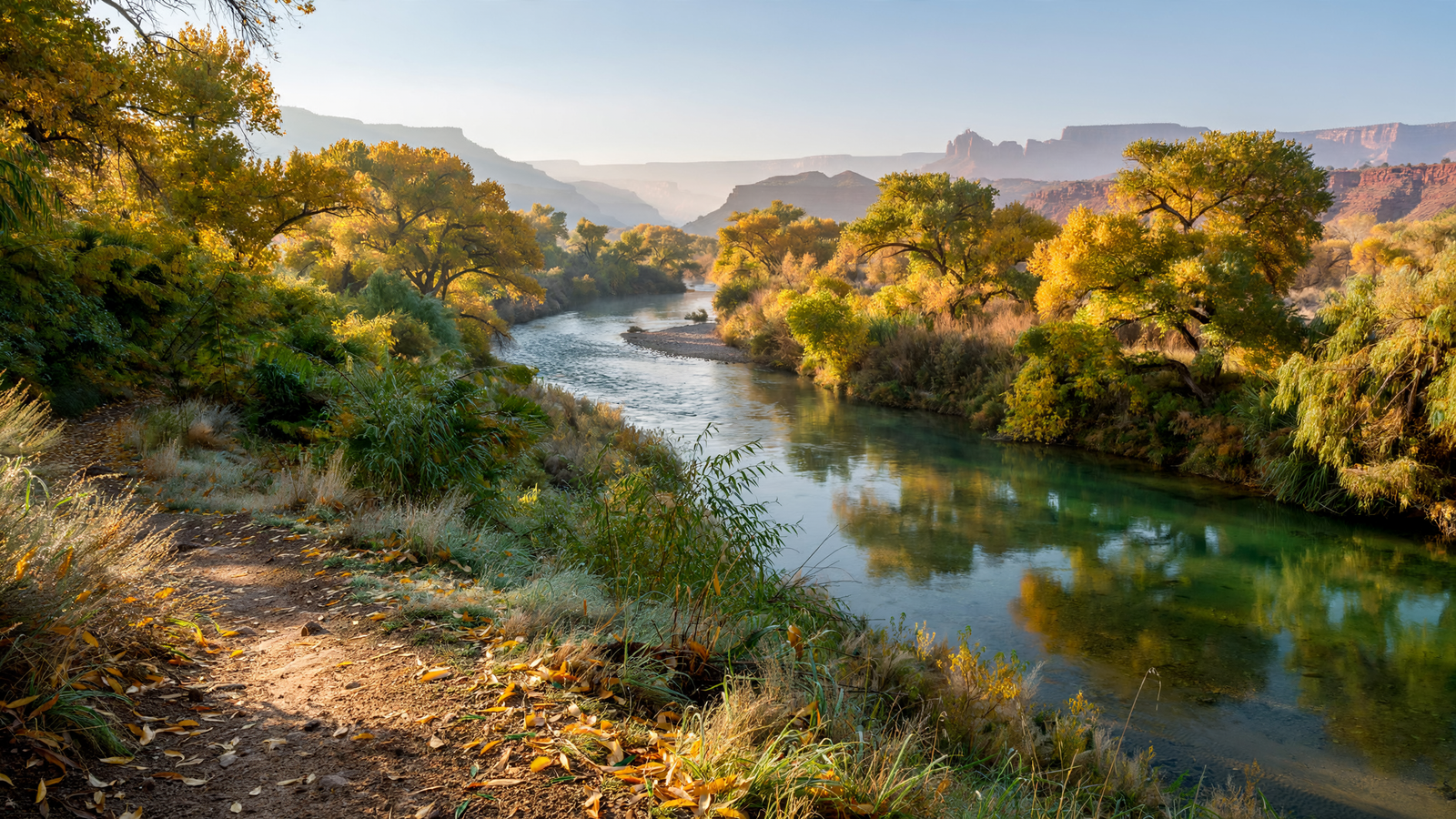
In the Verde Valley, the river is more than a line on a map. It is a place where nearby communities meet a landscape that behaves differently from the surrounding high desert: shaded banks, moving water and habitat sustained by the Verde River. The Verde River Greenway State Natural Area helps protect part of that corridor while keeping the river accessible to visitors.
The greenway sits in the Cottonwood–Clarkdale area, where the river passes through a landscape shaped by both natural processes and human history. Arizona State Parks describes the protected area as a place for river access and nature-based recreation. That combination gives the site a practical role for nearby residents: it is both a destination and a reminder that the health of a river corridor depends on how people use it.
A different kind of Arizona landscape
Riparian areas are the green ribbons that follow rivers through dry country. Their vegetation and water provide important habitat, and the contrast with surrounding uplands makes them especially noticeable in the Verde Valley. The greenway’s value is not simply that it offers a pleasant place to walk or spend time near the water. Protecting a river corridor also helps preserve the connected conditions that wildlife and plants rely on.
That connection matters in a region where water, habitat and recreation intersect. A riverbank can be a place for a quiet visit, but it is also part of a larger living system. The health of the river and its margins is shaped by more than the boundaries of a park: water flows through the valley, while people from several nearby communities share the landscape.
Access and care go together
Public access is one reason the greenway has a local presence beyond the map. Visitors can experience the river directly rather than encountering it only as a view from a road. That experience can make the importance of the corridor easier to understand: the trees, water and wildlife are not separate attractions but parts of one place.
Access also calls for care. Conditions at a river can change, and visitors should check current park information before planning a trip, follow posted guidance and avoid disturbing wildlife or damaging riverbank vegetation. These small choices help keep a public natural area usable while reducing pressure on the features that make it distinctive.
Nearby cultural landmarks add another layer to the setting. Tuzigoot National Monument, managed by the National Park Service, preserves an ancestral pueblo above the Verde Valley. Its presence is a reminder that people have lived in relationship with this landscape for centuries, even as the ways communities use and understand the river have changed.
A shared resource, not just a scenic stop
The greenway is not a newly announced project, and its importance is not measured by a single opening day. It is an ongoing public resource in a valley where river access, habitat protection and community life meet. For Cottonwood, Clarkdale and the surrounding communities, the Verde River offers a common point of connection—and a reason to pay attention to the land and water that sustain it.
That makes the greenway’s story a local one, even for people who do not visit often. A protected stretch of river can support recreation while preserving a landscape that is uncommon in the desert. Its continued value depends on treating the river not as a backdrop, but as a shared living corridor.