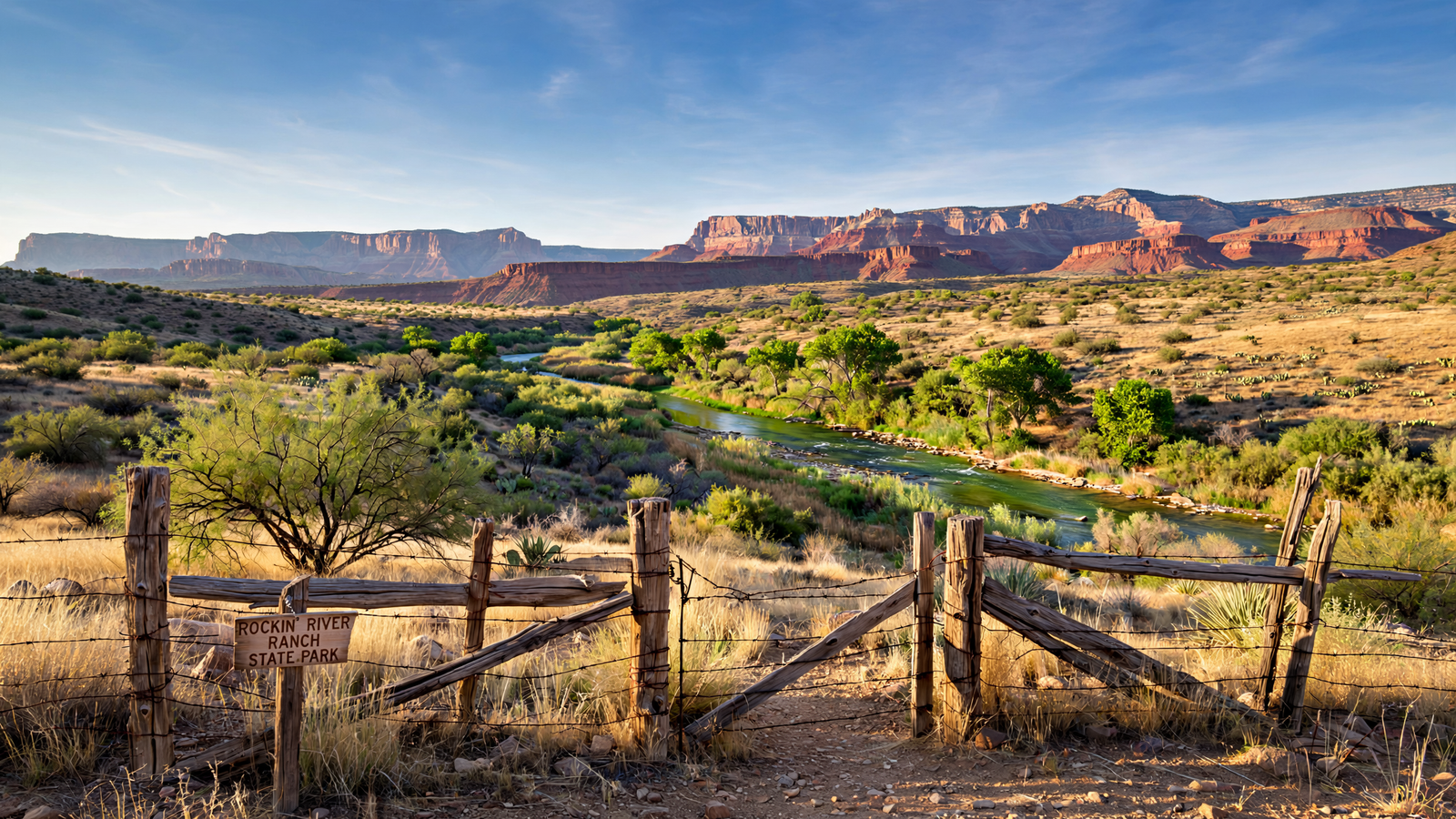
Near Camp Verde, a former ranch on the Verde River is being planned for a new public role. Rockin’ River Ranch State Park is not simply a finished recreation site waiting for visitors: Arizona State Parks and Trails is developing the plans and decisions that will shape how the property can be used.
That distinction matters in the Verde Valley, where river access, wildlife habitat and outdoor recreation all meet in a relatively narrow corridor. A new state park could eventually give residents and visitors another way to experience the river. But a public-access promise is not the same as a park that is ready to receive people. Facilities, visitor access and the protection of sensitive places all have to be considered.
From ranch property to public planning
The property, known as Rockin’ River Ranch, is near Camp Verde and includes land along the Verde River. Arizona acquired it for state-park use, placing it within a public system whose purpose includes recreation and the stewardship of natural and cultural resources. The change in ownership creates an opportunity; planning determines how that opportunity can work in practice.
For nearby communities, the project is significant less as a new attraction with a set opening date than as a long-term local land-use decision. Park planning can address where people might enter, what activities are appropriate and how to limit damage to the river corridor. Those choices influence whether a future park feels like an accessible public place while still respecting the qualities that make the site valuable.
It also means the public should distinguish between a property being acquired and a completed park being open. Arizona’s park-planning information describes a process for developing a site, rather than an invitation to visit a fully operating destination. Visitors should check the state’s current updates before making plans, and should not assume that planned facilities or access are already available.
A river landscape needs careful access
The Verde is one of Arizona’s important river corridors, and recreation is only one part of its story. A park beside the river has to account for the land and water that support plants and wildlife as well as the people who may come to walk, picnic or explore. The precise balance will depend on the plans adopted for the property.
That makes Rockin’ River Ranch a useful example of how public lands are made: not just through an acquisition, but through decisions about what a place can sustain. Thoughtful planning can help a community gain a new outdoor destination without treating the riverbank as an unlimited resource.
For Camp Verde and the surrounding Verde Valley, the project’s promise is straightforward but still unfolding: a former ranch may become a place where more people can encounter the river. The next measure of progress will not be a grand opening announcement alone. It will be whether the eventual design makes access possible while keeping the landscape’s needs in view.