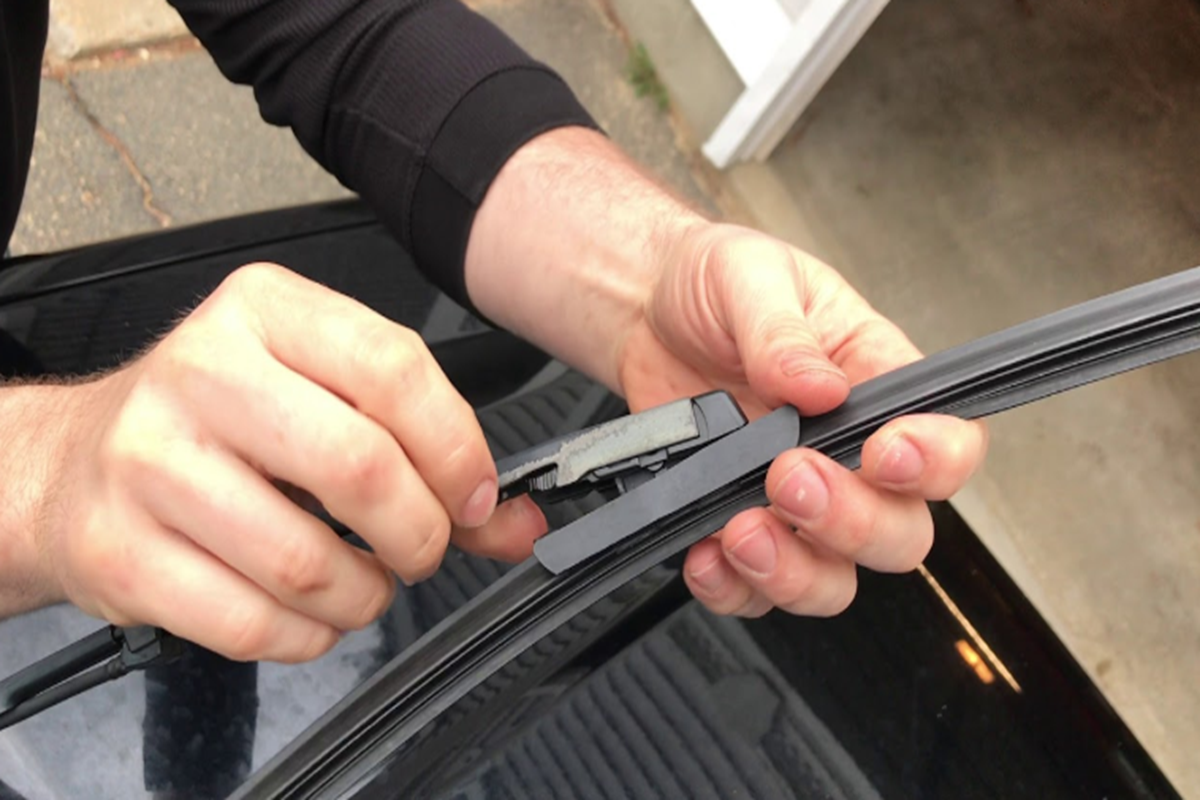
Wiper blades work hard in rain, snow and everyday dust, but their rubber edges wear down over time. If your blades leave streaks, skip across the glass or have visible cracks, replacing them can help restore a clear view.
This beginner-friendly guide covers how to choose and install replacement blades. Wiper attachments differ by vehicle, so use your owner’s manual and the instructions supplied with your new blades whenever they give model-specific directions.
What you will need
- Replacement blades that fit your vehicle and wiper arms.
- Your owner’s manual or the blade maker’s fitting instructions.
- A clean cloth or towel to protect the windshield.
Steps
- Check whether the blades need replacing. With the car parked, look over the rubber edges for splits, cracks or sections that have come loose. When the windshield is wet, watch for persistent streaks, missed areas or chattering. Dirt on the glass or blades can also affect wiping, so clean both before deciding that the blades are worn.
- Find the correct replacements. Check your owner’s manual, a vehicle-specific blade guide or the packaging fit guide. The driver-side and passenger-side blades may be different lengths, and a rear wiper, if fitted, may use a different blade or attachment. Do not assume that one size fits every position.
- Park safely and prepare the wipers. Park on a level surface, switch the vehicle off and make sure the wipers are off. Some vehicles require a special service position to raise the arms clear of the hood; consult the owner’s manual and do not force an arm that will not lift normally. Place a folded towel on the windshield beneath the raised arm. The spring-loaded arm can snap down and damage the glass if it slips.
- Remove the old blade. Hold the wiper arm securely while you release the blade’s connector. The release may be a tab, button or clip, and the blade may slide or rotate off in a particular direction. Follow the blade maker’s diagram for your connector style. Avoid prying with a tool or letting the bare arm fall against the glass.
- Attach the new blade. Use the supplied adapter if the instructions call for one, then guide the new blade onto the arm in the specified direction. Press or slide it into place until the connector is fully engaged. A click may indicate that it has locked, but check the instructions rather than relying on sound alone.
- Check the connection and lower the arm gently. Give the blade a light tug to confirm it is secure. Keep holding the arm as you guide it back onto the windshield; do not let it drop. Repeat the process for the other front blade and, if needed, the rear blade.
- Test the wipers on a wet windshield. Use washer fluid or wait for rain to wet the glass, then operate the wipers from inside the parked car. Check that each blade moves smoothly and clears the area it is meant to cover. If a blade is loose, noisy or leaving a persistent smear, switch the wipers off and recheck the fit and installation instructions.
Tips and things to know
Keep the two sides straight
If you are replacing both front blades, unpack and install them one at a time. Compare each new blade with the one it replaces before you discard the old one. This can help you avoid mixing up different lengths or connectors. Still, use the vehicle’s fit information as your guide: an old blade may itself be the wrong size.
Do not force a stubborn connector
Wiper arms use different attachment designs, and some replacement blades include several adapters. If the blade does not line up or lock into place, stop and check the instructions for the exact arm style. A blade that only appears to fit may come loose during use.
Check before the weather turns
Inspecting the blades as part of seasonal car care gives you time to replace worn ones before you need them in heavy rain or snow. There is no need to rely only on a calendar: condition and performance are useful reasons to check them. Keep the windshield and blades clean, too. Avoid running wipers across dry, dirty glass, which can leave the view unclear and make it harder to tell whether new blades are working properly.
Replacing wiper blades is a manageable home maintenance task when you confirm the fit, protect the windshield and follow the connector instructions. Take your time, test the blades on wet glass and consult the owner’s manual if your wipers need a special service position.