Planning to pull up old floor tiles or scrape stubborn adhesive? If the flooring is older, pause before you start. Some vinyl floor tiles, sheet flooring and the backing or adhesive beneath them may contain asbestos. You generally cannot confirm that just by looking, and disturbing the material can release fibers into the air.
That does not mean every dated floor is dangerous or that an intact floor needs to be removed. The safer first step is to figure out whether the planned work could disturb a material that may contain asbestos.
Why flooring can be a renovation concern
Asbestos was used in a range of building materials, including some flooring products. It may be present in the tile, the backing of sheet flooring, or the adhesive below it. A floor’s appearance or pattern is not a reliable test, and a product without a label is not necessarily asbestos-free.
The key risk is disturbance. Cutting, sanding, drilling, scraping or breaking suspect material can release fibers. Inhaling asbestos fibers can cause serious diseases, but risk depends on exposure; a single look at an old floor does not establish that someone has been exposed. The practical point is to avoid creating dust while the material is unidentified.
Before you lift, sand or scrape
- Pause work that could damage the flooring. Don’t pry up tiles, sand adhesive, drill through the floor or use power tools on suspect material.
- Don’t rely on a DIY visual check. If you need to know whether a material contains asbestos, contact a qualified asbestos professional about inspection and sampling. Sampling itself can disturb material, so it is not a job to improvise.
- Leave material in good condition alone when possible. If it is intact and won’t be disturbed, removal may not be necessary. Covering it with suitable new flooring can sometimes avoid disturbing it, but a professional can advise whether that approach fits the floor’s condition and the project.
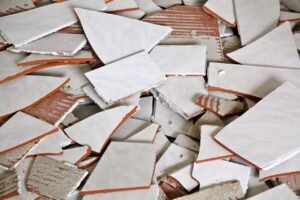
- Keep others away from damaged material. If tiles are broken or crumbling, avoid sweeping or vacuuming debris that might contain asbestos. Ask a qualified professional how to handle the situation.
These precautions are especially important before a larger remodel. A contractor who is about to remove flooring, cut into it, or disturb underlying adhesive should be told that asbestos has not been ruled out. Ask what inspection or testing is appropriate and who is responsible for arranging it. Licensing, notification and disposal requirements can vary by location and by the scope of the work, so check local and state rules as well.
What if you already disturbed the floor?
Stop the activity that is creating dust and keep people out of the immediate area. Don’t dry-sweep, brush or use an ordinary household vacuum on the debris. Contact your state or local environmental or health agency, or an asbestos professional, for advice tailored to the material and what happened. Avoid trying to collect a sample or clean up suspected asbestos yourself.
A new floor can be an exciting project, but the best first move may be no move at all. Identifying a possible asbestos issue before demolition can help you choose a safer plan—whether that means leaving sound material in place, covering it appropriately, or arranging professional handling.