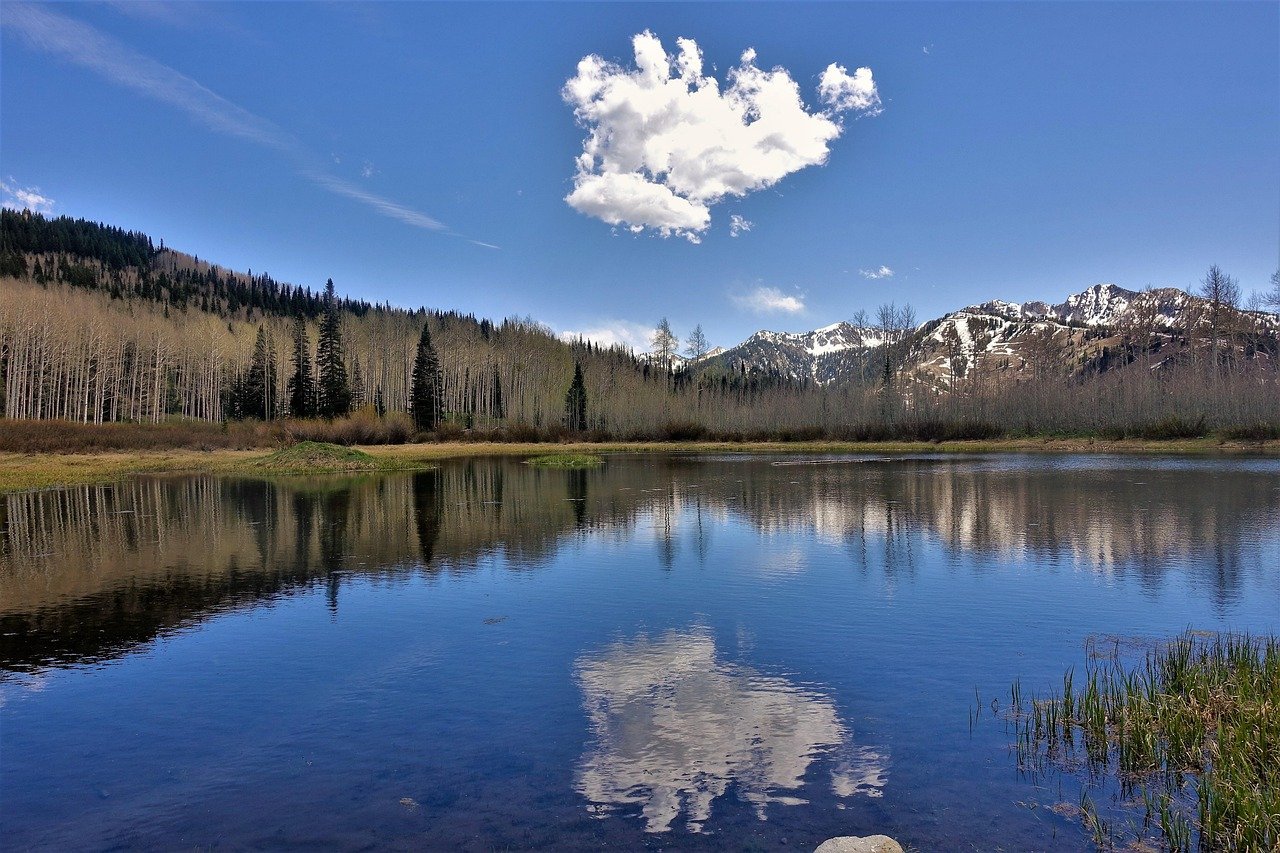
At first glance, Pando looks like a forest of separate quaking aspens. But the trees around Fish Lake in central Utah are connected by a shared root system: their trunks are stems of one genetic individual, or clone. That makes Pando a striking example of how a forest can be both many trees and one organism.
The stand covers about 106 acres and contains tens of thousands of stems, according to researchers who studied its condition. Its scale is impressive, but Pando’s future depends on a less dramatic question: Are enough young aspens growing into the next generation?
A forest that renews itself from below
Quaking aspens can reproduce by seed, but they also spread by sending up new shoots from their roots. These shoots, called suckers, are genetically the same as the parent tree. A single root system can produce many stems, and when older trunks die, new ones can take their place.
That renewal can falter when young shoots are repeatedly browsed before they grow tall enough to escape. At Pando, researchers have identified browsing by large herbivores as a major obstacle to recruitment. The challenge is not simply keeping mature trunks alive; it is allowing enough young stems to survive and grow.
What researchers learned from protected areas
A field study published in PLOS ONE compared parts of Pando under different management conditions, including areas protected by fencing and areas where animals could browse freely. The researchers found that young aspen growth was more abundant in fenced portions than in unprotected areas. The result offers a practical lesson: limiting browsing in selected sections can give new shoots the time they need to establish.
Fencing is not a cure-all, and it does not make the entire stand immune to drought, disease, fire or other pressures. But it can help managers test a direct intervention and see whether the forest is producing more young growth. Protected patches also show what regeneration can look like when browsing pressure is reduced.
Why one clone matters beyond its own roots
Aspen stands are important habitat and help shape the landscapes around them. Their leaves, branches and understory support wildlife, while the trees’ seasonal changes make them a defining feature of many western forests. Pando’s unusual size turns a familiar tree into a useful case study: it makes the balance between new growth and browsing easier to notice and investigate.
There is no single fence line that can resolve every factor affecting Pando. The longer-term task is to maintain a mix of conditions that lets young aspens become established while accounting for wildlife and the surrounding ecosystem. Continued monitoring can help managers learn which protected areas are regenerating and whether those gains last.
Pando is not a forest that needs to be rebuilt from scratch. Its connected roots still produce new shoots. The encouraging part is that researchers have identified a pressure that can be managed locally—and found that young growth responds where browsing is kept out. In a landscape made of thousands of trunks, renewal begins with the survival of the next small stem.