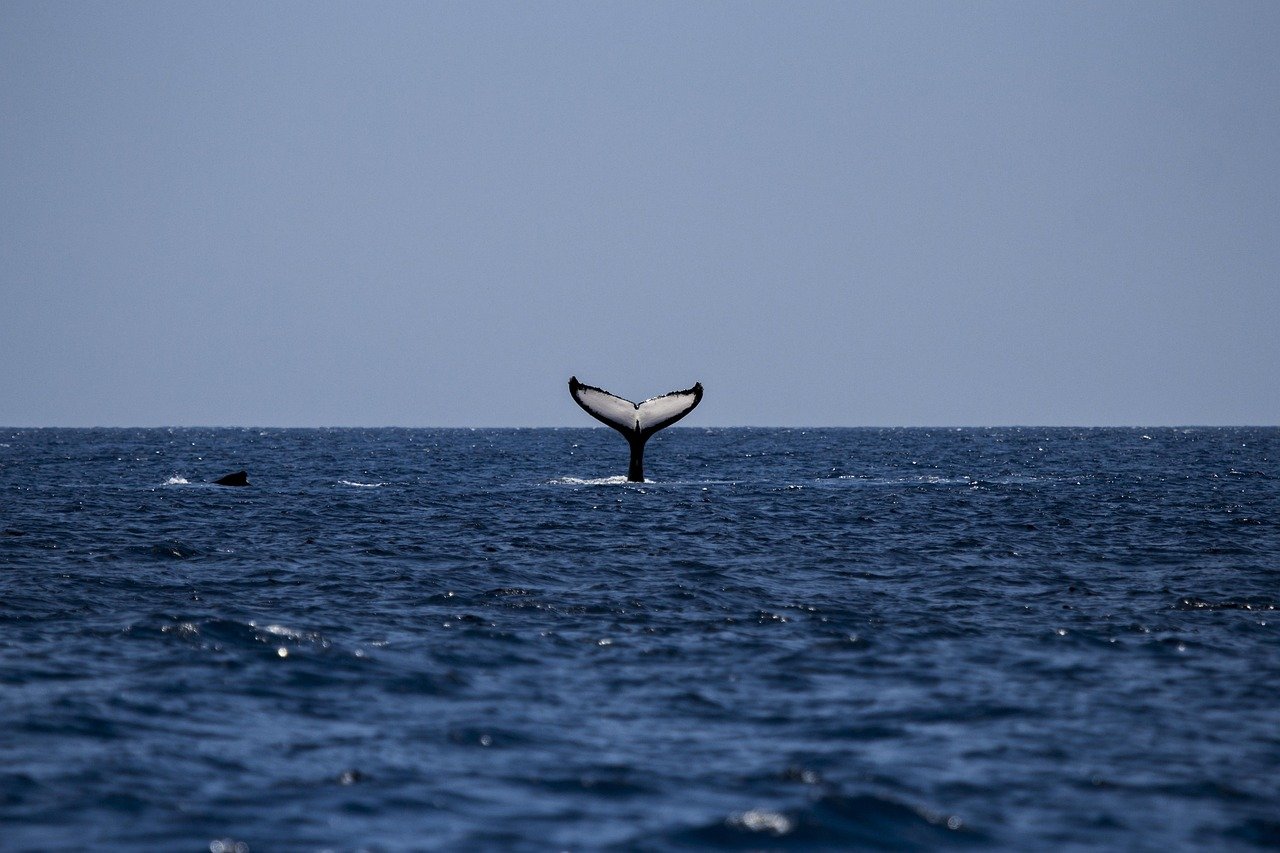
A humpback whale’s migration can span thousands of miles: the animals feed in productive, colder waters and travel toward warmer regions to breed and give birth. For generations, those journeys crossed waters where commercial whaling took a heavy toll. Today, many humpback populations have recovered substantially—a major conservation achievement, but not a guarantee that every group is secure.
The distinction matters. Humpbacks are one species, found in oceans around the world, but they do not form a single interchangeable population. Groups use different feeding and breeding areas, and some have rebounded far more than others. Their story is both an example of what international protections can accomplish and a reminder that recovery needs to be measured population by population.
A long-distance life at sea
Humpbacks are baleen whales. Instead of teeth, they have plates that filter small prey, including krill and schooling fish, from seawater. Many feed in higher-latitude waters during the productive season, then migrate to warmer waters. The route and timing vary among populations; not every whale follows the same schedule or travels the same distance.
Those movements connect habitats that can be thousands of miles apart. A whale may feed in one country’s waters and breed in another’s, crossing international boundaries along the way. That makes protection more complicated than drawing a safe zone on a map: conservation measures need to address risks across migration routes as well as feeding and breeding grounds.
Humpbacks are also conspicuous animals. Their long pectoral fins, surface leaps and complex songs have made them familiar to people far beyond the coastlines where they can be watched. But visibility is not the same as safety. A population can look abundant in one region while a smaller, more isolated group remains at risk.
Whaling pushed the species toward collapse
For much of the modern whaling era, humpbacks were hunted for their oil and other products. Industrial whaling made it possible to kill whales on a scale that traditional hunting could not match, and many populations were sharply reduced. International restrictions followed. The International Whaling Commission agreed to a pause on commercial whaling that took effect in 1986, although the commission’s rules and the protections applying to particular populations are not the whole story of whaling worldwide.
Ending or limiting commercial hunting removed a major source of mortality. Over time, researchers documented rebounds in a number of humpback populations. The recovery is not best understood as a single, worldwide count returning to an old baseline. Scientists assess different populations using information such as sightings, surveys and migration patterns, and estimates carry uncertainty. The important point is that trends differ between groups.
In 2016, the U.S. government reorganized the species’ status under the Endangered Species Act around 14 distinct population segments. Nine segments were removed from the list, four remained listed as threatened or endangered, and one was not listed. That decision captured the unevenness of the recovery: protections could be relaxed for some populations while continuing for others that still needed them.
Why a species-wide success can hide local risk
Population boundaries are a practical way to reflect how whales use the ocean, but they are not walls. Scientists use evidence about where whales feed and breed, where they migrate, and how groups are connected. The boundaries help identify conservation needs, while new observations can refine understanding of how populations relate to one another.
This is why a global headline such as “humpbacks are recovering” needs context. A strong increase in one region cannot automatically compensate for a vulnerable population elsewhere. Nor does the removal of one group from a threatened-species list mean that all human pressures have disappeared. It means authorities judged that group’s status had improved enough under the relevant rules; monitoring and management still matter.
Several hazards remain. Humpbacks can become entangled in fishing gear, and collisions with vessels can injure or kill them. Underwater noise can interfere with the sounds whales use to communicate. The severity of these risks varies by place and population, but each can affect animals that spend part of their lives in busy coastal or shipping areas. NOAA identifies entanglement, vessel strikes and ocean noise among the concerns in its overview of humpback whales.
What the recovery does—and does not—show
The humpback’s comeback demonstrates the value of reducing a direct, large-scale pressure. International limits on commercial whaling, along with national protections, gave many populations a chance to rebuild. The result was not immediate, and it was not uniform, but the direction of change for numerous groups is a reason for cautious optimism.
It is also a case for keeping good records. Surveys and long-term monitoring help scientists notice whether a population is growing, holding steady or declining, and help decision-makers tailor protections accordingly. Because whales move across national boundaries, cooperation between countries and conservation bodies remains important. A rule that works in a breeding area cannot by itself protect a migration route or feeding ground thousands of miles away.
For people watching a humpback rise from the sea, the sight can feel like a simple symbol of nature’s resilience. The science tells a more useful version of that story: recovery followed changes in human behavior, and it continues to depend on choices made in many places. Humpbacks have returned in numbers that once seemed out of reach for several populations. Protecting the groups still at risk—and keeping watch over those that have improved—is how that success can last.