Checking your engine oil is a simple way to keep tabs on an important part of routine car maintenance. The dipstick shows whether the oil level is within the range set for your vehicle; it does not tell you whether the oil is still in good condition or when it needs changing.
Follow your owner’s manual first. It explains whether your car has a dipstick, when to check the oil and which oil specification to use. Some newer vehicles show the level electronically instead.
What You’ll Need
- Your owner’s manual
- A clean paper towel or rag
- The correct engine oil, if the level needs topping up
Steps
- Park on level ground. Choose a safe, flat place, shift into park or gear as appropriate, and switch off the engine. A slope can make the reading inaccurate.
- Check the manual for the right conditions. The recommended engine temperature and waiting time vary by vehicle. Let the engine cool or wait as directed before checking; hot parts and oil can cause burns.
- Open the hood and find the dipstick. Use the owner’s manual to identify it. The handle is often brightly colored, but its appearance and location vary.
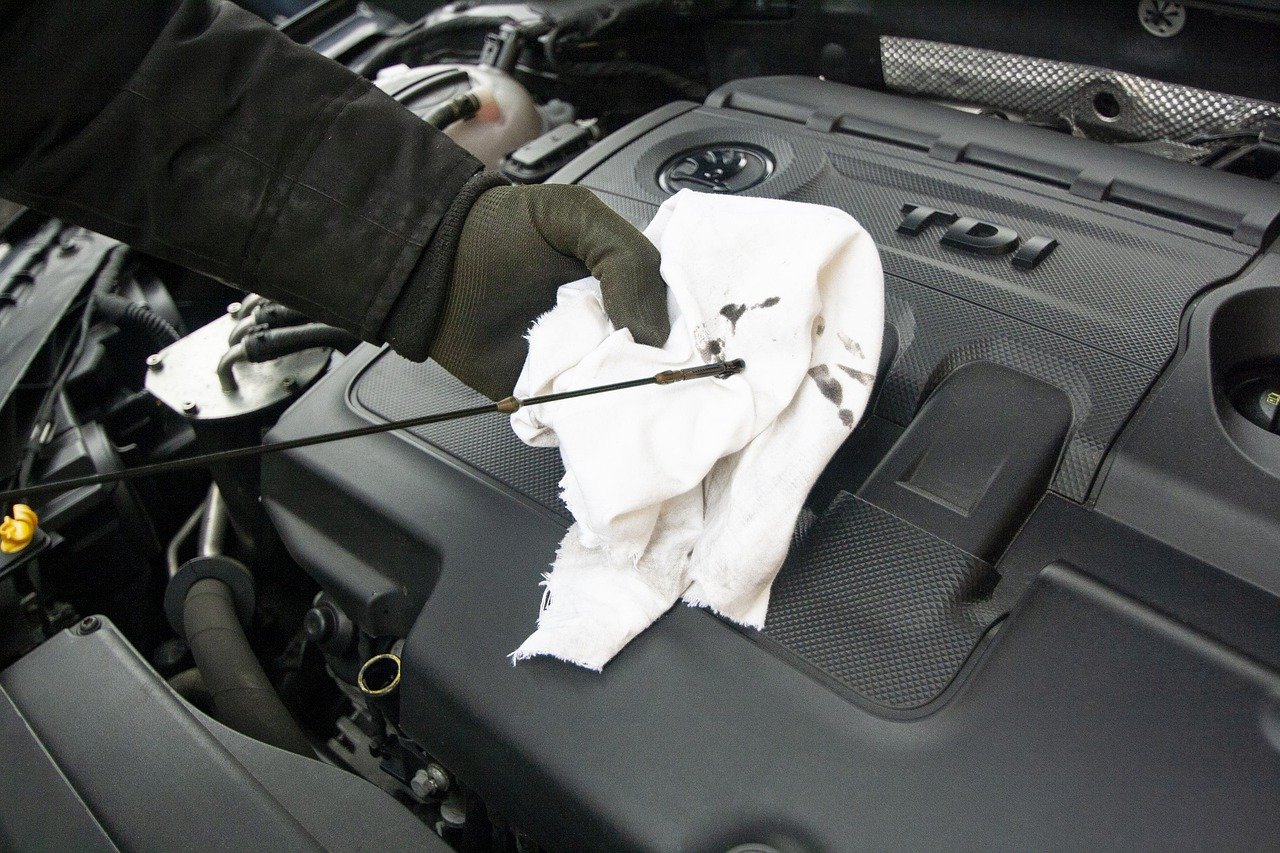
- Pull out the dipstick and wipe it clean. Use a clean rag or paper towel so the next reading shows the current oil level, not oil left on the stick.
- Reinsert the dipstick fully, then remove it again. Keep it level while you read the oil mark against the two lines, holes or labeled areas near the tip. The manual can help you interpret your model’s markings.
- Decide whether oil is needed. If the oil falls between the minimum and maximum marks, it is within the marked range. If it is at or below the minimum mark, add the oil specified in the manual. Do not guess at the required amount.
- Add oil a little at a time if needed. Remove the oil-filler cap, add a small amount of the correct oil, and replace the cap. Wait as directed by the manual, then check the dipstick again. Repeat only as needed to bring the level into range.
- Finish with a final check. Make sure the dipstick and filler cap are back in place. Wipe up any spilled oil and close the hood securely.
Tips and Things to Know
Use the oil type and specification listed in your owner’s manual, not just a brand or viscosity that sounds familiar. Different engines can require different oils, and the right choice may depend on the vehicle and operating conditions.
A level that is repeatedly low can point to a leak or oil use that needs attention. Arrange an inspection if the level keeps dropping. If the oil-pressure warning light comes on while driving, pull over safely and follow the instructions in your owner’s manual; do not treat the warning as a routine reminder to top up later.
If your car has no dipstick, use the manual’s electronic oil-level procedure rather than trying to find or add oil through an unfamiliar opening. A careful check takes only a few minutes, and your owner’s manual is the best guide to doing it the right way for your car.