A dead battery can leave a car unable to start, but jumper cables may help you get going again. This guide covers the basic process for a conventional gasoline car using another vehicle and jumper cables.
Before connecting anything, check both vehicles’ owner’s manuals. Battery locations and approved connection points vary, and some vehicles require a specific procedure. Follow the manuals if they differ from these general steps.
What You’ll Need
- A set of jumper cables in good condition.
- A second vehicle with a compatible, working battery.
- Your vehicle’s owner’s manual, if available.
Before You Begin
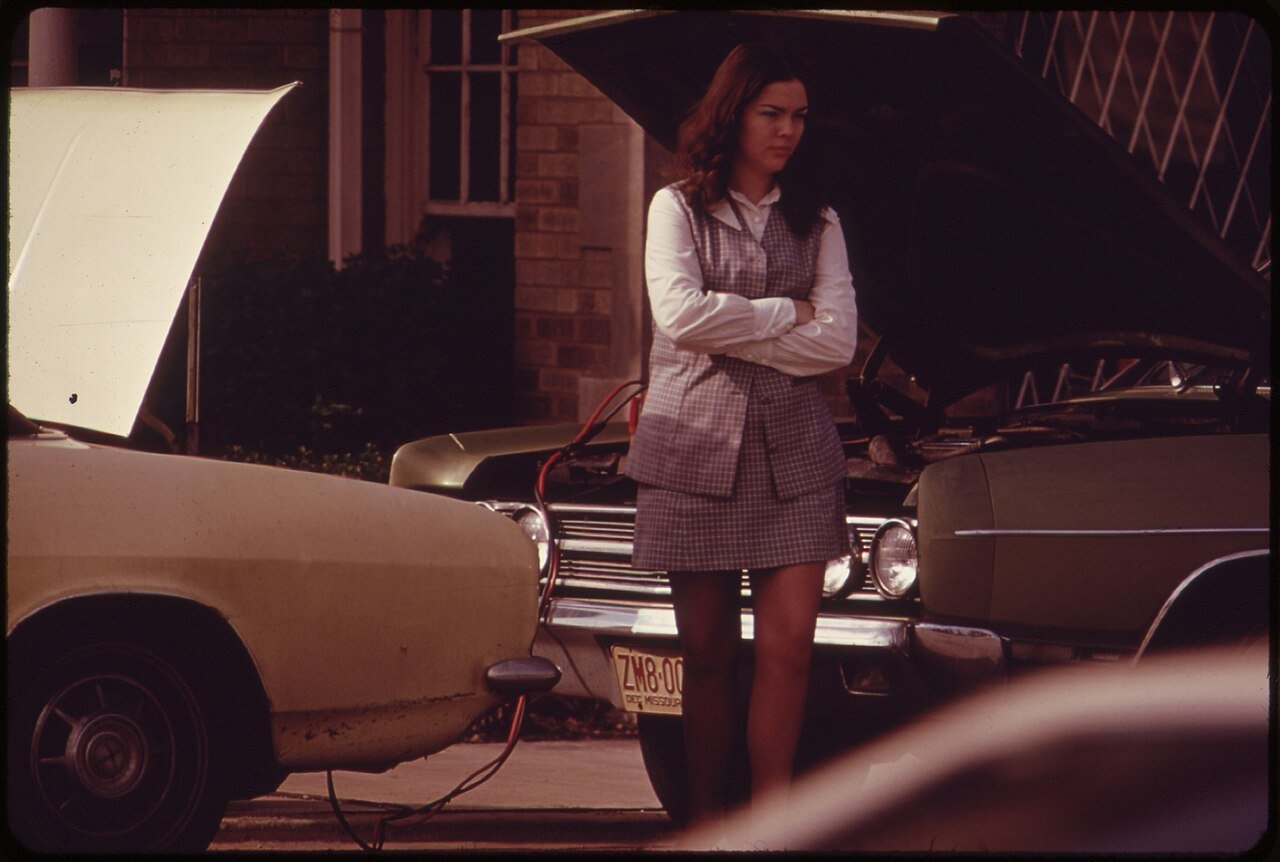
Park the vehicles close enough for the cables to reach, but do not let them touch. Put both vehicles in Park, or in Neutral if the manual calls for it, engage the parking brakes, and switch off the ignitions and electrical accessories. Keep cigarettes, flames, and other sources of sparks away from the batteries.
Do not attempt a jump-start if either battery is cracked, leaking, swollen, or frozen. Stop if you cannot identify the correct battery terminals or jump-start points. Hybrid and electric vehicles may have specific restrictions, so use their manuals rather than assuming they can be jump-started like a conventional car.
Steps
- Identify the terminals and connection points. Find the positive (+) and negative (−) points on both vehicles, using the manuals if needed. Some cars have designated remote jump-start posts. Do not guess.
- Attach one red clamp to the disabled car’s positive point. Make sure the clamp grips the metal securely and does not touch other metal parts.
- Attach the other red clamp to the assisting car’s positive point. Keep the loose black clamps away from the red clamps and from metal surfaces.
- Connect a black clamp to the assisting car’s negative point. Check the manual for the correct connection point.
- Connect the remaining black clamp to the disabled car’s designated ground point. If the manual specifies a suitable unpainted metal point on the engine or chassis, use that rather than the battery’s negative terminal. Keep the clamp away from moving parts.
- Start the assisting car, then try the disabled car. Follow any vehicle-specific instructions for starting. If the disabled car does not start after a brief attempt, stop rather than repeatedly cranking the engine.
- Remove the cables in reverse order. Take off the black clamp from the disabled car first, then the black clamp from the assisting car, followed by the red clamp from the assisting car and the red clamp from the previously disabled car. Do not let clamps touch each other or the cars while disconnecting.
Tips and Things to Know
If the car starts, keep it running only as directed by its manual. A jump-start may get the engine running, but it does not show whether the battery can hold a charge or whether the charging system is working properly. If the car needs another jump soon, or the battery warning light stays on, arrange for the battery and charging system to be checked.
If you hear unusual sounds, see smoke, smell something burning, or notice a cable getting hot, stop and move away from the vehicles. Do not continue troubleshooting near a battery that may be damaged. Roadside assistance or a qualified repair shop can help.
With the manuals checked and the clamps connected carefully, a jump-start can be a straightforward way to get a conventional car moving again. When anything about the battery or connection points is uncertain, choose professional help instead.