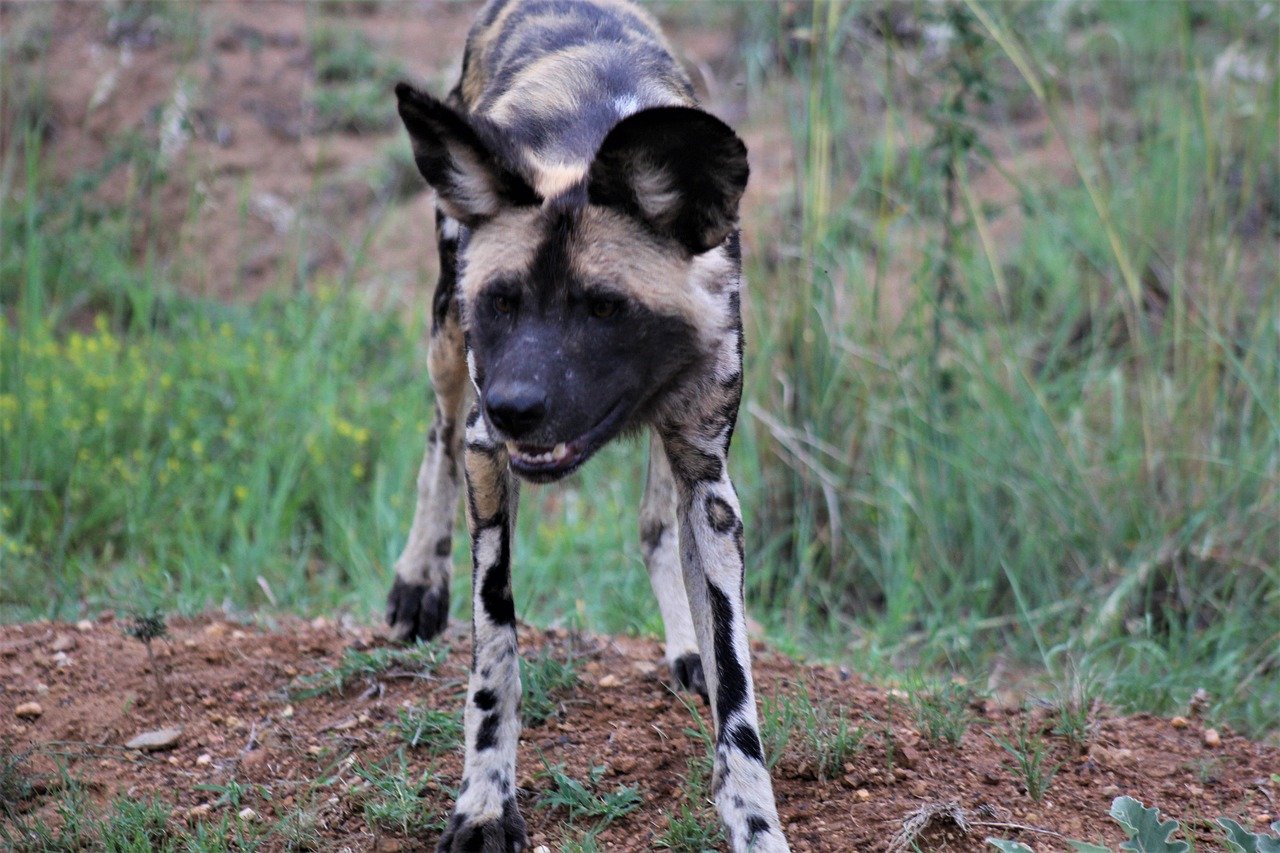
A sneeze usually seems like an individual act: a quick, involuntary burst of air. But when African wild dogs gather before moving on, the sound may also help reveal whether the group is ready to go.
In a study of wild dogs in Botswana, researchers observed that departures from resting places were more likely after gatherings in which the animals sneezed. The pattern was not as simple as a fixed number of sneezes triggering every move. The presence of dominant animals appeared to matter, too.
The research, published in 2017 in Proceedings of the Royal Society B, offered an unusual example of how a highly social mammal may coordinate a group decision. It also came with an important caveat: watching sneezes accompany a departure does not prove that the dogs consciously use them as votes.
A gathering before the journey
African wild dogs, also called painted dogs, live and hunt in social packs. Like other animals that travel together, they need ways to move as a group: leaving too soon could separate members, while waiting too long could delay the pack.
Before some departures, dogs gather in a lively group interaction called a rally. Animals may approach one another, greet, and become more active. Researchers studying these moments noticed that sneezing often occurred during the gatherings—and that the pack sometimes set off soon afterward.
To investigate the connection, the team recorded rallies and departures among wild dogs in Botswana. They compared the number of sneezes in a rally with whether the pack moved on. The question was not whether a sneeze has a single, obvious meaning. It was whether sneeze counts were associated with the group’s decision to depart.
The researchers found that rallies with more sneezes were more likely to be followed by a departure. They also found that the apparent threshold varied depending on whether dominant individuals had initiated the rally. In other words, the group’s response did not seem to depend on one universal sneeze count.
Not quite a show of paws
It is tempting to describe the finding as a pack taking a vote. The study’s title uses that comparison, and it is a useful way to picture how a group can reach a decision without an obvious spoken command. But the metaphor has limits.
The observations show a relationship between sneezing, rallies, and departures. They do not demonstrate that each dog deliberately sneezed to express a preference, understood the count as a tally, or followed a conscious rule. A sneeze could be tied to arousal or other aspects of the gathering. The study identifies a pattern worth testing, not a direct window into what the animals think.
That distinction matters in animal behavior research. Scientists can measure visible actions and compare what happens next, but interpreting the purpose of a behavior requires care. A signal can help coordinate a group even if it is not a human-like vote—and even if the animals are not consciously counting.
The finding about dominant animals adds another layer. If fewer sneezes were associated with departure when a dominant individual initiated the rally, that could suggest that social position changes how much agreement is needed. But the observation alone cannot tell us exactly why. The dominant dog’s presence, its behavior, or other features of the situation could all contribute.
Why a small sound matters
Group coordination is a practical challenge for animals that feed, travel, or rest together. A pack needs to respond to local conditions while keeping its members connected. Studying the details of a departure can help researchers understand how animals manage that challenge.
It also broadens the idea of what a social signal might look like. Communication is not limited to dramatic calls or clear gestures. A behavior that appears ordinary on its own may become informative when it occurs in a particular social setting and is linked to what the group does next.
Still, one study does not establish that sneezing works the same way in every pack or under every condition. The observations came from wild dogs in Botswana, and the pattern needs to be understood within that context. Further research could examine whether the association holds across more groups, what prompts the sneezes, and how individual roles affect departures.
For now, the research offers a modest but memorable insight: the moments before a pack moves may contain more information than they first appear to. A sneeze is not proof of a ballot, and the dogs’ decision-making remains difficult to translate into human terms. But by carefully tracking a small behavior alongside a consequential group action, researchers found a new clue to how painted dogs may get moving together.