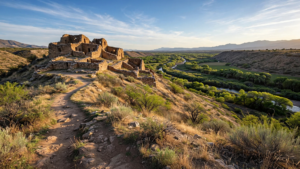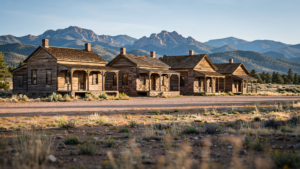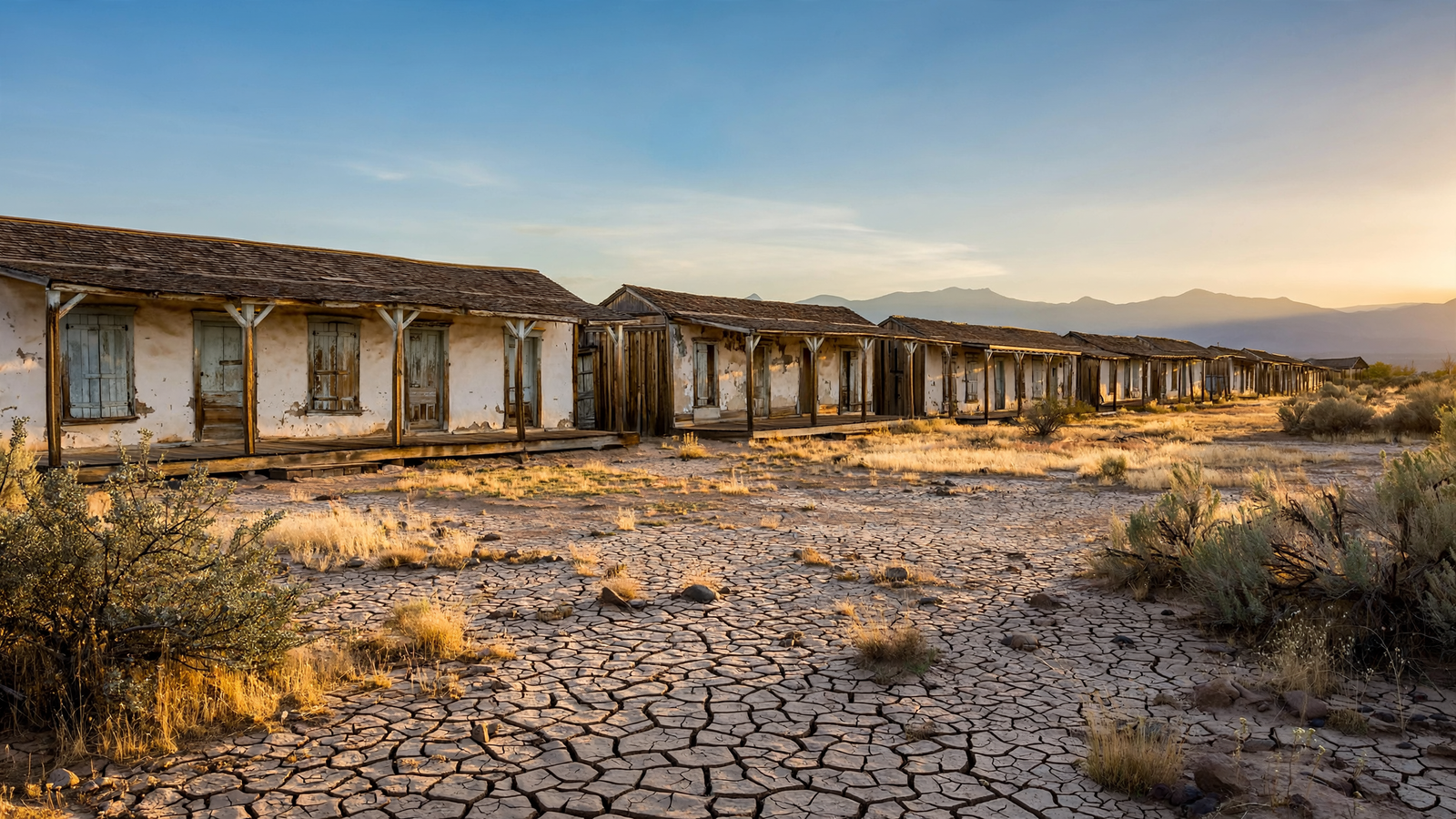
On a low rise near the Verde River, a handful of nineteenth-century buildings still stand in the Arizona sun. Their walls are modest. Their porches are plain. There is no grand stone citadel, no sweeping battlefield, and no reconstructed frontier town stretching across acres of land. For related reading, see Fort Verde: The Yavapai County Place Where Arizona’s Frontier History Remains Standing.
Yet Fort Verde State Historic Park remains one of the most revealing historic places in Yavapai County. The park preserves the surviving core of a U.S. Army post built during a period when the Verde Valley was becoming a contested landscape—one shaped by Indigenous communities, settlers, soldiers, farmers, prospectors, and federal policy. For related reading, see Camp Verde’s Dark-Sky Ambition: How a Verde Valley Town Is Protecting the Night.
Today, Fort Verde is not simply a monument to the Army. At its best, it is a place where visitors can see how several histories met, often uneasily, in one valley. Its continuing value comes from that complexity. For related reading, see Montezuma Castle: How a Verde Valley Cliff Dwelling Keeps Ancient Ingenuity in View.
A military post in a changing valley
Fort Verde was established in the 1870s, when the United States was expanding military operations in central Arizona. The Army’s presence in the Verde Valley was connected to a wider campaign against Yavapai and Tonto Apache people, as well as to federal efforts to move Native communities onto reservations and secure territory for non-Native settlement.
The post was first known as Camp Verde. It was later renamed Fort Verde, a designation that reflected the Army’s growing presence in the region. Soldiers stationed there were responsible for patrols, escorts, reconnaissance, and operations across a large and difficult landscape.
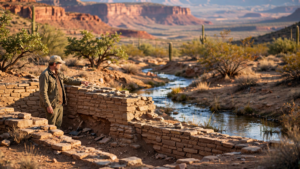
The location was strategically useful. The Verde River provided water in an otherwise arid region, while nearby routes connected the valley with Prescott, Fort Whipple, Camp Verde, and other military and civilian settlements. The post also sat near communities whose lives had already been shaped by farming, trade, movement, and conflict long before the Army arrived.
That setting is important because Fort Verde’s story does not begin with the construction of the buildings. The Verde Valley was not empty frontier. Yavapai and Apache people had deep relationships with the land, its waterways, its plants, and its travel routes. The arrival of the Army introduced new power, new restrictions, and new pressures into an existing cultural landscape.
What remains of the fort
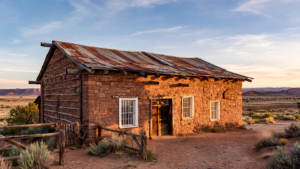
Fort Verde State Historic Park preserves three original buildings from the post, along with a reconstructed barracks. The surviving structures include the Commanding Officer’s Quarters, the Bachelor Officers’ Quarters, and the former hospital building. Together, they give the site an unusual immediacy.
These are not monumental buildings. Their importance lies in the details: the scale of the rooms, the deep shade of the porches, the separation between officers’ and enlisted spaces, and the practical design required by a hot, dry climate. Visitors can move through spaces that once served as homes, offices, medical rooms, and military quarters.
The buildings also make it easier to imagine the fort as a working community rather than a lonely outpost. Soldiers lived there with officers, medical staff, laborers, families, and visitors. Supplies had to be transported over long distances. Animals needed care. Equipment required repair. Illness and injury were part of daily life. Military history, in other words, was also a history of food, housing, health, transportation, and routine work.
The hospital building is especially useful for understanding that everyday dimension. Frontier military posts depended on medical care in places where professional treatment could be far away. A preserved hospital can make the Army’s infrastructure visible in a way that battle stories often do not.
A place for difficult history
Fort Verde’s preservation also carries a responsibility. The post was part of a system that helped remove Yavapai and Apache people from their homes and place them under federal control. Military operations, forced marches, confinement, and reservation policy are central to the site’s history.
A visit should therefore resist the easy version of the frontier story—the one in which soldiers simply brought order to an empty wilderness. The valley was already inhabited, used, and understood. The conflict was not an isolated episode between two equal forces. It unfolded as the United States asserted control over land and Indigenous people with military power behind it.
That history can be uncomfortable, but it is also the reason places such as Fort Verde matter. Preserved sites give communities a chance to examine the past in its physical setting. A textbook can describe a campaign or a policy. A historic building can show the scale of the institution that carried it out.
The most constructive future for Fort Verde is not to turn the post into a celebration of military conquest. It is to keep broadening the story: to explain the Army’s role, acknowledge the experiences of Yavapai and Apache communities, and connect the fort to the larger history of the Verde Valley.
From military outpost to public place
Fort Verde closed as an active military post in the 1890s. Some buildings disappeared, while others were adapted or lost to time. The remaining structures eventually became part of Arizona’s public heritage system, allowing the site to survive as a state historic park rather than becoming another trace erased by development.
That transition changed the meaning of the place. A military installation had been designed to serve the Army. A historic park serves the public. Its visitors may arrive for different reasons: a family looking for an educational outing, a local resident attending a history program, a traveler exploring the Verde Valley, or a researcher studying Arizona’s territorial period.
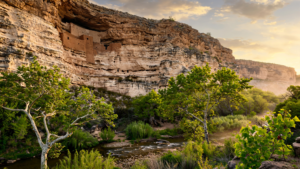
The park’s setting in Camp Verde makes it part of a larger network of nearby places that tell different parts of the region’s story. Montezuma Castle and Montezuma Well preserve evidence of Sinagua communities. The Verde River connects farms, wildlife habitat, and towns. Tuzigoot National Monument protects another major archaeological landscape. Fort Verde adds the later military and settlement period to that regional sequence.
Seen together, these places challenge the idea that Arizona history can be reduced to one era. The Verde Valley is not only an ancient landscape, a military corridor, or a modern recreation destination. It is all of those things layered together.
Why small historic parks still matter
Large national parks often receive the most attention, but smaller historic sites can offer a more focused kind of encounter. Fort Verde does not require a full day to understand. Its compact scale encourages visitors to look closely.
A short walk between the buildings can prompt questions that a much larger attraction might obscure. Who lived in this room? Who was allowed inside? Who supplied the post? Which roads connected it to the outside world? What happened to the people whose land the fort occupied? What changed after the soldiers left?
Those questions are the beginning of historical understanding. They also make the park useful for younger visitors, who can connect large events to tangible objects and spaces. A military policy becomes a building. A period of territorial expansion becomes a road, a water source, or a set of quarters. The past becomes easier to investigate because it is still standing.
Fort Verde also demonstrates why preservation is an active public service. Keeping old buildings open requires maintenance, interpretation, staffing, and continued community interest. The result is not only a protected collection of structures. It is a place where residents and visitors can encounter evidence that cannot be replaced once it is gone.
The wider meaning of Fort Verde
Yavapai County contains many landscapes that invite admiration for their scenery. Fort Verde asks for a different kind of attention. Its value is not primarily visual, although the surrounding valley is part of the experience. Its value lies in the questions it makes visible.
The park shows how a small military post could become part of a national project of expansion. It shows how federal institutions reached into remote valleys. It shows how military history was also domestic history, medical history, transportation history, and environmental history. Most importantly, it provides a setting in which the consequences for Indigenous communities cannot be separated from the story of settlement.
That is a meaningful role for a public historic place. Fort Verde does not need to make the past simpler in order to remain welcoming. It can invite curiosity while making room for difficult truths. It can preserve the buildings without preserving the assumptions that once shaped them.
In Camp Verde, the surviving quarters and barracks form a small footprint with a large reach. They connect the Verde Valley’s older Indigenous history to Arizona’s territorial period and to the modern work of remembering responsibly. The fort remains open not because the past is finished, but because each generation has more to ask of it.
Use: Official information on the park, its preserved buildings, history, visitor experience, and programs.
Use: Authoritative regional context on Indigenous history and the Verde Valley’s archaeological landscape.
Use: Local civic context for the community in which Fort Verde State Historic Park is located.
Arizona State Parks and Trails — Fort Verde State Historic Park — https://azstateparks.com/fort-verde/ — Official information on the park, its preserved buildings, history, visitor experience, and programs.
National Park Service — Montezuma Castle National Monument — https://www.nps.gov/moca/index.htm — Authoritative regional context on Indigenous history and the Verde Valley’s archaeological landscape.
Town of Camp Verde — https://www.campverde.az.gov/ — Local civic context for the community in which Fort Verde State Historic Park is located.