In Camp Verde, a cluster of historic buildings offers a different kind of Arizona history lesson. Fort Verde State Historic Park preserves part of a U.S. Army post that operated in the Verde Valley during a period of military expansion and conflict—and whose story cannot be separated from the displacement of Yavapai and Apache people from their homelands.
The post’s names and locations changed as the Army’s presence grew. It began as Camp Lincoln in 1865, according to Arizona State Parks, and was moved to the present site in 1871. It became Camp Verde and was renamed Fort Verde in 1879. The Army left in 1891.
A post built into a larger campaign
Fort Verde was part of a wider system of Army posts established during the Indian Wars in the Southwest. From here, soldiers operated in a region where the U.S. government sought to control Indigenous communities and their lands. That history was not simply a matter of military administration: Yavapai and Apache people faced campaigns, confinement and forced removal.
In 1875, Yavapai and Apache people were forcibly removed from the Verde Valley to the San Carlos reservation. Remembering the post therefore means looking beyond the Army buildings themselves. They are evidence of military life, but also of the power the Army exercised over Indigenous people and the profound consequences for their communities.
What the surviving buildings show
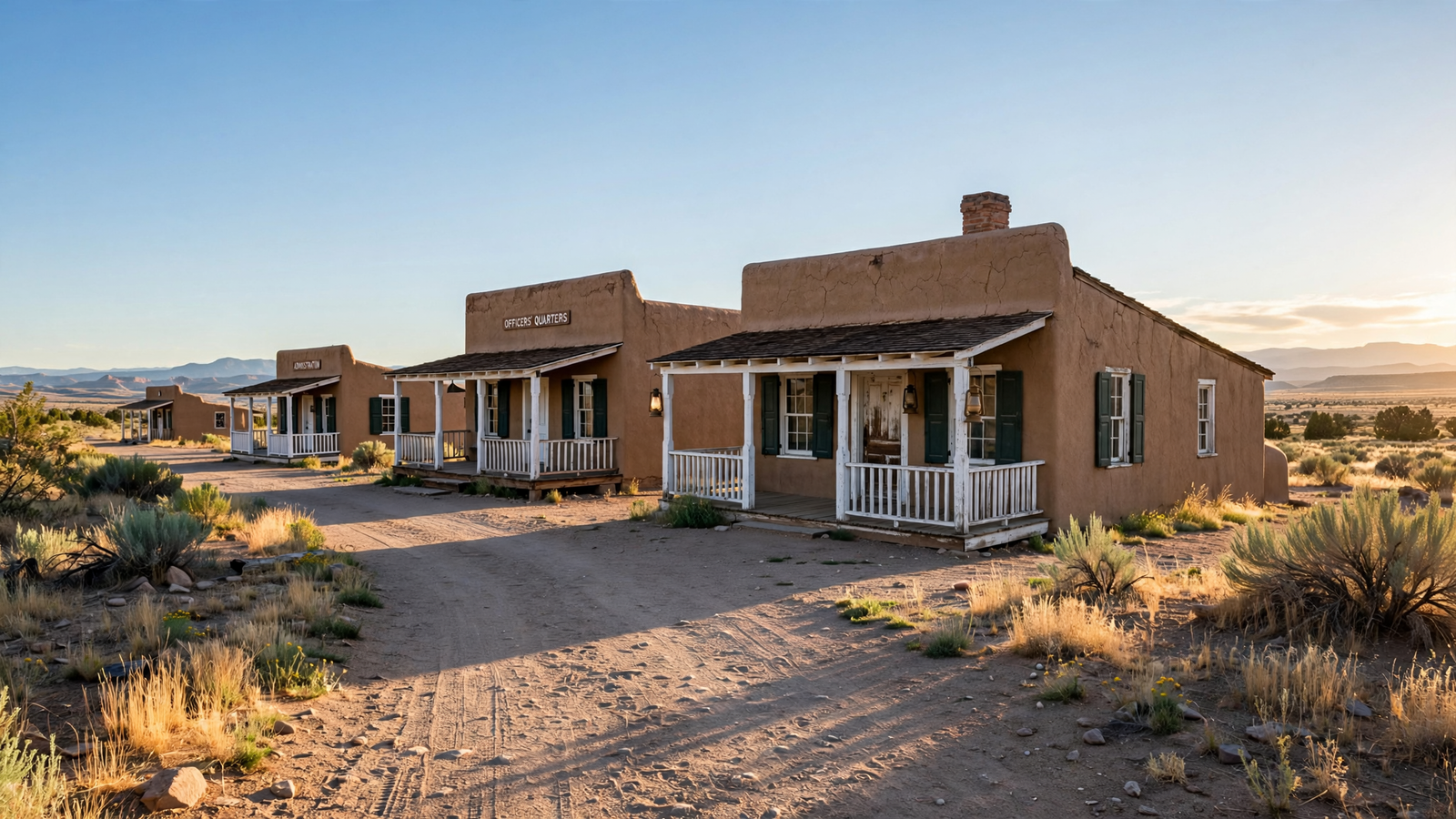
After the Army departed, the former post did not remain an intact military installation. Some structures disappeared, while several of the surviving buildings eventually became the core of the state historic park. The park interprets the site through preserved quarters and exhibits, offering visitors a chance to consider the practical work of maintaining a frontier post—not only its campaigns.
Military posts depended on more than soldiers in the field. Officers and medical staff needed housing; supplies had to be managed; and everyday routines continued between expeditions. The surviving quarters make that institutional world easier to picture. Their modest scale also helps distinguish Fort Verde from the romantic image of a remote fort as a self-contained outpost. It was part of a network of federal power operating across Indigenous homelands.
The buildings are not a complete record of life in the Verde Valley, and they do not speak for the people most affected by the post. They do, however, create a place to ask better questions: Who made decisions here? Whose land was being controlled? What did military expansion mean for the Yavapai and Apache families who lived in the region?
A nearby place to reckon with the past
For residents of Camp Verde and visitors moving through the Verde Valley, Fort Verde makes a consequential chapter of Arizona history tangible. Its preserved buildings give the site a physical presence, while its history asks for more than admiration of old architecture. Understanding the post means holding two truths together: the structures reveal the daily operations of an Army installation, and the installation served a campaign that disrupted Indigenous lives and sovereignty.
That complexity is part of the site’s value. Fort Verde is not just a collection of old quarters; it is an opportunity to explore how military institutions shaped the region—and to remember the Yavapai and Apache people whose history extends far beyond the Army’s years in Camp Verde.