Some of the most important help a child receives does not arrive in a dramatic moment. It may look like an adult sitting beside a student who is struggling to read, greeting a child by name each morning, or listening patiently while a young person tries to explain a difficult day.
Across Arizona and the United States, older adults are making room for those moments through the AmeriCorps Seniors Foster Grandparent program. The program connects adults age 55 and older with children and young people who can benefit from extra attention, encouragement and guidance. Its work is simple in form but meaningful in effect: offer time, show up consistently and help a child feel seen.
Foster grandparents are not adoptive parents, and they are not substitutes for teachers, counselors or social workers. They are community volunteers who work alongside professionals in schools, Head Start programs, child-care centers, hospitals and other approved settings. Their contribution is the human one that can be difficult for busy institutions to provide in abundance: a dependable adult relationship.
A national idea with a personal scale
The Foster Grandparent program began in 1965, during the same period that the federal government created the broader network of programs now known as AmeriCorps Seniors. The original idea was to address two needs at once: give older adults a meaningful way to serve and provide children with caring adult attention.
That dual purpose remains central. AmeriCorps describes Foster Grandparents as volunteers who mentor and support children with exceptional needs, children who have been abused or neglected, and young people facing other challenges. Assignments vary by local program, but the common thread is a regular presence in a setting where a child can benefit from patience and encouragement.
The word “grandparent” describes the role rather than a family connection. Volunteers do not need to have grandchildren, and the children they serve are not necessarily related to them. The title points to a familiar kind of care: the willingness to encourage, teach, notice small changes and remain interested over time. For related reading, see Petrified Forest: The Arizona Place Where Deep Time Meets an Open Road.
What kindness looks like in practice
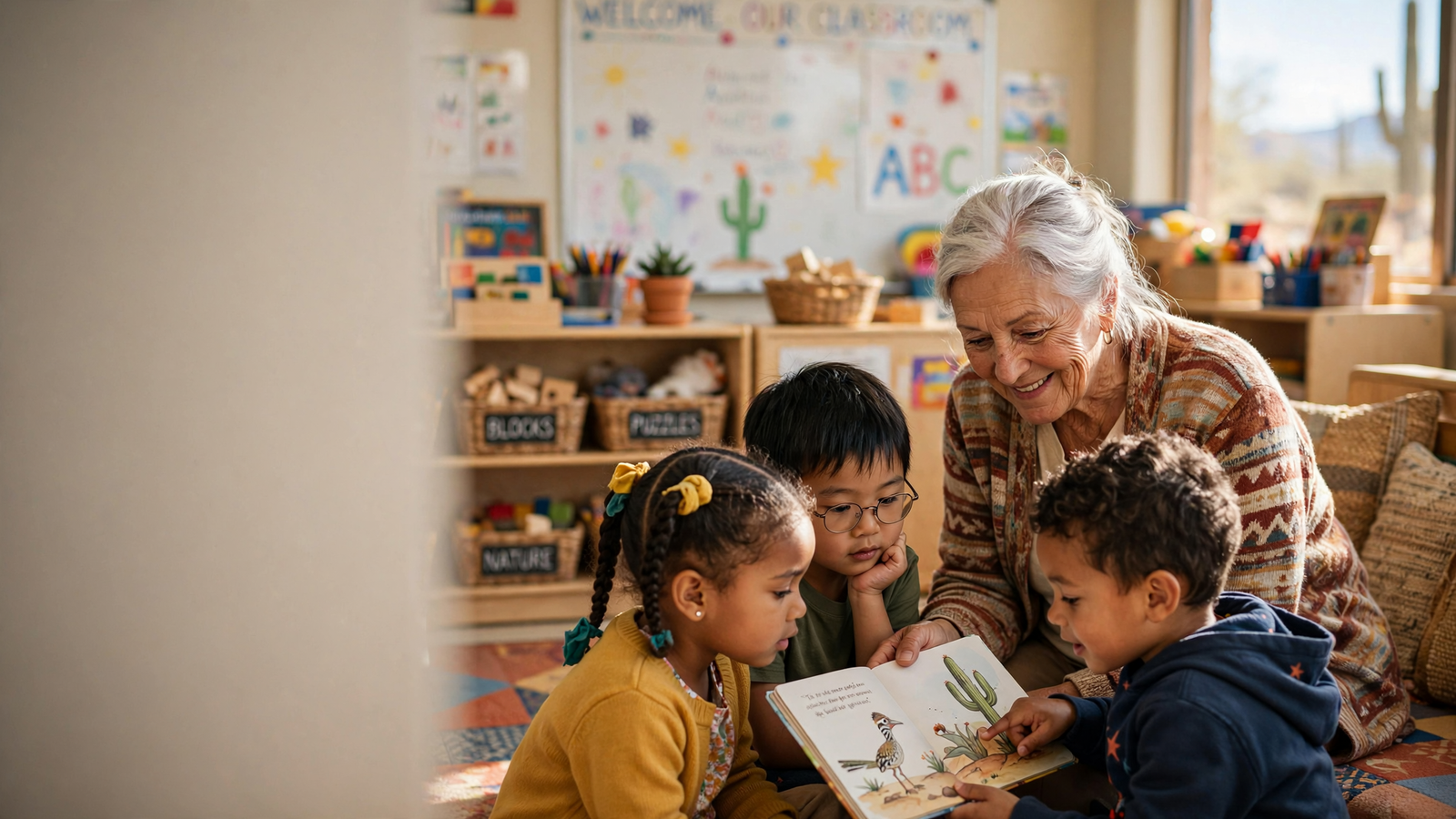
Kindness can sound abstract until it is attached to a routine. In a school, a foster grandparent might read with a child, practice basic skills, help with a project or provide a calm transition between activities. In a Head Start or early-learning setting, the volunteer may help children learn to share, express feelings or follow a daily rhythm.
In other settings, the work may be less academic. A volunteer could sit with a child who needs reassurance, participate in supervised play or give a young person an opportunity to talk with an attentive adult. The program does not ask one person to solve every problem. It creates more occasions for children to experience patience, structure and positive attention.
Consistency is part of the value. A single encouraging conversation can matter, but repeated contact gives the relationship a stronger foundation. Children learn that the volunteer is likely to return, remember what happened last time and notice their progress. That reliability can be especially meaningful for children whose lives have included frequent changes in caregivers, schools or living arrangements.
The work also has practical boundaries. Foster grandparents serve under the direction of the organizations where they are placed. They receive orientation and training, and programs use screening and supervision procedures designed to protect both children and volunteers. The structure matters because kindness is most useful when it is dependable, respectful and safe.
Why older adults are at the center
Foster Grandparents is built around a resource that is often overlooked: the experience of older adults. A volunteer may bring decades of work, parenting, caregiving, problem-solving or community involvement to a child-centered setting. That experience does not make every volunteer an expert, but it can help create the calm and perspective that young people need.
Serving also gives older adults a way to remain connected after retirement or other life transitions. The National Institute on Aging has noted that social connection and meaningful engagement are important parts of healthy aging. A regular volunteer role can provide both: contact with other adults and a clear reason to be present somewhere beyond home.
This does not mean volunteering should be treated as a cure-all. Older adults have different abilities, schedules and health needs, and a good program must match assignments to the volunteer rather than demand more than the person can comfortably give. The strength of the model is its flexibility. Some people may want a classroom role; others may prefer a smaller placement or a schedule that leaves room for medical appointments, family responsibilities and rest. For related reading, see The 1950 Census: How a Household Form Became a Time Machine for American Life.
AmeriCorps Seniors programs may offer modest expense reimbursement or a stipend to eligible volunteers with limited incomes. Those supports are not wages, and participation does not require someone to be financially eligible in every case. Their purpose is to make service more accessible by helping with costs such as transportation, meals or other approved expenses.
The Arizona connection
Arizona is a natural setting for an intergenerational program. The state has a large and growing older population, along with communities where schools, child-care providers and family-support organizations serve children with very different needs. Local Foster Grandparent programs help translate the national model into those specific places.
Arizona volunteers may serve in urban neighborhoods, smaller communities or rural areas, depending on the local sponsor and available placements. That local structure matters. A statewide slogan about kindness is easy to repeat; a program that knows which classrooms need support, which volunteers can reach them and what training is required has a better chance of producing useful relationships.
In Maricopa County and elsewhere, organizations that coordinate senior volunteer programs describe service as a partnership. The volunteer brings time and attention. The host site supplies supervision and context. Families and children receive another layer of support. No single part of the arrangement works alone.
That partnership also keeps the idea grounded. Foster grandparents are not sent into a community as heroic outsiders. They become part of an existing team, learning the routines of a classroom or program and contributing in ways that fit the professionals already doing the work.
A quieter measure of impact
Programs like this are not always easy to evaluate with a single number. A reading score, attendance record or developmental measure may capture part of what changes, but not all of it. A child who begins raising a hand, asking for help or trusting an adult may be showing progress that takes time to appear in formal data. For related reading, see Gene Therapy Is Giving Some Children Born Deaf a New Way to Hear.
For that reason, the program’s most important outcomes are often cumulative. A child receives more chances to practice. A teacher gains another set of supportive hands. An older adult remains connected to the community. A family sees that someone outside the household is invested in the child’s well-being.
These are modest outcomes compared with the language often used for large social programs. They are also durable. Communities depend on thousands of small acts that reduce isolation, build confidence and make public institutions feel more humane. The Foster Grandparent model gives those acts a schedule, a setting and a measure of accountability.
How readers can take part
Someone interested in becoming a foster grandparent can begin with AmeriCorps Seniors or a local sponsoring organization. The first step is usually an information session or conversation about age requirements, background checks, training, transportation, time commitments and the kinds of placements currently available.
People who cannot volunteer in a child-centered role can still support the same principle. Schools and child-care programs often need classroom readers, tutors and activity helpers, while local senior-service agencies may have other opportunities involving food delivery, companionship or community outreach. The right choice is the one that can be sustained.
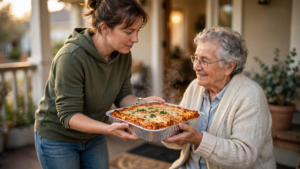
It is also worth remembering that intergenerational kindness does not have to begin with an official program. A retired neighbor who reads with a child, a grandparent who helps a family navigate school routines, or an older resident who welcomes young people at a library can all strengthen the same social fabric.
The lesson of Foster Grandparents is not that every older adult must take on a new job. It is that attention is a form of generosity, and experience becomes more valuable when it is shared. In a culture that often celebrates speed, scale and novelty, the program offers a quieter idea of progress: one caring adult, one child and one dependable hour at a time.
Use: Program history, age eligibility, service settings, volunteer roles and general support information.
Use: Background on the national AmeriCorps Seniors network and its community-service purpose.
Use: Authoritative context on social connection, isolation and meaningful engagement in later life.
Use: Arizona and Maricopa County context for local aging services and volunteer opportunities.
AmeriCorps Seniors — Foster Grandparents — https://americorps.gov/serve/fit-finder/americorps-seniors/foster-grandparents — Program history, age eligibility, service settings, volunteer roles and general support information.
AmeriCorps Seniors — Official Program Overview — https://americorps.gov/serve/americorps-seniors — Background on the national AmeriCorps Seniors network and its community-service purpose.
National Institute on Aging — Social Isolation and Loneliness — https://www.nia.nih.gov/health/loneliness-and-social-isolation/social-isolation-and-loneliness-older-adults — Authoritative context on social connection, isolation and meaningful engagement in later life.
Area Agency on Aging, Region One — https://www.aaaphx.org/ — Arizona and Maricopa County context for local aging services and volunteer opportunities.