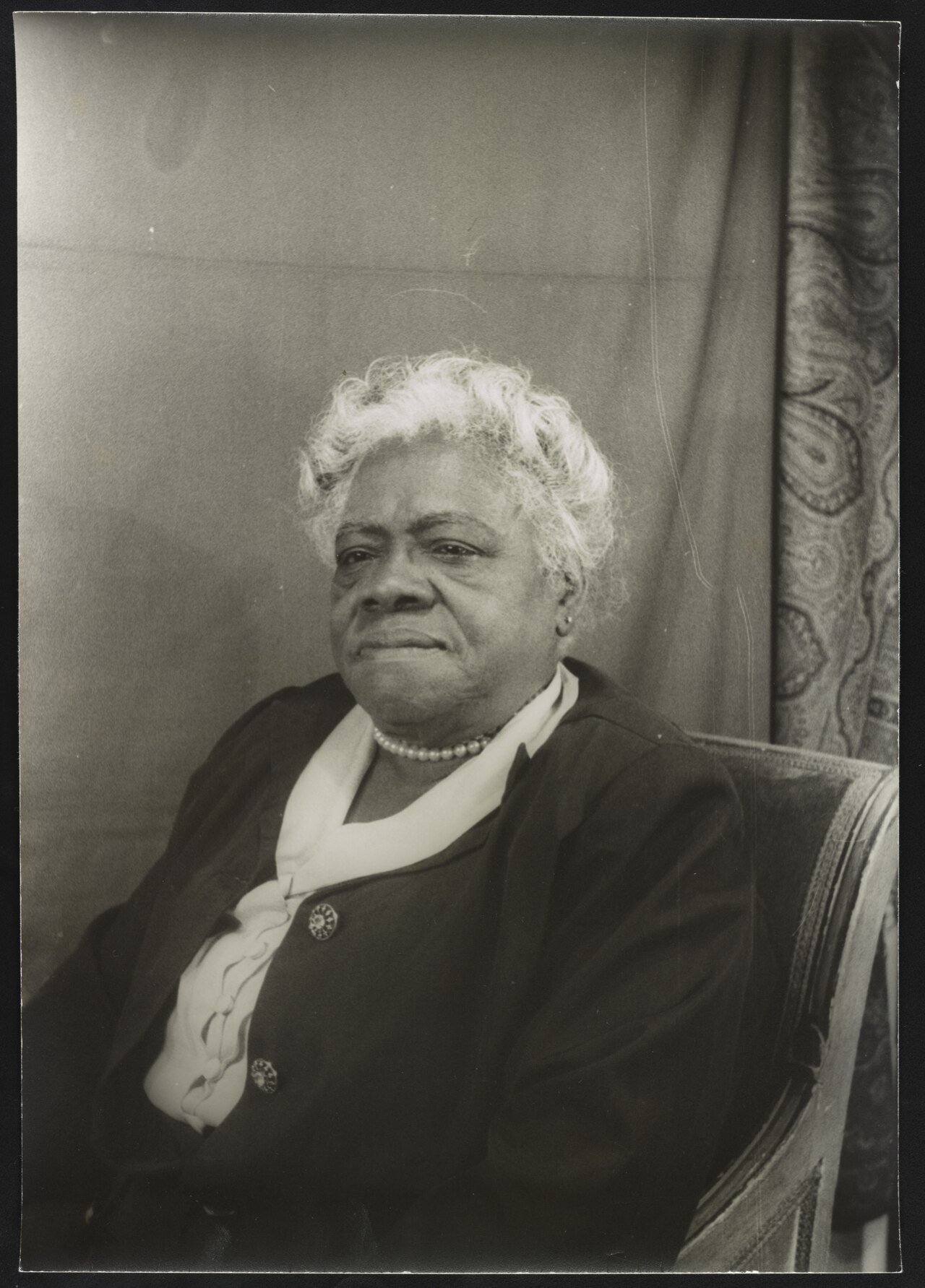
In 1904, Mary McLeod Bethune opened a school for Black girls in Daytona, Florida. She had six pupils, a rented building and just $1.50 to start. The school was small, but its purpose was ambitious: education could give girls tools to shape their own futures in a society built to restrict them.
Bethune’s work would grow beyond one classroom. She became an educator, institution-builder and national advocate, connecting the needs of students in Florida with debates about civil rights and opportunity across the country.
A school built from a practical idea
Bethune was born in 1875 in Mayesville, South Carolina, the fifteenth of 17 children in a family whose parents had been enslaved. She attended school and later studied at Scotia Seminary in North Carolina, an education that helped prepare her for a career in teaching. At the time, schooling for Black children was scarce and underfunded, particularly in the South.
After teaching in several places, Bethune settled in Daytona and started the Daytona Literary and Industrial School for Training Negro Girls. Its early work was hands-on as well as academic: the school aimed to educate girls and prepare them for independent lives. It expanded over time, eventually joining with the Cookman Institute for Men in 1923. The combined institution became Bethune-Cookman College, now Bethune-Cookman University.
That growth was not simply a matter of opening more classrooms. A school needed buildings, teachers and steady support. Bethune made institution-building part of her work, cultivating donors and public allies while remaining closely involved in the educational mission. The enterprise she began with a handful of students became a lasting college.
From education to national organizing
Bethune also understood that a school could not address every barrier its students faced. In 1935, she founded the National Council of Negro Women, bringing together organizations and leaders to work on issues affecting Black women and families. The council created a national platform for collaboration at a time when both racism and sexism limited access to political influence.
Her experience as an educator and organizer brought her into federal public service. During Franklin D. Roosevelt’s administration, she led the Division of Negro Affairs in the National Youth Administration, which worked on youth employment and education. In that role, she pressed for Black young people to be included in public programs. Her position gave her access to policymakers, but it also made her work part of a larger struggle over who benefited from government initiatives.
Bethune’s Washington home later served as the council’s headquarters. The house was more than a personal residence: it was a place where organizers could meet, plan and build relationships. Today, the National Park Service preserves it as the Mary McLeod Bethune Council House National Historic Site.
A legacy measured in institutions
Bethune’s story is often told as one of individual determination. But her lasting influence also rests on the organizations she helped create and sustain. A college continued educating students after its founder’s lifetime; a national council gave women’s groups a way to work together; and a historic house preserves a record of organizing as well as biography.
Her achievement was not that she overcame every obstacle—segregation and unequal access remained powerful realities. It was that she built durable places for learning and collective action within those conditions. The school that began with six girls became a university, while the organization she founded carried forward a national agenda. Bethune’s life shows how a local classroom can become the starting point for a much wider public contribution.