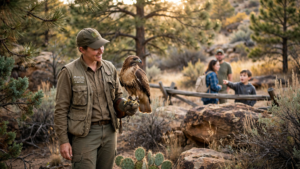
On Prescott’s western edge, where ponderosa pine gives way to open high-desert country, a quiet kind of public work is taking place behind the fences of Heritage Park Zoological Sanctuary. For related reading, see Heritage Park Zoological Sanctuary: The Prescott Place Where Wildlife Care Meets Public Education.
The sanctuary is home to animals that need permanent care rather than a temporary stop on the way back to nature. Some cannot be released because of injury, illness, human imprinting, or other circumstances that would make survival in the wild unlikely. Instead of presenting those animals as attractions alone, the Prescott facility uses their presence to explain a more complicated truth about wildlife: sometimes the most responsible form of conservation is long-term care.
That makes Heritage Park different from a traditional roadside menagerie and different, too, from a wilderness preserve where visitors might never see an animal. It is a place built around the meeting point between people and wildlife—a setting where visitors can learn about Arizona species while seeing the daily responsibilities involved in keeping them safe.
A sanctuary shaped by the high desert
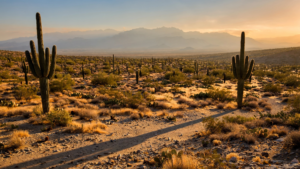
Heritage Park Zoological Sanctuary opened in 1988, according to the organization. Its location in Prescott gives the facility a distinctive environmental setting. At roughly 5,300 feet in elevation, the city sits in a transition zone where desert landscapes, grasslands, oak country, and pine forest begin to overlap.
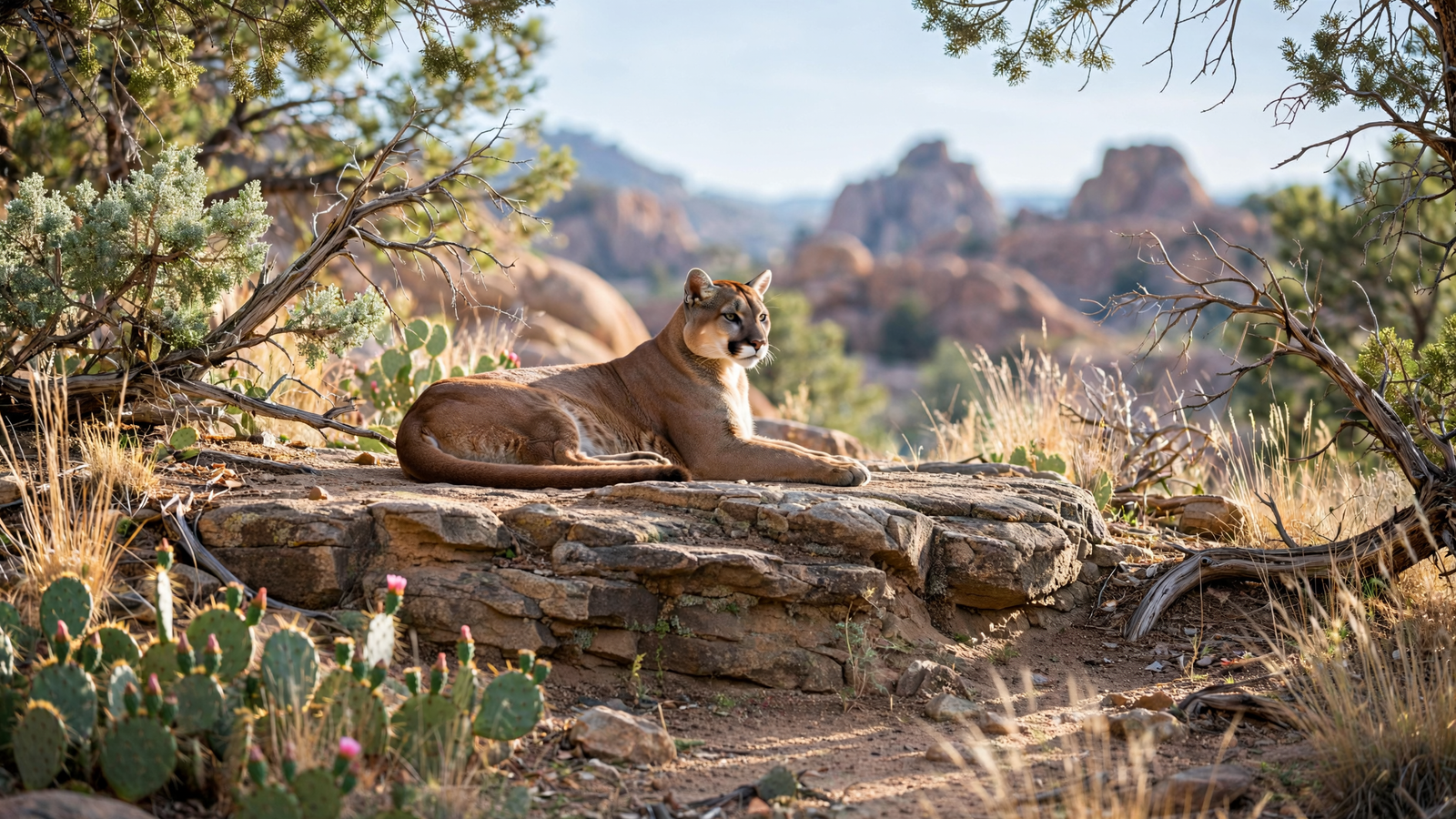
That landscape matters to the way visitors understand the animals. A mountain lion, black bear, bobcat, or raptor is not being presented against an abstract backdrop. The surrounding terrain resembles the broader ecological world many of these species inhabit in central Arizona, even though the animals themselves live in managed habitats.
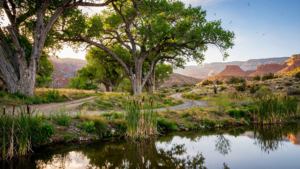
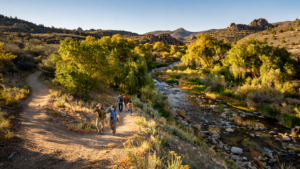
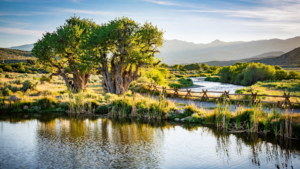
The sanctuary is part of Prescott’s Heritage Park, a large municipal recreation area near Willow Lake. The park’s trails, water, vegetation, and open views create a natural relationship between the zoo and the public landscape around it. A visit can therefore feel less like entering an isolated collection of exhibits and more like moving through a small, carefully managed piece of the region.
That connection also helps make the place useful to residents who may already know the high country well. The sanctuary does not have to take visitors far from town to begin a conversation about habitat, human development, road crossings, drought, wildfire, or the pressures facing animals that live near communities.
When returning an animal to the wild is not the right answer
Wildlife rehabilitation often aims at release. When a young animal is orphaned, an injured raptor is treated, or a sick mammal is found, the best outcome is usually a return to a suitable habitat with as little human dependence as possible.
But release is not always humane or safe. An animal may have lost the skills needed to find food, avoid danger, or recognize threats. A serious injury can make hunting or escaping predators impossible. Animals that have become too accustomed to people may also create risks for themselves and for the communities around them.
Heritage Park’s role begins with that difficult distinction. Its permanent residents are not simply animals waiting for a release date. The sanctuary provides food, veterinary attention, shelter, enrichment, and carefully designed spaces for animals whose circumstances require lifelong human care.
That work is easy for visitors to overlook because the most visible part of an animal sanctuary is the viewing area. Behind it are routines that do not make for dramatic photographs: preparing species-appropriate diets, monitoring behavior, cleaning habitats, checking barriers, maintaining shade and shelter, and watching for changes that might signal illness or stress.
The daily rhythm is part of the educational message. Wildlife care is not only about dramatic rescues. It is also about consistency.
Arizona animals, seen at a human scale
The sanctuary’s collection includes animals associated with Arizona and the broader Southwest, along with species whose stories help explain the responsibilities of modern wildlife care. Visitors may encounter large carnivores, smaller mammals, birds of prey, and other animals whose lives have been shaped by injury, captivity, or human contact.
For many people, the most valuable lesson is not a rare fact about a particular species. It is the difference between seeing wildlife and understanding wildlife.
A black bear can be visually impressive, but the larger lesson may involve food storage, garbage, and the ways human habits can draw bears into conflict. A mountain lion may inspire awe, while its story raises questions about habitat fragmentation and the need for animals to move through landscapes without encountering roads or dense development. A raptor can make the effects of injury visible, including the importance of avoiding litter, fishing line, and other hazards.
The sanctuary’s educational work gives those questions a physical setting. Instead of discussing wildlife only through a book or screen, visitors can observe body language, movement, feeding behavior, and the ways animals use space. That kind of observation can make ecological ideas more memorable, especially for children encountering them for the first time.
More than a place to look at animals
The organization describes its mission in terms of conservation, education, and the care of animals that cannot return to the wild. Those goals reinforce one another.
An animal in a permanent habitat becomes a living ambassador for its species, but the sanctuary’s strongest contribution may be the context surrounding the animal. Staff and interpretive materials can explain where a species belongs, what it eats, how it behaves, and what people can do to reduce harm.
That public-facing role is especially important in a region where homes, roads, recreation areas, and wildlife habitat meet. Prescott and the surrounding communities are close to forests, washes, rocky outcrops, and open country. Residents do not need to travel to a national park to encounter wildlife. They may see a raptor along a highway, a bear near a neighborhood, or a bobcat moving through a suburban edge.
A sanctuary cannot solve those conflicts by itself. It can, however, make the consequences easier to understand. Visitors leave with a clearer sense that wild animals are not lost pets, that feeding wildlife can create dangerous dependence, and that the best encounter is often the one that allows an animal to remain wild and undisturbed.
A place where conservation becomes personal
Large conservation efforts can feel distant. Habitat corridors, population surveys, species protections, and land-management plans are essential, but they often happen at a scale that is difficult to see during an ordinary week.
Heritage Park offers a more immediate entry point. A visitor can watch a resident animal move through its habitat, learn why release is not possible, and then connect that individual story to broader questions about the species beyond the fence.
That individual connection has limits. A sanctuary is not the wild, and no managed habitat can reproduce every choice or challenge an animal would face in its natural range. The value lies elsewhere: in making care visible, encouraging respect, and helping people understand that wildlife protection includes both free-ranging populations and animals whose lives have already been altered by people.
The distinction is an important one. Good wildlife education does not turn every animal into a symbol of human rescue. It acknowledges that intervention can be necessary while also emphasizing prevention—safer roads, responsible pet ownership, secure food and trash, protection of nesting areas, and the preservation of connected habitat.
Prescott’s small, durable wildlife institution
Places do not remain meaningful simply because they have been open for a long time. They remain meaningful when their work continues to answer a current need.
For Heritage Park Zoological Sanctuary, that need is unusually direct. Arizona’s communities continue to expand, people continue to explore wildlife country, and animals continue to encounter the consequences of human infrastructure. A local institution that can care for unreleasable animals while teaching visitors how to avoid creating more of those cases has a practical role in the region.
Its setting strengthens that role. The sanctuary is close enough for a school visit, a family outing, or a return trip by a local resident, yet its surroundings keep the high-desert landscape in view. The result is not a substitute for wilderness. It is a bridge to understanding it.
That may be Heritage Park’s most lasting contribution to Prescott: a place where compassion is paired with responsibility. The animals draw people through the gates, but the deeper lesson is about coexistence—how to admire wildlife without possessing it, how to help without making dependence worse, and how a community can make room for creatures whose lives no longer fit safely in the wild.
In a county known for forests, rivers, archaeological sites, and dramatic geology, Heritage Park adds another kind of place to the map. It is a working sanctuary, a classroom, and a reminder that conservation is often built from patient daily care.
Use: Organization history, mission, sanctuary role, animal care, and educational purpose.
Use: Municipal information about Heritage Park’s location and setting near Willow Lake.
Use: State wildlife-management context and background on responsible coexistence with Arizona wildlife.
Heritage Park Zoological Sanctuary — https://www.heritageparkzoo.org/ — Organization history, mission, sanctuary role, animal care, and educational purpose.
City of Prescott — Heritage Park — https://www.prescott-az.gov/parks/heritage-park/ — Municipal information about Heritage Park’s location and setting near Willow Lake.
Arizona Game and Fish Department — Wildlife — https://www.azgfd.com/wildlife/ — State wildlife-management context and background on responsible coexistence with Arizona wildlife.