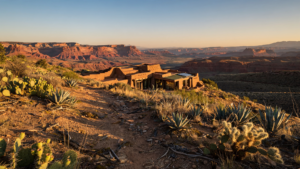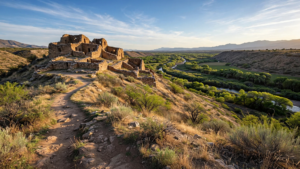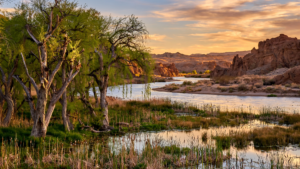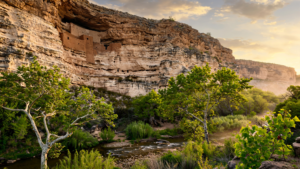
In the Verde Valley, the landscape changes quickly. Dry hills rise beyond the town of Cottonwood, but along the Verde River, cottonwoods gather in a green corridor that feels cooler, quieter, and more layered than the surrounding desert. For related reading, see Dead Horse Ranch State Park: The Verde Valley Place Where Water Makes Room for Everyone.
Dead Horse Ranch State Park sits inside that contrast. Its name sounds like a relic of the frontier, but the park’s lasting importance is less about western legend than about access: it gives people a place to encounter water, riparian forest, wildlife, and open sky without leaving town far behind. For related reading, see Jerome State Historic Park: How a Copper Town’s Mansion Became a Mountain Archive.
The park is one of those Arizona places that can serve several purposes at once. It is a camping destination, a fishing area, a starting point for walks, a family day-use landscape, and a small but meaningful refuge for plants and animals along the Verde. Its appeal does not depend on a single spectacular overlook. Instead, it comes from the way ordinary elements—ponds, shade trees, footpaths, birds, and flowing water—fit together. For related reading, see The Verde Canyon Railroad: How a Working Rail Line Became a Window Into Arizona’s Verde Valley.
From private ranch to public landscape
Arizona State Parks and Trails identifies Dead Horse Ranch as a 423-acre park developed after the state acquired the property in the 1970s. The park inherited its unusual name from the former ranch, continuing a local story into a new public chapter.
That change in ownership mattered because the property was not simply an empty patch of desert waiting for recreation facilities. It was already part of the Verde Valley’s working landscape, shaped by ranching, irrigation, roads, fields, and the river itself. Turning it into a state park preserved more than acreage. It kept a piece of the valley available for shared use as the surrounding communities grew.
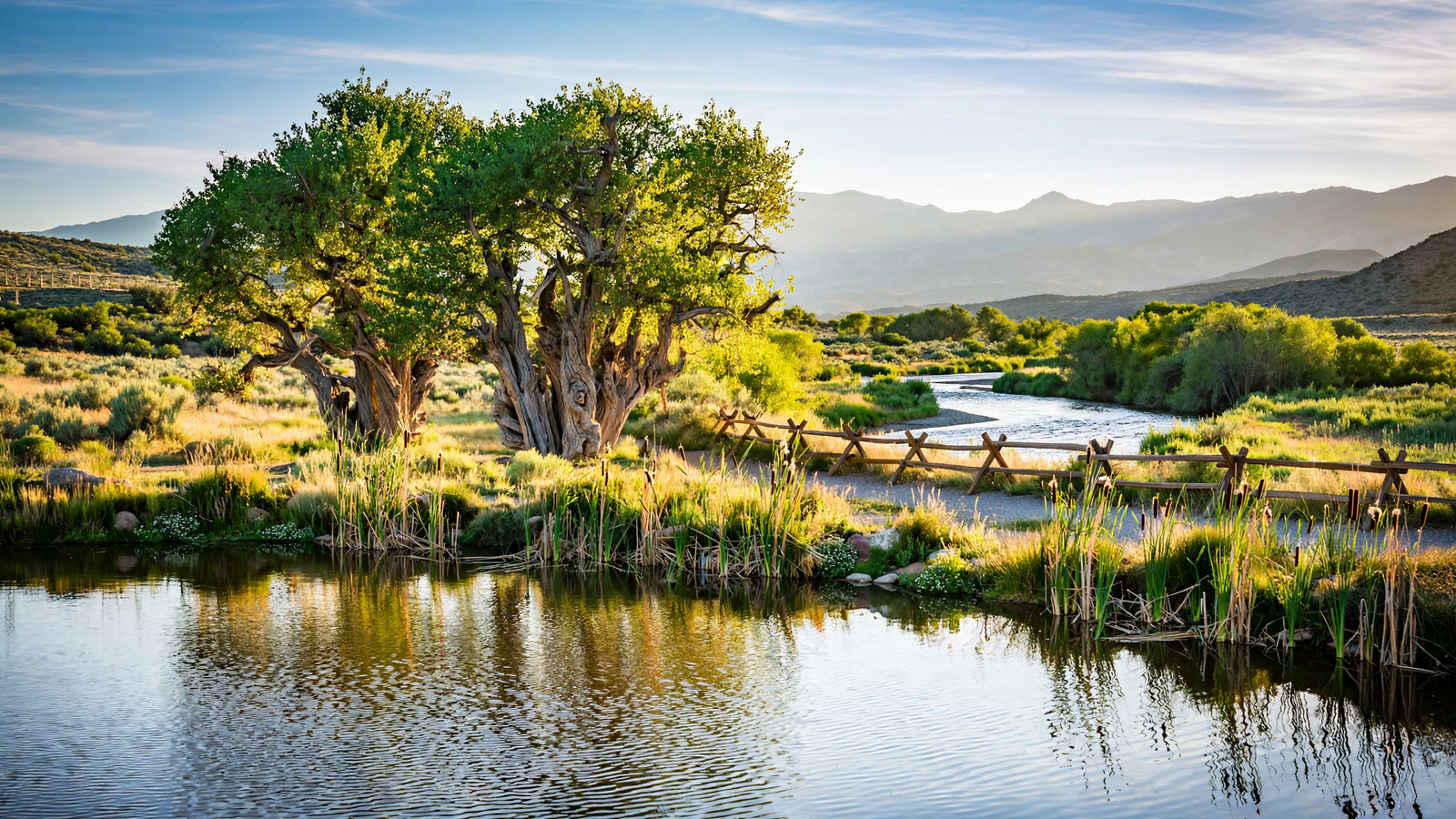
Today, the park’s character comes from the meeting of several landscapes. The Verde River forms its natural spine. Cottonwood and willow habitat provides shade and cover. Constructed lagoons create still-water environments beside the river. Dry uplands frame the scene, reminding visitors that this green pocket exists because water is moving through an otherwise arid region.
The result is a landscape that feels both cultivated and wild. It is not wilderness in the strict sense, and it was not left untouched. Its value lies in the careful coexistence of public recreation and river habitat.
The lagoons make the park distinctive
Dead Horse Ranch is especially known for its lagoons, which give the park a different rhythm from a typical desert trail system. Instead of walking only through open, sunlit terrain, visitors can move between water and woodland, watching the surface of a pond one moment and following the river corridor the next.
The lagoons support fishing and offer places to pause, observe birds, or simply experience the cooling effect of water in a high-desert setting. Arizona Game and Fish Department information lists the park among the Verde Valley’s fishing opportunities, with species and stocking practices varying by water body and season. Anglers should check current regulations before visiting, since licenses, limits, bait rules, and seasonal conditions can change.
For non-anglers, the lagoons are part of what makes the park approachable. A person does not need technical outdoor skills to appreciate them. A short walk beside calm water can become a lesson in how quickly habitat changes when shade and moisture are available.
That variety also makes the park useful for different kinds of visits. One group may arrive for a day outdoors, another for a weekend campsite, and another simply to watch the river corridor for an hour. The same setting can accommodate activity and stillness.
A green corridor in a desert valley
Riparian areas—places where land meets a river or stream—occupy a small portion of the Southwest but support an outsized share of its wildlife. Along the Verde, trees and water create conditions that are very different from the surrounding uplands. Birds can find cover and food. Mammals use the corridor as a travel route. Insects and aquatic organisms support a broader food web.
Visitors do not have to identify every species to notice the difference. The river corridor has its own soundscape: moving water, wind through leaves, and calls from birds hidden in the canopy. In warmer months, the shade can feel like a physical boundary between two climates. On a bright afternoon, a cottonwood grove offers a kind of relief that no amount of desert scenery can replace.
The park also helps people understand why rivers are important beyond their visible channels. A river is not only the water flowing between banks. It includes floodplain vegetation, pools, side channels, fallen trees, and the organisms that depend on periodic changes in water and sediment. A public park along the Verde makes those connections easier to see.
Because the area is developed for visitors, it also provides an accessible introduction to riparian ecology. Someone who has never visited a desert river can begin with a short walk around the lagoons or along the park’s river-side areas and then recognize similar patterns elsewhere in the Southwest.
A place for slow recreation
Many Arizona destinations are organized around a dramatic feature: a canyon, a mountain, a ruin, or a sweeping view. Dead Horse Ranch offers something quieter. Its strongest experiences often come from slowing down.
That might mean looking for movement in the reeds, noticing how the riverbank changes from open gravel to dense shade, or watching the late light settle over the water. The park rewards repeat visits because conditions are never exactly the same. Water levels, weather, bird activity, foliage, and temperature all alter the experience.
It is also a useful place for families and beginning visitors to build confidence outdoors. The presence of developed facilities and relatively accessible water features can make a first camping trip or fishing outing feel manageable. At the same time, the river corridor offers enough complexity to keep experienced visitors interested.
As with any desert waterway, comfort and safety depend on preparation. Summer heat can be severe even near the river. Shade is valuable but not universal, and visitors should carry water, protect themselves from the sun, and avoid assuming that a green landscape is a cool one. Conditions around water can change, and children and pets need close supervision near channels, ponds, and uneven ground.
The story the park keeps
Dead Horse Ranch State Park is not a museum of the Verde Valley, but it preserves a readable part of the region’s story. The former ranch name remains. The river still organizes the landscape. The lagoons show how people have adapted the property for public use. The cottonwoods reveal the ecological power of water in a dry place.
That combination makes the park more than a recreation stop. It is an example of conservation through continued public presence. A state park can protect land not only by closing it off, but also by giving people a responsible way to know it. Trails, campsites, fishing areas, and interpretive experiences can turn an abstract idea—“protect the river corridor”—into something visitors understand through their senses.
The park’s larger lesson is easy to miss because it is so practical: valuable places do not always begin as grand landscapes. Sometimes they are working properties beside a river, acquired at the right moment and cared for over time. Their importance grows through ordinary visits—an afternoon beside a lagoon, a family’s first campout, a walk beneath cottonwoods, or a quiet look at the Verde.
In a county known for dramatic geology and historic towns, Dead Horse Ranch State Park offers a different kind of destination. It shows how a modest river property can become a shared landscape, one where recreation and habitat support each other and where the Verde Valley’s most precious resource—water—remains visible in everyday life.
Planning a visit
- Check the official Arizona State Parks and Trails listing for current hours, fees, camping information, reservations, and alerts.
- Bring water, sun protection, and footwear suited to uneven or wet ground, even when visiting only for a short walk.
- If fishing, review current Arizona Game and Fish Department rules, licenses, seasonal information, and any water-specific limits.
- Stay on established routes where posted, keep pets controlled, and avoid disturbing birds, vegetation, and riverbank habitat.
- Consider visiting at a quieter time of day, when the lagoons and cottonwood corridor are often best suited to observation.
Use: Park history, acreage, landscape, lagoons, recreation, camping, and visitor-planning information.
Use: General Arizona fishing guidance and verification that fishing information and regulations should be checked by location and season.
Use: Background on the Verde River watershed and the importance of water quality in the region.
Arizona State Parks and Trails — Dead Horse Ranch State Park — https://azstateparks.com/dead-horse/ — Park history, acreage, landscape, lagoons, recreation, camping, and visitor-planning information.
Arizona Game and Fish Department — Fishing in Arizona — https://www.azgfd.com/fishing-2/where-to-fish/ — General Arizona fishing guidance and verification that fishing information and regulations should be checked by location and season.
Arizona Department of Environmental Quality — Verde River watershed information — https://azdeq.gov/verde-river — Background on the Verde River watershed and the importance of water quality in the region.