There are places in Yavapai County that ask visitors to hike, climb or look for a trailhead. The Verde Canyon Railroad offers a different invitation: sit down, watch the landscape move past the window and let an old working route explain the valley.
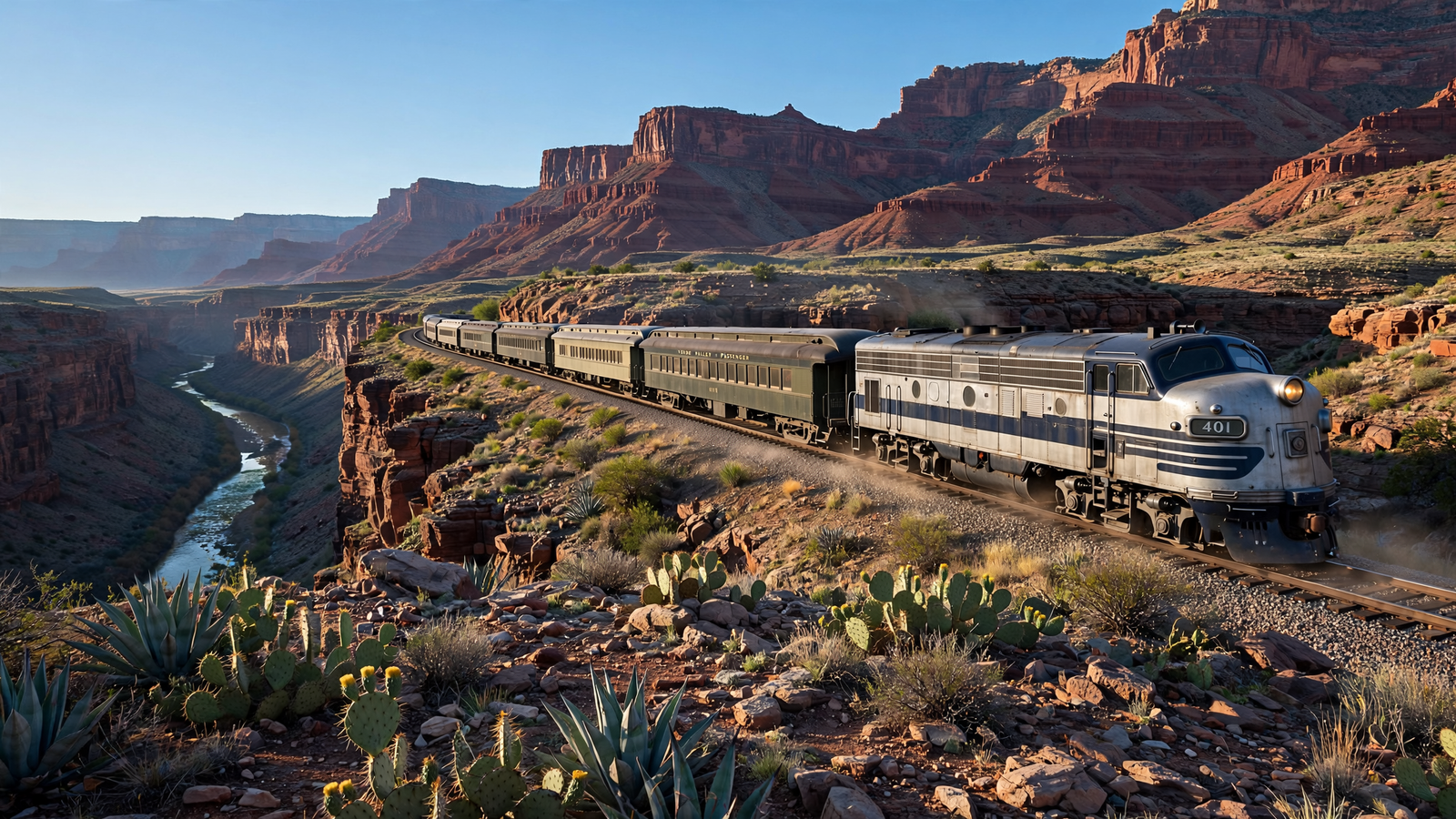
The excursion railroad runs between Clarkdale and Perkinsville along a remote stretch of the Verde River. Its tracks pass through a landscape of red-rock walls, cottonwood-lined water, open desert and steep canyon country that is difficult to reach by ordinary road. The journey is not simply a scenic ride. It is also a moving lesson in how railroads, mining and river corridors helped shape the Verde Valley.
A railroad built for copper
The line’s story begins in the early 20th century, when northern Arizona’s mining economy needed dependable transportation. The Verde Valley Railway was constructed in 1912 to connect the mining and smelting operations around Jerome and Clarkdale with the wider rail network. The route carried copper and other freight through the valley, linking industrial sites with markets beyond the region.
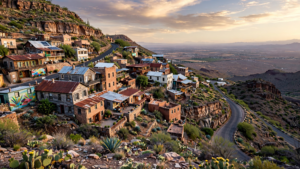
Clarkdale itself grew as a company town associated with the United Verde Copper Company and its smelter. Jerome, built high on Cleopatra Hill, supplied the ore; Clarkdale processed it; and the railroad helped move materials and finished products. The tracks also served ranching communities and isolated settlements along the Verde River.
Mining eventually declined, but the railroad corridor remained. That survival matters because many historic transportation routes disappear when the industry that created them ends. In the Verde Valley, the rail line continued to connect communities even as its economic purpose changed.
From freight route to scenic journey
Modern passenger excursions began in 1990, giving the public access to a section of the railroad that had long been primarily a freight route. The train now travels roughly 20 miles each way between Clarkdale and Perkinsville, following the Verde River for much of the trip.
The experience is deliberately slower than a highway drive. There is no need to navigate winding roads, search for a safe overlook or keep one eye on traffic. The route creates a long, continuous view of the valley: cliffs appear and recede, river habitat opens below the tracks, and the colors of the canyon change with the light.
That pace is part of the appeal. A road trip usually breaks the landscape into destinations. A train ride makes the route itself the destination.
Why the river is the heart of the trip
The Verde River gives the railroad journey much of its character. In a dry state where watercourses often appear seasonal or heavily altered, the Verde remains one of Arizona’s important perennial rivers. Its corridor supports cottonwood and willow vegetation, wildlife habitat and a cooler, greener ribbon through the surrounding desert.
From the train, passengers may see a landscape that changes in surprisingly small distances. River-bottom vegetation gives way to exposed rock. Narrow canyon walls open into broader views. The line passes through country shaped by water, volcanic geology and long periods of erosion.
The railroad does not replace a wilderness hike or a river trip. Instead, it offers a lower-effort way to observe the relationship between the river and the uplands. For travelers who cannot manage a strenuous trail, or for families seeking a shared experience across generations, that accessibility is meaningful.
A place where history remains visible
The Verde Canyon Railroad is especially interesting because its history has not been separated from the scenery. The track alignment, bridges, grades and old railroad structures are part of the view. The train’s route still reflects decisions made for freight movement more than a century ago.
Perkinsville, the northern end of the excursion, began as a small ranching and railroad community. The settlement is not a conventional tourist town, and the train does not function as a hop-on, hop-off transit service. That distinction helps preserve the sense that passengers are traveling through a working landscape rather than moving between a series of themed attractions.
The railroad also helps explain why Clarkdale, Jerome and the Verde Valley are connected even though they occupy very different terrain. Jerome’s mines, Clarkdale’s industrial base, the river settlements and the broader rail system were parts of one regional economy. The scenery is beautiful, but it was also infrastructure: a route for ore, supplies, workers and communication.
What passengers can expect
The standard excursion is a round trip lasting about four hours. The train departs from the Clarkdale depot, travels north along the river and returns to the same area. Because the route is an out-and-back journey, passengers can view the landscape from both directions, although the lighting and perspective change during the trip.
Passenger cars generally include enclosed seating, large windows and outdoor viewing areas. The railroad also operates upgraded seating options on some departures. Amenities, schedules and access rules can change, so visitors should confirm current details directly with the railroad before planning a trip.
Spring and fall are often especially comfortable times to explore the Verde Valley, while summer brings stronger heat to the surrounding region. The railroad operates on a seasonal schedule, and departures may vary by month. A reservation is wise, particularly during popular travel periods and on specialty excursions.
- Start in Clarkdale: The depot is the primary boarding point and is close to the Verde Valley’s mining and industrial history.
- Allow several hours: This is a full excursion rather than a short shuttle ride.
- Dress for changing conditions: Temperatures can differ between open-air viewing areas and enclosed cars.
- Bring binoculars if useful: The river corridor, cliffs and broad canyon views reward patient observation.
- Check current policies: Schedules, food service, accessibility arrangements and special departures are subject to change.
A quieter way to understand the Verde Valley
Scenic railroads can be easy to dismiss as entertainment detached from local life. The Verde Canyon route resists that description because the entertainment grew from an actual transportation corridor. Its views are not assembled for the train. The train is passing through a landscape that has its own history, ecology and ongoing uses.
That makes the journey useful for first-time visitors and longtime Arizona residents alike. Someone new to the region can see how the river organizes the valley. A history-minded traveler can follow the physical traces of mining and rail transportation. A family can spend time together without dividing its attention between a trail map and a steering wheel.
The ride also encourages a form of travel that is increasingly rare: looking closely without trying to hurry. The Verde Valley is often approached through its famous towns, ruins and red-rock views. The railroad reveals another layer, one measured in river bends, bridge crossings and the gradual change from industrial Clarkdale to the more remote country near Perkinsville.
The lasting value of an old route
The Verde Canyon Railroad does not preserve the past as a frozen display. It keeps an old corridor in use, giving visitors a direct encounter with the infrastructure that once supported northern Arizona’s copper economy. At the same time, the journey draws attention to the Verde River and the habitats that make the valley more than a mining landscape.
That combination is what makes the railroad an enduring Yavapai County place. It is a historic route, a scenic overlook that keeps moving and an accessible introduction to one of Arizona’s most distinctive river valleys. For travelers willing to let the landscape set the pace, the train offers a memorable way to see where the Verde Valley came from—and what still holds it together.