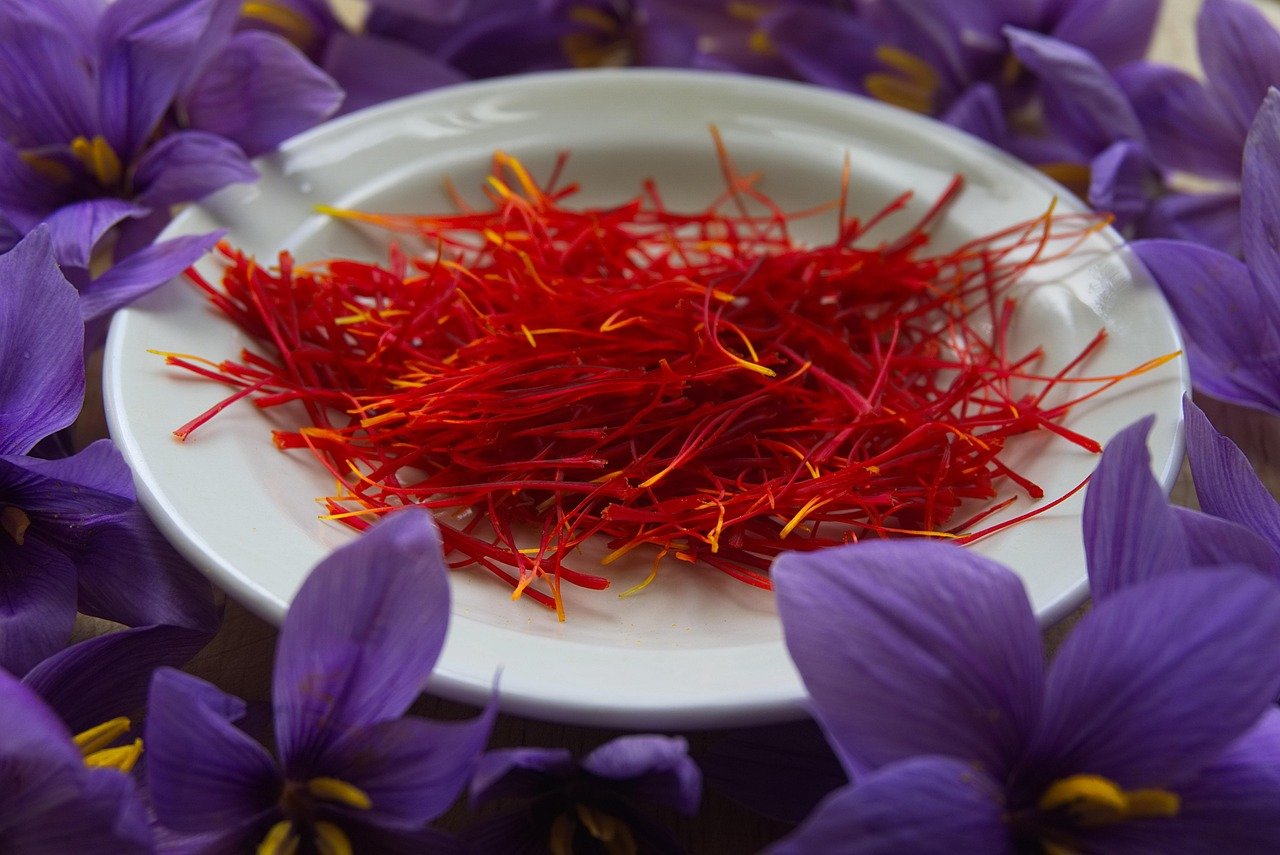
Saffron is harvested from a crocus, but not the familiar spring-flowering kind. Crocus sativus blooms in autumn, sending up flowers whose three vivid red stigmas are picked and dried to make the spice. Growing it at home is possible in a sunny, well-drained spot—and its unusual flowering season gives a garden a second burst of crocus color.
The first useful distinction is botanical: saffron crocus grows from a corm, a compact underground storage stem, rather than a true bulb. In ordinary gardening conversation, the two are often grouped together, but the distinction helps explain why planting stock is sold as corms and why the plants are multiplied by growing new corms.
Choose the right corms and planting time
Buy corms labeled Crocus sativus from a reputable nursery or specialist supplier. Saffron is not made from the stigmas of every crocus, and a plant’s name matters if you intend to harvest it for the kitchen. The Royal Horticultural Society recommends planting saffron crocus corms in late summer. In practice, follow the supplier’s local planting calendar: climate and the timing of the plant’s autumn growth differ around the world.
Choose firm corms without obvious soft or damaged patches, and plant them soon after purchase rather than leaving them in storage for an extended period. A sunny position is best. The key soil requirement is drainage: corms in ground that stays wet are more vulnerable to rotting. If your garden has heavy soil, a raised bed or container with drainage holes can make it easier to control conditions.
Plant for sun and drainage
RHS guidance gives a planting depth and spacing of about 10 centimeters (4 inches). Set each corm with its pointed end upward, cover it with soil, and water to settle the planting if the ground is dry. Avoid planting into a spot where water collects after rain. In a pot, use a free-draining growing medium and make sure excess water can escape; a decorative outer pot should not leave the planted pot standing in water.
Planting in a small group makes the autumn flowers easier to notice and harvest. It also makes it simpler to keep track of the bed when the plants are dormant. Mark the area, especially if you expect to work the soil in summer. Once planted, leave the corms undisturbed while they are growing rather than digging around them to check progress.
Container growing can suit a patio or a garden with poorly drained soil, but pots dry out more quickly than beds. Check them during dry spells, particularly while plants are in active growth. Aim for evenly moist—not waterlogged—soil. There is no need to keep a dormant pot constantly wet.
Let the foliage do its work
The crocus’s seasonal rhythm is different from that of spring bulbs: flowers appear in autumn, and narrow leaves may grow alongside or after them. Once flowering is over, keep the leaves intact while they remain green. They help replenish the corm for the next growth cycle. Trim them only after they have yellowed and died back naturally.
Over time, a corm can produce smaller replacement corms, creating a clump. If flowering becomes crowded or weak, lifting and dividing established corms during their dormant period may help. Replant healthy corms promptly in prepared soil. The exact interval depends on growing conditions, so treat declining bloom or crowding as a reason to inspect rather than following a rigid yearly schedule.
Harvest the stigmas gently
Flowers open in autumn, and the harvest window is brief. Pick flowers when they are fresh, then separate the three red stigmas from each flower. Clean tweezers can make the delicate work easier. The vivid red strands—not the yellow pollen-bearing parts—are the portion used as saffron.
A home planting is best approached as a small, hands-on harvest, not a guaranteed supply of spice. Each flower provides only a few stigmas, and the total harvest depends on how many corms flower and how well they grow. A cluster that brightens a garden may still yield only a modest amount for cooking.
Dry the collected stigmas thoroughly and store them in a clean, airtight container away from light and moisture. For food use, be certain the plant is correctly identified as Crocus sativus; don’t eat an unfamiliar ornamental simply because it resembles a crocus. If you are unsure about a plant or its source, enjoy the flowers as ornamentals and leave the harvest to a clearly identified planting.
A small crop with a long season
Saffron crocus rewards gardeners who can offer sun, drainage and a little patience. Its autumn flowers arrive when many summer displays are fading, while careful leaf care supports the next cycle underground. Start with a few corms, learn how they perform in your conditions, and expand only if the planting thrives. The result is not necessarily a jar full of spice—but it is an unusual seasonal flower with a harvest that connects a home garden to one of the world’s best-known seasonings.