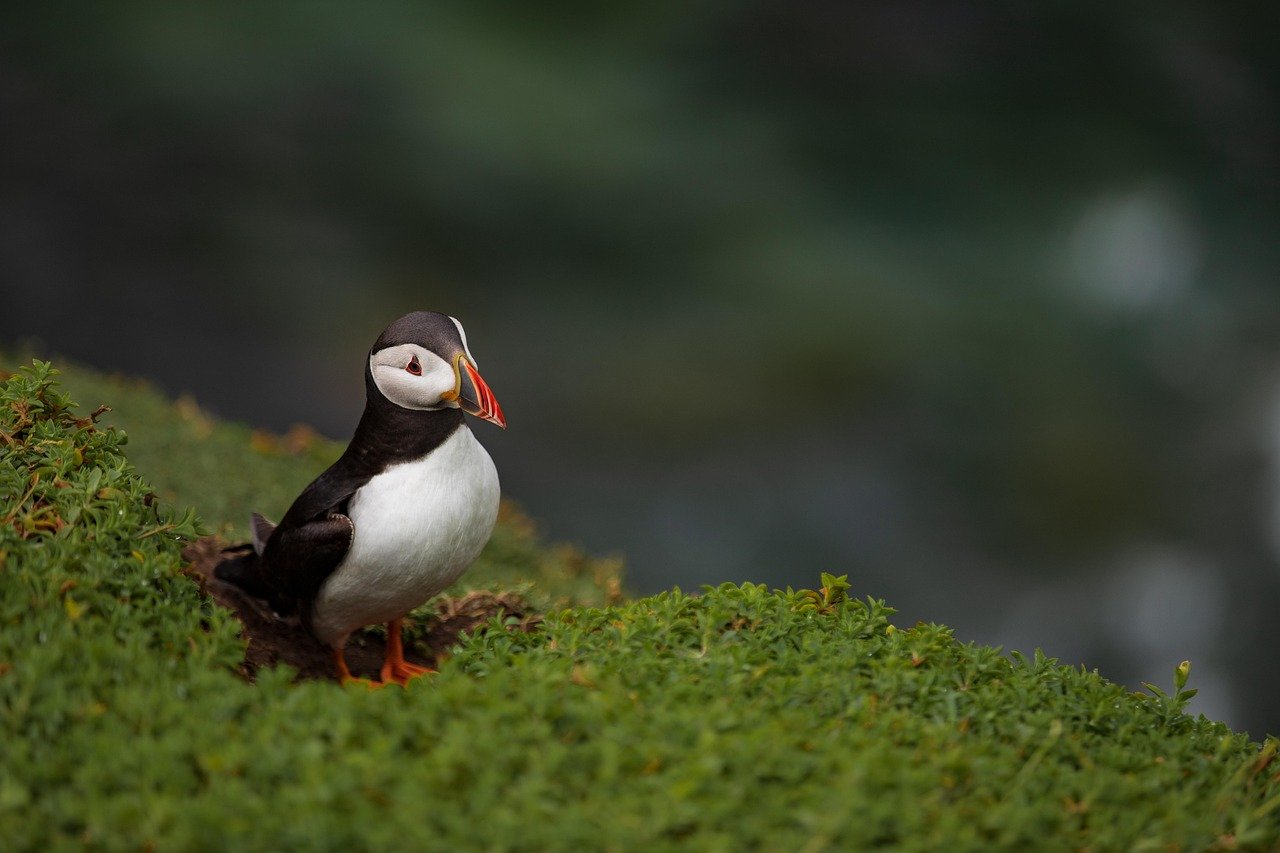
For a bird whose future has been clouded by warming seas, shifting food supplies and other threats, a handful of islands around Britain and Ireland are offering a reason for guarded optimism. Targeted conservation on small, discrete breeding sites — from removing mammalian predators to protected reserves and careful monitoring — has helped produce clear local rebounds in Atlantic puffin numbers in recent years.
Counted comebacks on island colonies
On Scotland’s Isle of May, scientists from NatureScot and the UK Centre for Ecology & Hydrology reported an all‑island burrow count in 2024 that estimated roughly 52,000 occupied puffin burrows, a 33% rise from the previous full survey in 2017. The agencies cautioned that the figure masks variability and that broader marine pressures still threaten the species, but the island’s long‑term monitoring records make the shift visible and measurable. ([ceh.ac.uk](https://www.ceh.ac.uk/press/puffin-numbers-increase-isle-may))
Further west, Skomer Island’s own full‑island counts recorded more than 41,600 individual puffins in 2024 — nearly 19% higher than the five‑year mean for that well‑surveyed Welsh reserve. Skomer’s results underscore how protected island habitats can sustain large auk colonies when local conditions are favorable. ([welshwildlife.org](https://www.welshwildlife.org/sites/default/files/2025-04/Skomer%20Island%20Bird%20Report%202024.pdf))
Longer‑term restoration work offers a second kind of success story. Lundy Island in the Bristol Channel was declared rat‑free in 2006 after a multi‑partner eradication programme. In the years since, Lundy’s seabird populations have grown substantially: the island now hosts tens of thousands of nesting seabirds and, by recent counts, more than a thousand puffins where numbers once fell to the low tens. The Lundy case is frequently cited as a model for how removing invasive mammals from breeding islands can allow burrow‑nesting species to recover. ([landmarktrust.org.uk](https://www.landmarktrust.org.uk/lundyisland/news-and-events/latest-news/lundy-seabirds2/))
On Rathlin, removal of invasive predators is changing the outlook
Rathlin Island off the coast of Northern Ireland offers a current example of active restoration. The multi‑partner LIFE RAFT project has been removing non‑native predators in stages; monitoring already shows improved breeding success and rising puffin counts. A Northern Ireland seabird report estimated Rathlin’s puffin population at about 1,719 individuals in mid‑June 2025 — a notable increase on counts from previous years — and project partners report early signs of other seabirds returning to use restored burrows. These results show how large, carefully run eradication and biosecurity programmes can deliver measurable benefits for burrow‑nesting seabirds. ([bto.org](https://www.bto.org/sites/default/files/northern-ireland-seabird-report-2025.pdf))
Why islands, and why the caution?
Island refuges are effective because they let conservationists tackle problems that are hard or impossible to solve at sea — chiefly invasive mammalian predators and local disturbance. When those pressures are removed, burrow‑nesting auks like puffins often respond quickly if food near the colony is adequate. But puffins remain vulnerable to broader marine changes: sandeel and small forage fish availability, marine heatwaves and extreme storms all affect adult survival and chick production. That means local successes do not yet equal recovery across the species’ whole North Atlantic range; they are, however, practical proof that well‑designed, site‑specific work can make a big difference. ([bto.org](https://www.bto.org/sites/default/files/bto-jncc-rspb-seabird-montoring-programme-annual-report-2024.pdf?utm_source=openai))
What comes next
Conservationists say the next steps are clear: maintain biosecurity and predator‑control gains on restored islands, combine island work with fisheries and marine management that supports puffins’ food supplies, and keep consistent monitoring so managers can detect changes quickly. For now, these island stories — Skomer, Isle of May, Lundy and Rathlin among them — are practical, hopeful examples of conservation delivering results where it can act decisively. ([welshwildlife.org](https://www.welshwildlife.org/sites/default/files/2025-04/Skomer%20Island%20Bird%20Report%202024.pdf))