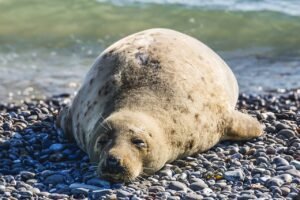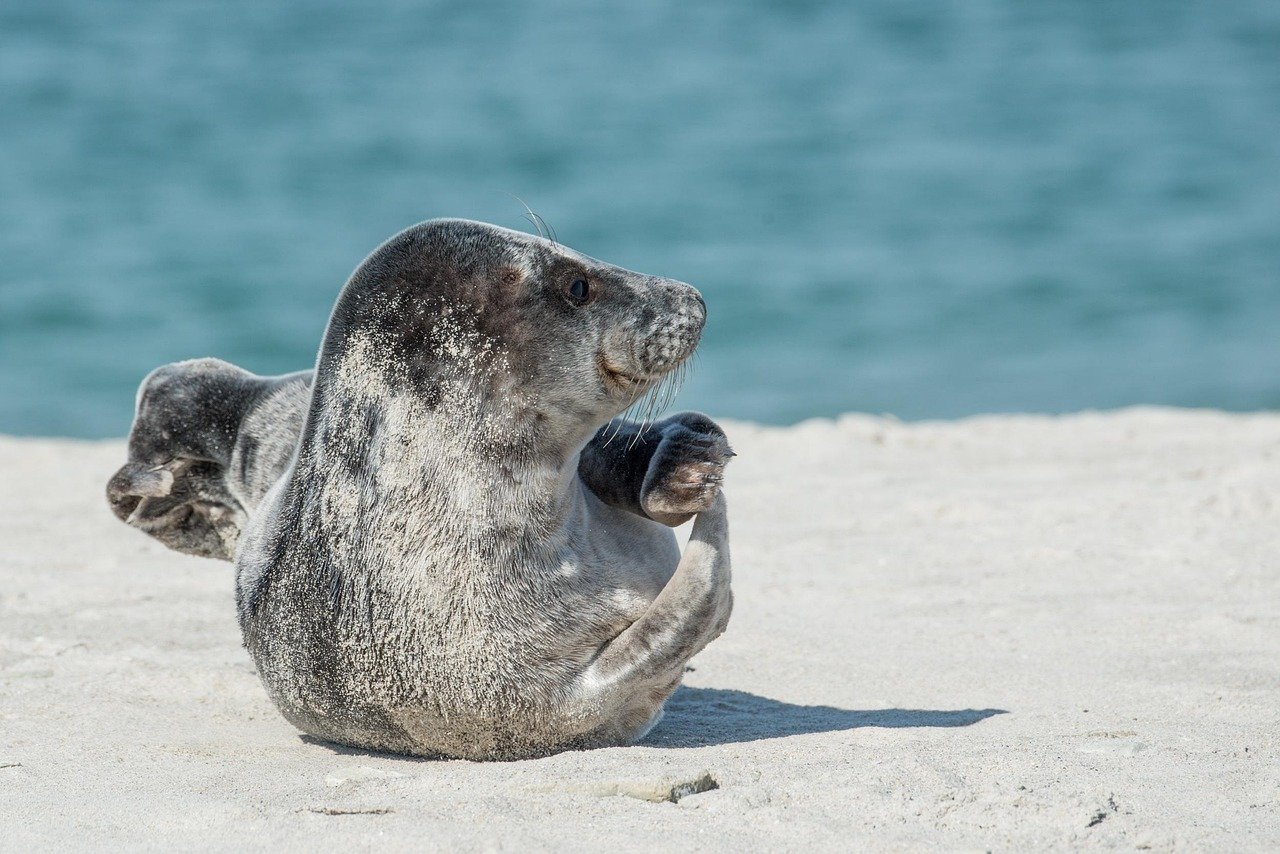
On a quiet beach in Hawaiʻi, a monk seal may look like it has simply found a comfortable place to rest. But a seal stretched out on the sand is part of a much larger story: the gradual return of a species that came close to disappearing from the islands.
Hawaiian monk seals are among the rarest seals in the world and the only seal native to Hawaiʻi. NOAA Fisheries estimates that about 1,600 remain in the wild. That is a hopeful change from the especially low numbers recorded in recent decades—but it does not mean the species is out of danger. Its recovery has been slow, differs between parts of the archipelago and depends on continued protection.
A seal spread across a vast island chain
The species’ scientific name is Neomonachus schauinslandi. Its home stretches from the main Hawaiian Islands far northwest through a long chain of smaller islands and atolls. Many monk seals live in the remote Northwestern Hawaiian Islands, while a smaller population occupies the main Hawaiian Islands, where people are more likely to encounter them on beaches.
That geography matters. The seals do not all face the same conditions. In the remote northwestern part of their range, young seals have historically faced serious survival challenges, including limited access to food in some areas. Around the main islands, the population has grown, but seals can encounter fishing gear, marine debris, disease and people who get too close.
Monk seals need more than a safe place to haul out. They forage at sea, often over reefs and other underwater habitat, and return to land to rest, give birth and nurse their pups. A conservation plan therefore has to work across both worlds: the water where hazards may be hard to see and the shore where a resting animal can be disturbed.
Recovery built one intervention at a time
There is no single dramatic moment that explains the species’ progress. Instead, its recovery reflects years of monitoring and practical responses to specific risks. NOAA’s Hawaiian Monk Seal Research Program tracks seals, assesses their health and coordinates conservation work across the islands.
When a seal is entangled in fishing line or marine debris, trained responders may be able to remove it. Teams also monitor animals that are injured or in poor condition, and some seals receive care when they need treatment. In places where young seals face particular survival pressures, conservation workers have used interventions such as moving vulnerable pups to safer locations. These measures cannot remove every threat, but they can give individual animals a better chance to survive.
Monitoring is essential to that work. Researchers identify and follow seals over time, gathering information about where they live, whether they are healthy and how populations change. That evidence helps conservation teams decide where action is most needed and whether a response is working. It also helps distinguish a local improvement from a recovery across the species’ full range.
What a growing population does—and does not—mean
The overall number is encouraging, but it should be read with care. A population can rise while still remaining small and vulnerable. Hawaiian monk seals are spread across isolated sites, and a gain in one area does not automatically mean that seals elsewhere have overcome their challenges.
The species also shares its habitat with people. Fishing gear and discarded line can injure seals; marine debris can entangle them; and close approaches on shore can interrupt rest or place animals and people at risk. NOAA advises the public to give seals space and follow posted or agency guidance when one comes ashore. That simple response helps protect the animal while letting trained staff assess whether intervention is needed.
For residents and visitors, the most useful role is often restraint rather than rescue. Keep a respectful distance, do not feed or touch a seal, and report an animal that appears injured or entangled to the appropriate wildlife authorities. A resting seal is not necessarily in trouble, and an untrained attempt to help can make a situation worse.
A conservation success still in progress
Hawaiian monk seals show what recovery can look like when it is measured in years of careful work rather than a single headline. The species remains endangered, and its future is not guaranteed. Yet an estimated population of about 1,600—along with sustained monitoring and targeted help for animals in danger—offers a real reason for cautious optimism.
The seals’ story also makes conservation concrete. A population estimate is built from observations of individual animals: a pup that survives, an entanglement removed, a beach where people give a mother and pup room. None of those actions solves every problem. Together, though, they help keep a rare native species present across the island chain it calls home.