A Japanese beetle trap looks like a tidy solution: hang a lure, collect the insects and protect the garden. But the lure can draw beetles toward an area without catching every one. For a small yard, that may mean more beetles arriving to feed on nearby plants.
The trap’s appeal is understandable. Adult Japanese beetles are conspicuous, and their feeding can turn leaves into a lacework of veins. Yet effective control starts with a less dramatic step: identify the insect, check where the damage is happening and choose a response suited to that stage of its life.
One insect, two different garden problems
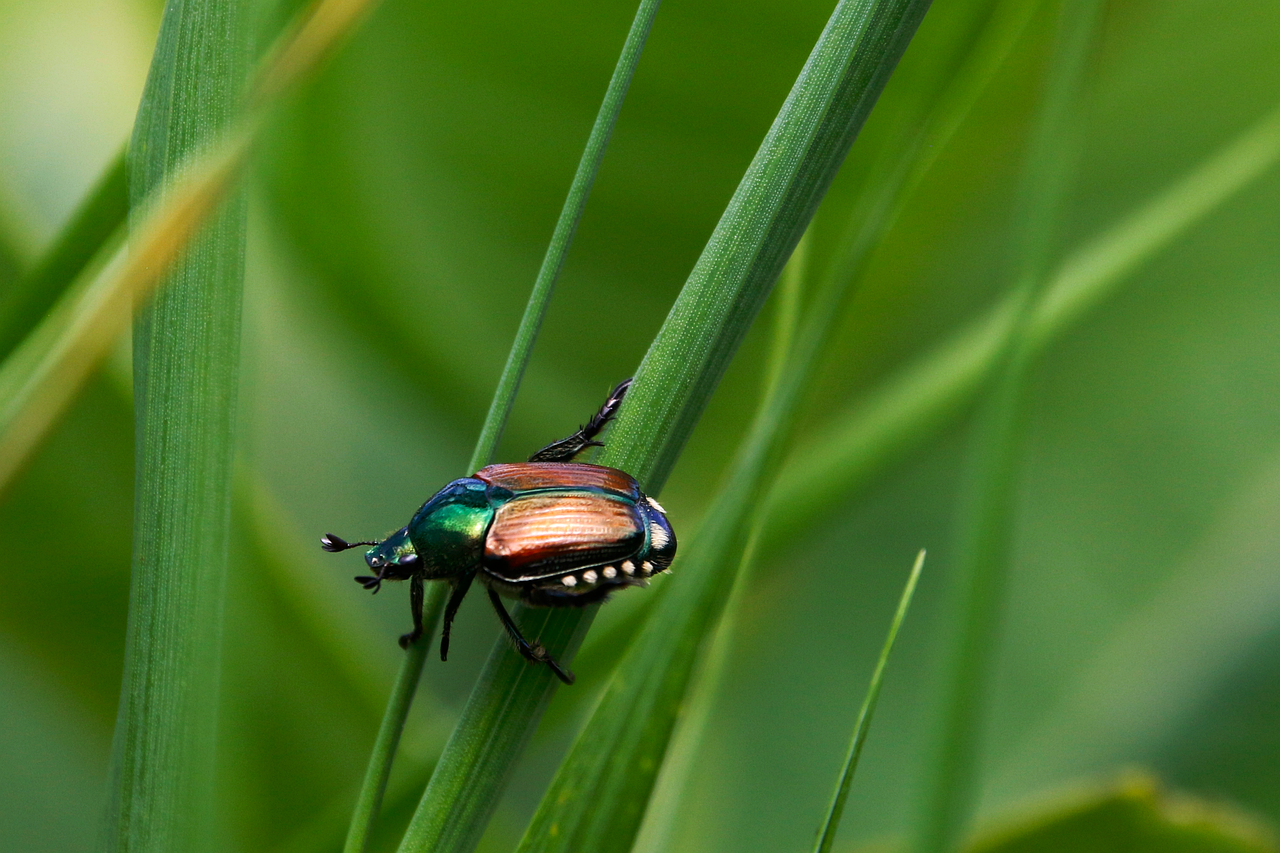
Japanese beetles have an above-ground adult stage and a soil-dwelling immature stage, or grub. Adults feed on the foliage, flowers and fruit of many plants. They typically chew the soft tissue between leaf veins, leaving a skeletonized appearance. A metallic green body, coppery wing covers and small tufts of white hairs along the sides can help distinguish the beetle.
Grubs live in soil and feed on grass roots. Their presence does not automatically mean a lawn needs treatment: the useful question is whether there is meaningful turf damage and whether Japanese beetle grubs are actually responsible. Brown or thinning patches can have other causes, so checking the lawn before applying a product matters.
That difference helps explain why one general-purpose fix rarely solves both problems. A treatment aimed at lawn grubs will not remove adult beetles already eating a rose, and removing adults from a shrub will not establish that a lawn has a damaging grub population.
Why a trap may not protect the plants beside it
Japanese beetle traps use attractants to draw in adults. University extension guidance cautions that traps can attract beetles from the surrounding area and may increase feeding near the garden if some insects are not captured. They can still be useful for monitoring or collection in an appropriate setting, but they are not a dependable shield for prized plants when placed beside them.
If you use a trap, follow its directions and think carefully about placement. A trap positioned next to the plants you want to protect defeats the purpose. In a small garden, skipping the trap and dealing with beetles directly may be the more practical choice.
Start with the least disruptive response
For a manageable number of adults, hand-picking is a straightforward option. Check plants regularly, especially when beetles are actively feeding, and drop the insects into a container of soapy water. Early morning can be a useful time to collect them, when beetles are less active. Repeat checks matter: removing the insects you see does not prevent more from arriving.
If a plant is being heavily fed on, temporary row covers or other physical barriers may help protect it during the beetles’ active period. Covers also keep pollinators away, so they should not be left over flowering plants that need insect visitors. Consider the plant’s role and remove the barrier when it is no longer useful.
It can also help to look at the whole planting rather than trying to make every leaf flawless. Where practical, choose a mix of plants and avoid concentrating especially susceptible plants in one small area. That will not make a garden immune, but it can reduce reliance on repeatedly treating every visible beetle.
Treat the lawn only when the evidence supports it
Grub control is a separate decision. If turf is thinning or lifting easily, inspect a small area of soil and roots to identify what is there before choosing a treatment. Different white grubs can look similar, and lawn stress can result from drought, disease or other problems. A local university extension service can help with identification and advice suited to regional timing.
Integrated pest management, or IPM, is a useful framework: monitor first, identify the pest, consider how much damage it is causing, and use the least disruptive effective option. If a pesticide is warranted, follow its label exactly, including instructions about where and when it can be used. Avoid spraying flowering plants when bees or other pollinators may be exposed.
Japanese beetles are persistent, and no single tactic promises a beetle-free garden. But distinguishing leaf damage from lawn damage, resisting the temptation to put a lure beside vulnerable plants, and checking before treating can make the response more precise. The best first move may be less about catching every beetle—and more about finding out which problem you actually have.