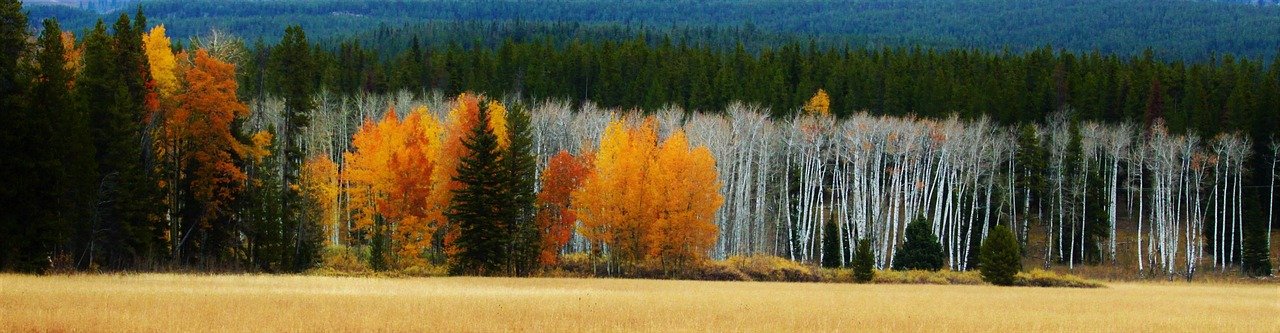
From a distance, Pando looks like a stand of quaking aspens: pale trunks, round leaves and a canopy that flickers in the wind. But the trees are connected underground. Pando is a single genetic individual—a clone that sends up many stems from a shared root system—in Fishlake National Forest in Utah.
The name means “I spread,” and the spread is easy to miss because each stem looks like a separate tree. Aspen commonly reproduce in two ways: seeds can grow into new trees, and roots can send up shoots called suckers. In a clone such as Pando, those shoots are genetically alike and linked through the roots. The visible trunks are the parts we notice; the living network beneath them is what ties the grove together.
A forest made of many stems
That distinction changes how to think about Pando’s age and health. Individual aspen stems have limited lifespans, even when the larger root system persists and replaces them with new growth. So asking how old “the tree” is does not have the same straightforward answer as counting the rings in one trunk. Pando is better understood as a continuing population of stems sustained by one root system.
Quaking aspen is well suited to this kind of renewal. After disturbance, surviving roots can produce fresh shoots, creating a new cohort of stems. Across the West, this ability helps aspen stands recover and spread. But it only works if young shoots can grow tall enough to escape repeated browsing by animals.
The challenge is getting new stems established
At Pando, researchers and forest managers have raised concern that browsing by large herbivores can keep young aspens from becoming the next generation of trunks. When older stems die and too few young ones grow to replace them, a grove can gradually lose its canopy. The issue is not that the clone suddenly stops being one organism; it is that the balance between aging stems and successful new growth matters to the whole stand.
Fencing has been used in parts of Pando to limit browsing and give shoots a chance to grow. It is a practical experiment, not a simple cure: fencing different areas allows researchers and managers to compare how the grove responds, while also highlighting that wildlife, forest conditions and human land use can all affect regeneration. The Forest Service and Utah State University provide background on the site and the work to understand its condition.
What Pando can—and can’t—tell us
Pando is remarkable, but it is not a single trunk towering above the forest. Its scale comes from the connection between many stems and one root system. That makes the grove a useful reminder that forests are not always organized in the way they appear from a trail. What looks like a collection of separate trees can, in some cases, be a connected organism.
It also makes Pando’s future a story about renewal. The clone’s long-term persistence depends on more than keeping its existing stems standing; new ones need to take their place. Protecting those shoots gives the root system a chance to continue doing what aspens do so well: sending up another generation.