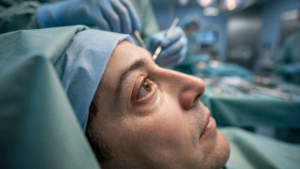
Patricia Bath’s work in eye care followed two connected tracks: developing new ways to treat cataracts and pressing for more people to receive basic vision care. She became an ophthalmologist and inventor at a time when Black women were rarely represented in medicine. Her career linked laboratory research to a practical question: who gets the chance to see clearly?
Born in Harlem in 1942, Bath studied at Hunter College and earned her medical degree from Howard University in 1968. After training in New York, she moved to California and joined the University of California, Los Angeles. She became the first woman ophthalmologist on the faculty of UCLA’s Jules Stein Eye Institute, according to the National Library of Medicine’s account of her career.
Taking eye care beyond the clinic
Bath’s interest in unequal access to vision care grew from what she saw in clinical work. She observed that blindness and vision loss affected Black communities at higher rates, while access to ophthalmologists and treatment could be limited. The problem, in her view, called for more than a new procedure: it also required reaching people who might not otherwise get care.
In 1976, Bath helped establish the American Institute for the Prevention of Blindness, an organization focused on preventing avoidable vision loss. She also advanced the idea of “community ophthalmology”—bringing eye care and education closer to underserved communities. The approach treated prevention, screening and treatment as connected parts of the work, rather than assuming that patients would simply find their way to a specialist.
That public-health concern did not pull Bath away from research. It helped define the problem her research could address. Cataracts cloud the eye’s lens and can cause serious vision loss; surgery can restore sight, but the tools used to remove the affected lens matter.
A laser tool for cataract surgery
Bath began developing a laser-based cataract instrument in the early 1980s. The resulting Laserphaco probe used laser energy to break up and remove cataract tissue. A U.S. patent for the device was granted in 1988. The patent describes a probe and method for cataract removal; it is a record of the invention, not by itself a measure of how widely it was adopted.
Bath’s achievement was significant in a field where women—and especially Black women—had been excluded from many opportunities to lead and invent. She became the first Black woman physician in the United States to receive a medical patent, a distinction recognized by the National Library of Medicine. Her work also resulted in patents in other countries.
The device was one part of a career that included teaching, clinical practice and efforts to improve access to sight-saving care. Bath continued to advocate for blindness prevention and equitable treatment until her death in 2019.
Innovation with access in view
Bath’s story is not simply that of an inventor who developed a new instrument. It is also a reminder that medical progress depends on asking who benefits from it. Her community eye-care work confronted gaps in access, while her invention addressed a treatment challenge inside the operating room.
Those two efforts belonged to the same vision of medicine: research should make treatment better, and care should reach people who need it. Patricia Bath helped push both ideas forward, leaving a legacy that joins a patented surgical tool with a broader call to make sight a matter of public health.