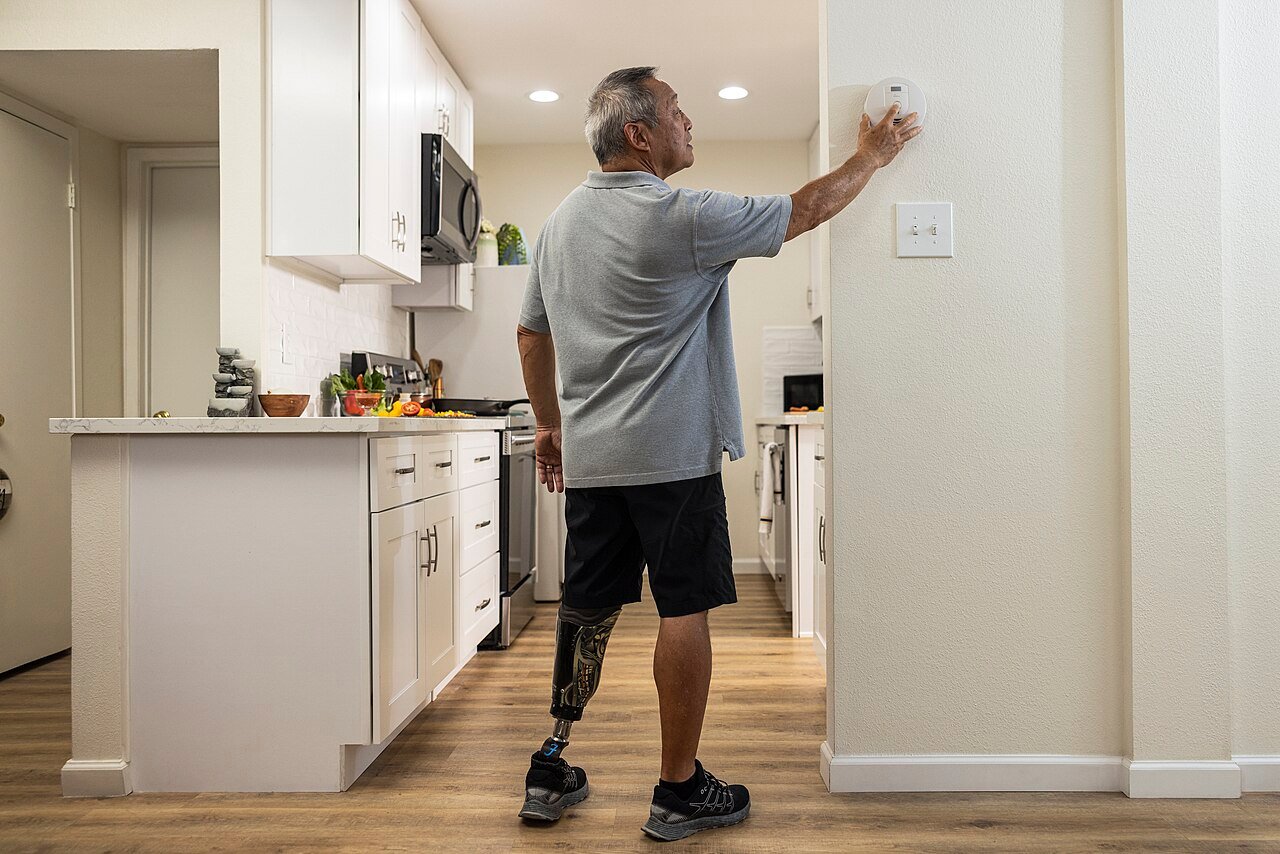
A smoke alarm can only do its job if it can detect smoke and alert people who need to hear it. That makes placement more than a matter of convenience: an alarm in the wrong spot may be easier to ignore, while a home with alarms in the right places can provide warnings in more rooms.
U.S. fire-safety guidance calls for smoke alarms on every level of a home, including the basement, and inside and outside each sleeping area. In a home with more than one floor, that means checking each level rather than assuming an alarm near the bedrooms will cover the whole house. If someone sleeps with a bedroom door closed, an alarm inside the room is particularly useful: a warning in the hallway may not be as easy to hear through the door.
Choose locations that can detect smoke
Follow the alarm manufacturer’s instructions for mounting. Many alarms can be installed on a ceiling or high on a wall; smoke rises, so a low location is generally not the right choice. Avoid placing an alarm in a corner where a ceiling and wall meet, and keep it at least 10 feet from a cooking appliance when possible. That distance can reduce nuisance alarms from ordinary cooking, which can tempt people to disable an alarm they actually need.
Do not remove a battery or disconnect an alarm because it sounds during cooking. Use a hush feature if the model has one, and improve ventilation or move the alarm only if the manufacturer’s instructions allow it. Never leave a home without working alarms while trying to solve repeated false alarms.
Make alarms easier to hear throughout the home
When alarms are interconnected, one detecting smoke can trigger the others. That can help alert people in distant rooms or on another floor. Some homes have hardwired interconnected alarms; compatible wireless models may be an option in others. Check the product instructions and local requirements before replacing or adding equipment.
People who are deaf or hard of hearing may need alarms with visual or vibrating alerts, such as strobes or bed-shaking devices. A standard sound-only alarm may not provide an effective warning for everyone in the household. Consider who needs to be alerted, where they sleep, and whether they can hear the signal from that room.
Test, maintain and replace
Press each alarm’s test button regularly; the U.S. Fire Administration recommends testing smoke alarms monthly. Follow the manufacturer’s directions for battery changes and cleaning. If an alarm has a replaceable battery, a chirp may mean the battery needs attention, but check the manual because signals vary by model. An alarm with a sealed long-life battery still needs testing.
Smoke alarms do not last forever. Replace an alarm when it reaches the end of its service life, generally 10 years from its manufacture date, or sooner if its instructions say so. Look for the date on the device rather than guessing from when you moved in. If the date is missing or the alarm is older than recommended, replacing it is a safer choice.
A quick household check can make the plan concrete: count the floors, locate sleeping rooms, identify alarms inside and outside those rooms, and test each device. If you rent, ask the landlord or property manager about alarms that are missing, damaged or past their replacement date. Smoke alarms are a small part of fire preparedness, but their placement and upkeep determine whether they can give a household an early warning.