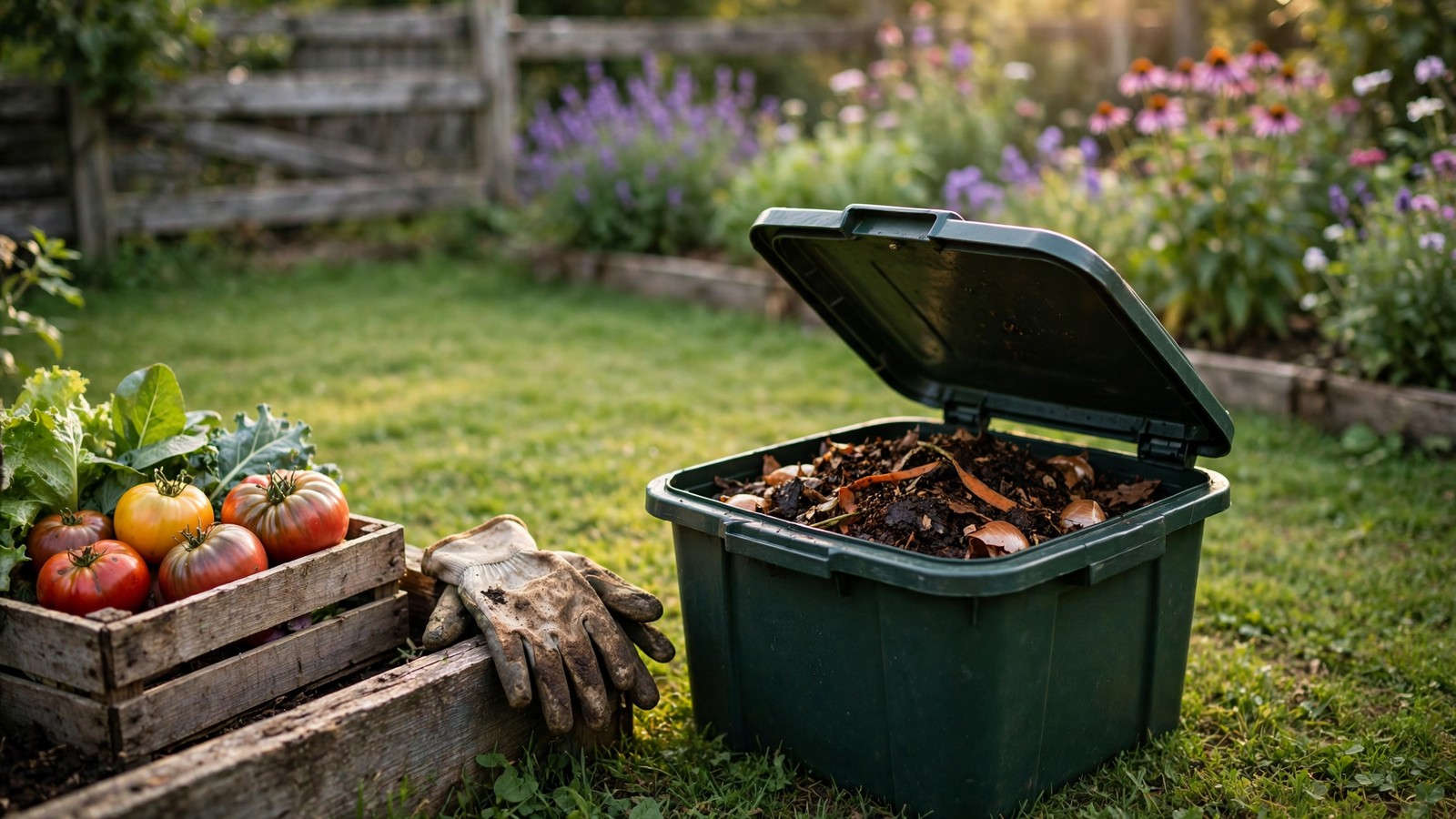
Every kitchen produces a small stream of leftovers that seem to have nowhere to go: coffee grounds, vegetable peels, wilted greens, eggshells, and the leaves that collect after a weekend of yard work. For many American households, the next stop is the trash can. But a growing number of homes are giving those materials another destination: a compost pile, bin, tumbler, or neighborhood collection program.
Composting is not a futuristic technology. It is a managed version of a natural process, using microorganisms, oxygen, moisture, and time to turn organic material into a dark, earthy soil amendment. Done at home, it can be as simple as layering scraps with dry leaves in a corner of the yard. Done indoors or in a small space, it can involve a sealed countertop container, worm bin, or municipal organics service.
The good news is practical rather than dramatic. Composting gives households a visible way to waste less, improve soil, and notice the seasonal rhythm of their own homes. A banana peel that once disappeared into a garbage bag can become part of next year’s garden.
A household habit with a natural purpose
Food scraps and yard trimmings are organic materials, meaning they once came from living plants or animals. In nature, they do not need to be “thrown away.” Leaves fall, plants die back, and microorganisms break those materials down. The nutrients return to the soil and become available to future growth.
A household compost pile recreates that cycle in a contained form. Bacteria and fungi begin the work, while larger organisms such as worms and other decomposers help break material into smaller pieces. The pile gradually changes from recognizable scraps into a crumbly material that smells earthy rather than sour.
The U.S. Environmental Protection Agency identifies composting as one way to manage food and other organic materials before they become waste. Its food-recovery guidance places preventing wasted food and donating edible food above composting in the preferred order. That distinction matters: composting is useful, but buying only what a household can use and saving edible leftovers are still the first choices. For related reading, see Home Energy Rebates: How a Federal Program Is Turning Efficiency Into a Household Resource.
For the scraps that remain, composting offers a constructive path. Instead of treating organic material as worthless, it treats it as a resource that can return to gardens, trees, houseplants, and landscapes.
Why the finished material matters
Finished compost is not a complete replacement for soil, fertilizer, or careful gardening. It is better understood as a valuable amendment. Mixed into soil, it can add organic matter and help create conditions that support plant growth.
Compost can help soil hold water while also improving drainage in compacted ground. It can contribute nutrients gradually and support the community of organisms that lives in healthy soil. In a vegetable bed, a few inches incorporated before planting can improve the texture of the growing area. Around established plants, a thin layer used as mulch can help protect the soil surface.
These benefits are especially useful in home landscapes, where soil may have been disturbed by construction, depleted by repeated mowing, or compacted by foot traffic. Compost does not solve every soil problem, but it gives households a gentle, low-cost tool for rebuilding organic matter over time.
The process also changes the way people see a yard. Leaves stop being merely debris. Coffee grounds become a small contribution to a larger cycle. A garden becomes not just a place where plants are put into the ground, but a place where materials are continuously returned to it.
Starting small is the secret
Many people avoid composting because they imagine a large, complicated backyard project. It does not have to be. The best system is the one a household can manage consistently.
- Backyard bin: A covered bin or simple enclosure can hold food scraps and yard materials. It works best on bare ground, where organisms can move into the pile.
- Tumbler: A rotating container keeps the material contained and can make turning easier, although it usually holds less material than an open-bottom bin.
- Worm bin: Indoor or sheltered vermicomposting uses certain worms to process food scraps. It is well suited to apartments, patios, and small yards.
- Community collection: In places with curbside organics pickup or drop-off sites, residents can collect scraps in a small container and let a larger operation manage the composting.
A beginner can start with a modest bin and a short list of materials. Fruit and vegetable scraps, coffee grounds, tea leaves, crushed eggshells, dry leaves, small amounts of untreated grass clippings, and plain paper are common ingredients. The mix works best when wet, nitrogen-rich materials such as food scraps are balanced with dry, carbon-rich materials such as leaves, shredded cardboard, or uncoated paper.
One useful household rule is to keep a bag of dry leaves or shredded cardboard near the compost bin. Each time food scraps go in, a handful of dry material can follow. That simple habit helps keep the pile from becoming too wet and gives the process a more manageable structure. For related reading, see Phoenix Is Turning Extreme Heat Into a Public-Safety Mission.
What not to add
Home composting is forgiving, but not every organic item belongs in every backyard system. Meat, fish, bones, dairy products, fats, oils, pet waste, and foods treated with chemicals can attract animals, create odors, or introduce pathogens. Some commercial systems accept these materials under controlled conditions, but a basic household pile generally should not.
Weeds that have gone to seed and diseased plants are also best handled carefully. A small backyard pile may not get hot enough for long enough to destroy every seed or plant pathogen. Local extension services and municipal programs can provide guidance for materials that require higher-temperature or industrial composting.
Compost should smell like soil. A strong rotten odor usually means the pile is too wet, too compacted, or short on dry material. Adding leaves or shredded cardboard and turning the pile can restore airflow. If the pile is dry and inactive, a little water and more fresh food material may help.
Composting belongs in small homes, too
Not having a yard does not have to end the idea. A small covered container can hold scraps temporarily, while residents use a community drop-off site or subscription collection service. Some apartment buildings offer shared organics bins. Others make room for garden plots or communal compost systems.
Worm bins are another option. They need bedding, moisture, ventilation, and the right species of worms, but they can fit beneath a sink, on a porch, or in a basement utility area. The finished vermicompost can be used in houseplant soil or outdoor containers.
Even a household that cannot compost on its own can support the larger system by learning the rules of its local program. Accepted materials differ from place to place. Some communities collect certified compostable packaging; others do not. Following local instructions prevents contamination and makes the collected material more useful. For related reading, see America’s First Offshore Wind Farm Is Now Powering Long Island Homes.
A modest climate action with limits
Composting is often described as a climate solution, but its benefits should be stated carefully. Keeping organic material out of landfills can reduce the conditions that produce methane when food decomposes without oxygen. Composting also returns carbon and nutrients to soil. The precise benefit depends on the local waste system, the composting method, and what happens to the finished material.
That is why composting works best as part of a broader household approach: prevent unnecessary food waste, use leftovers, share surplus food when possible, and compost what cannot be eaten. No single bin can solve the food-waste problem, but millions of ordinary decisions can change the amount of material that enters the waste stream.
The EPA has emphasized that wasted food also represents wasted land, water, energy, labor, and transportation. A compost pile cannot recover all of those resources, but it can preserve some value in the material that remains after prevention and reuse.
The quiet satisfaction of a useful cycle
There is something encouraging about compost because the result is tangible. The process is slow, but it is not mysterious. Scraps go in. Air, moisture, microbes, and time do their work. Eventually, the household gets something back.
That return may be a healthier tomato plant, a softer patch of garden soil, or a balcony container that holds moisture a little better. It may simply be the satisfaction of seeing fewer garbage bags fill with material that still has a purpose.
Composting turns home life into a small lesson in renewal. It reminds us that “away” is not really a place, and that many things called waste are only materials waiting for the right conditions. In a backyard, apartment, school garden, or community collection program, the habit offers a hopeful and useful idea: the end of one household cycle can become the beginning of another.
Use: Home composting methods, suitable materials, and basic process guidance.
Use: The priority order of preventing wasted food, donating food, and managing remaining organic material.
Use: Context on the environmental value of reducing food waste and managing organic materials.
Use: Practical guidance on compost ingredients, moisture, airflow, troubleshooting, and finished compost.
U.S. Environmental Protection Agency — Composting at Home — https://www.epa.gov/recycle/composting-home — Home composting methods, suitable materials, and basic process guidance.
U.S. Environmental Protection Agency — Food Recovery Hierarchy — https://www.epa.gov/sustainable-management-food/food-recovery-hierarchy — The priority order of preventing wasted food, donating food, and managing remaining organic material.
U.S. Environmental Protection Agency — Sustainable Management of Food — https://www.epa.gov/sustainable-management-food — Context on the environmental value of reducing food waste and managing organic materials.
University of Minnesota Extension — Home Composting Basics — https://extension.umn.edu/how-manage-soil-and-nutrients/home-composting-basics — Practical guidance on compost ingredients, moisture, airflow, troubleshooting, and finished compost.