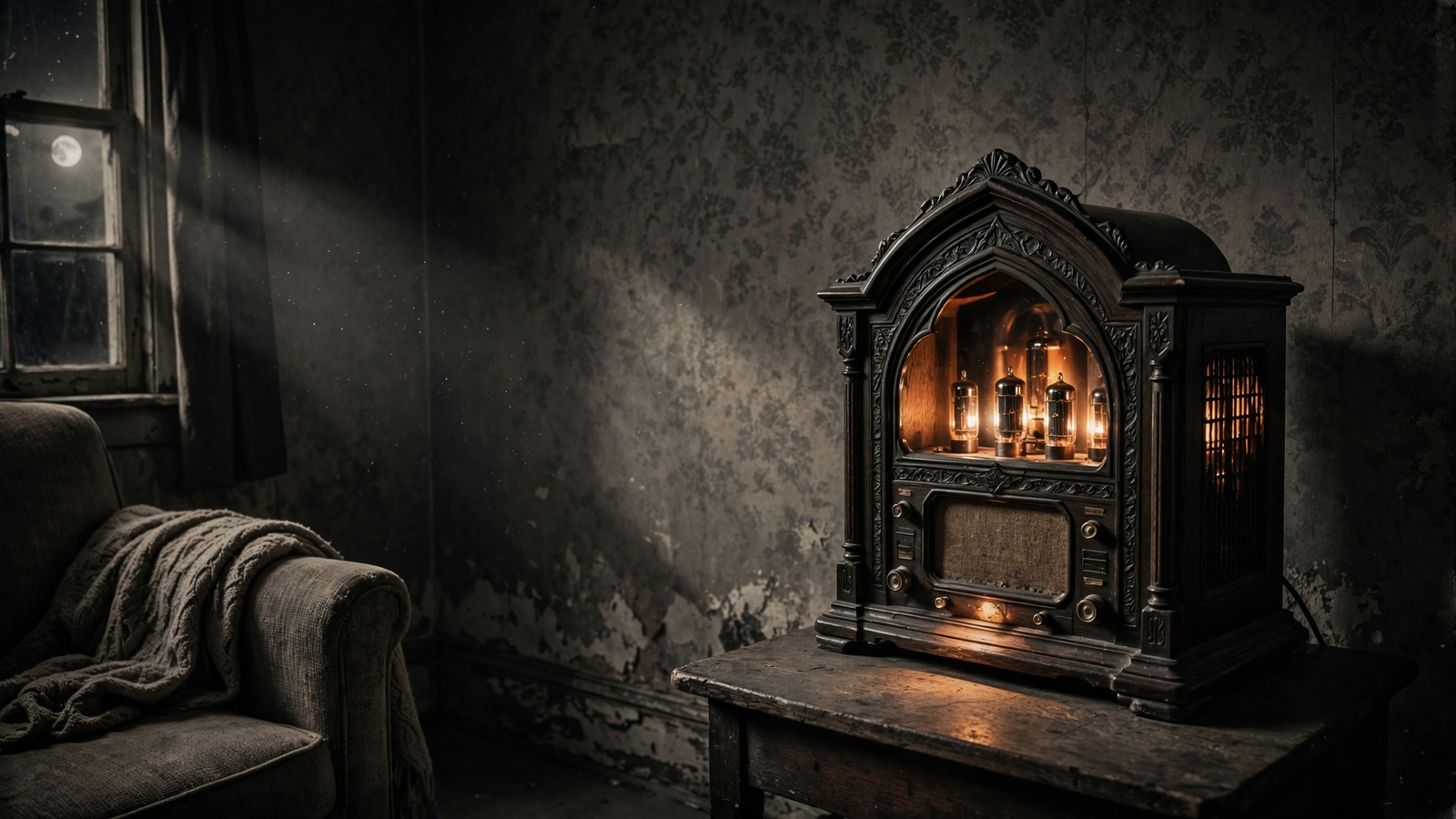
On the evening of March 12, 1933, millions of Americans heard the president speak from the White House about something many families understood far better than Washington usually imagined: the fear of losing their money.
Franklin D. Roosevelt’s first radio address was not a formal speech from a podium. It was an explanation. The country was in the middle of a banking crisis, and Roosevelt wanted listeners to understand why banks had closed, what the government was doing, and why reopening them could be safe. He began simply: “I want to talk for a few minutes with the people of the United States about banking.”
That opening helped establish one of the most recognizable traditions in American broadcasting: the fireside chat.
A new way to reach the country
Radio had already become a fixture in American homes, but political communication often still sounded formal and distant. Roosevelt used the medium differently. Rather than addressing only lawmakers, newspaper reporters, or an audience gathered in a hall, he spoke directly to people sitting in living rooms and kitchens across the nation.
The phrase “fireside chat” suggested an informal conversation, even though the broadcasts were carefully prepared and technically demanding. Roosevelt generally spoke from the White House, sometimes from his study or office, with microphones and radio networks carrying his voice across the country. There was no literal fireside in every broadcast, but the image made the new style easy to understand.
The approach depended on clarity. Roosevelt often explained government programs through familiar examples, defined complicated terms, and addressed listeners as citizens whose cooperation mattered. Radio could not show charts or documents, so the force of the broadcast came from the sound of a calm, deliberate voice and from the feeling that the president was speaking into an ordinary home.
Radio during an anxious decade
The timing mattered. The first chat came during the Great Depression, when unemployment, bank failures, and uncertainty had disrupted everyday life. Later broadcasts discussed subjects including recovery programs, the war in Europe, and America’s entry into World War II.
According to the Franklin D. Roosevelt Presidential Library and Museum, Roosevelt delivered 31 radio addresses that became known as fireside chats between 1933 and 1944. They were not a weekly program. Instead, he used the format when he believed a national explanation was especially important.
That selectivity helped preserve their significance. A fireside chat felt like an event, but not necessarily like a spectacle. Listeners were invited into a conversation about public problems rather than asked to watch a performance. The broadcasts showed that mass communication could be both national in scale and personal in tone.
The beginning of a broadcast presidency
Roosevelt did not invent radio, and he was not the first politician to use it. His achievement was recognizing how the medium could change the relationship between public office and private life. The president’s voice could now enter homes without a newspaper editor, theater audience, or local meeting standing between speaker and listener.
That change shaped every presidency that followed. Later presidents used radio and television to explain decisions, rally support, or speak during moments of crisis. The technologies evolved, but the central idea remained: national leadership could be delivered in a voice that sounded less like a proclamation and more like a conversation.
The fireside chat’s legacy is therefore larger than Roosevelt’s 31 broadcasts. It marked the moment when the American home became part of the nation’s political room—and when radio proved that distance did not have to mean emotional separation.