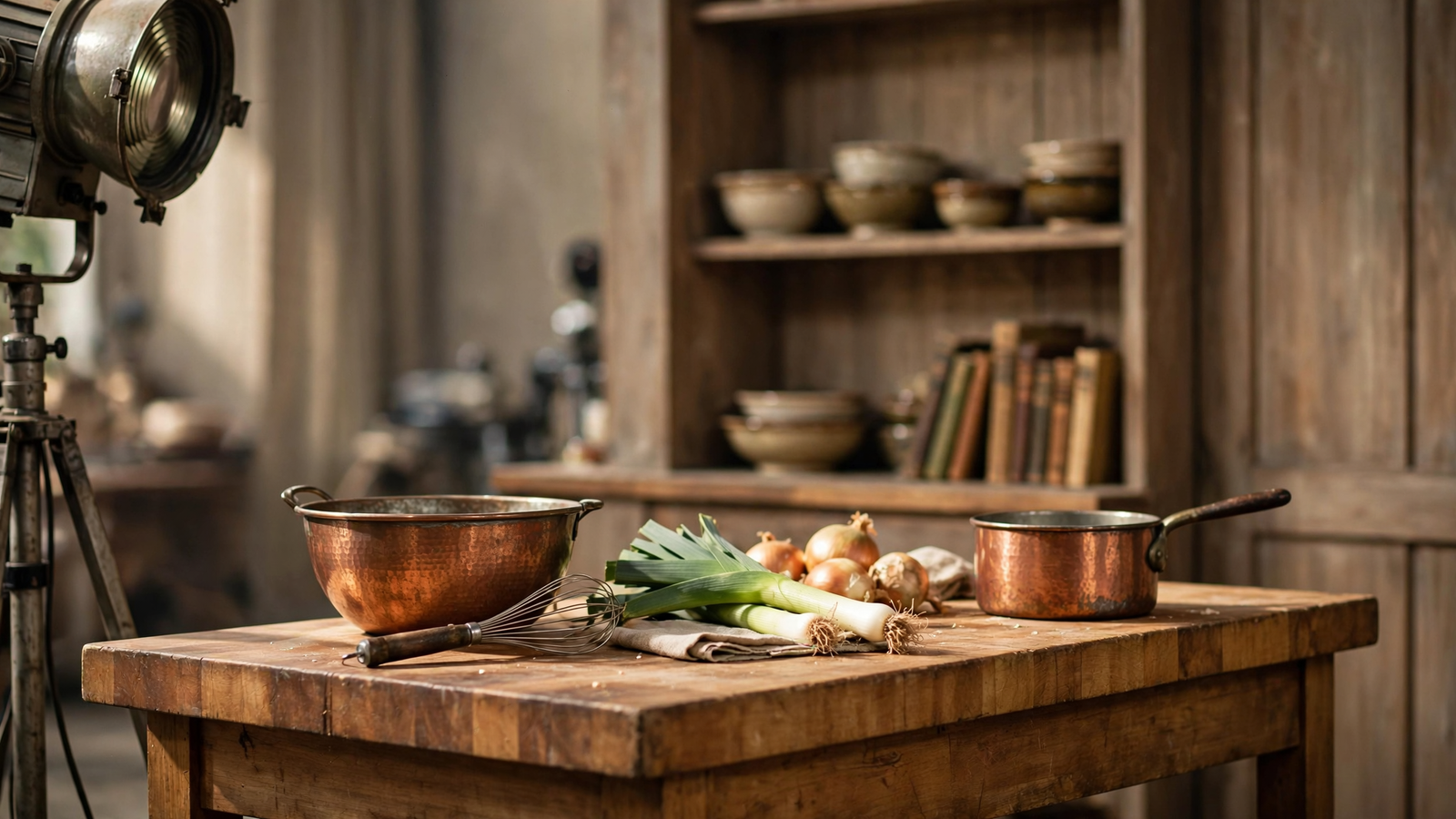
Before cooking television became a crowded genre, Julia Child stood in front of a camera with a cutting board, a skillet and an unmistakable willingness to make mistakes in public. On The French Chef, she did more than explain how to prepare French food. She helped Americans see public television as a place for practical knowledge, good humor and ordinary human connection.
The program began on Boston’s educational station WGBH in 1963, after Child had appeared on the station’s book discussion program, I’ve Been Reading. Her demonstration was so engaging that WGBH developed a cooking series around her. The French Chef soon moved beyond its local beginnings and reached viewers nationally through the educational television network that became PBS.
A different kind of television kitchen
Child was not presented as a distant authority. She was tall, energetic and plainly comfortable explaining a technique several times if the audience needed it. Her approach gave viewers permission to try. A collapsed dish, a messy counter or an awkward moment did not end the lesson; it became part of the lesson.
That quality mattered in the early 1960s, when television was still teaching Americans what the medium could be. Commercial networks were built around entertainment and advertising. Educational stations had a different mission, but they still needed programs that people would choose to watch. Child’s show demonstrated that instruction did not have to feel like homework. A half-hour about sauce, pastry or a roast could also be lively, intimate and entertaining.
Her subject was French cuisine, but her larger message was democratic: complicated skills could be learned. Child translated professional techniques into steps a home cook could understand, while also explaining why those steps mattered. The result was not a promise of effortless perfection. It was an invitation to practice.
From cookbook to cultural landmark
The French Chef grew out of Child’s 1961 cookbook, Mastering the Art of French Cooking, written with Simone Beck and Louisette Bertholle. The book had already introduced many American readers to methods and ingredients that were unfamiliar outside restaurant kitchens. Television gave Child another tool: she could show movement, texture and timing instead of describing them only on the page.
The program’s success helped establish cooking as a serious subject for television without stripping it of personality. Child received a Peabody Award for the series and later became one of the first television chefs widely recognized as a national star. Her influence reached beyond recipes. She helped make the public television host a familiar kind of American figure: knowledgeable without being stiff, authoritative without being unapproachable.
WGBH’s production also showed how much could be accomplished with a relatively simple studio format. There was no need for an elaborate set or a constantly changing spectacle. A skilled host, a clear explanation and the anticipation of seeing what happened next were enough to hold an audience.
The lesson that lasted
Modern food television often emphasizes competition, travel and transformation. The French Chef offered something quieter and, in its own way, more radical. It treated viewers as capable people who might want to understand a process rather than simply watch a result.
That spirit remains part of Julia Child’s legacy. She made room for curiosity, appetite and imperfection on American television. In doing so, she helped public broadcasting feel less like an institution speaking at the audience and more like a generous neighbor opening the kitchen door.