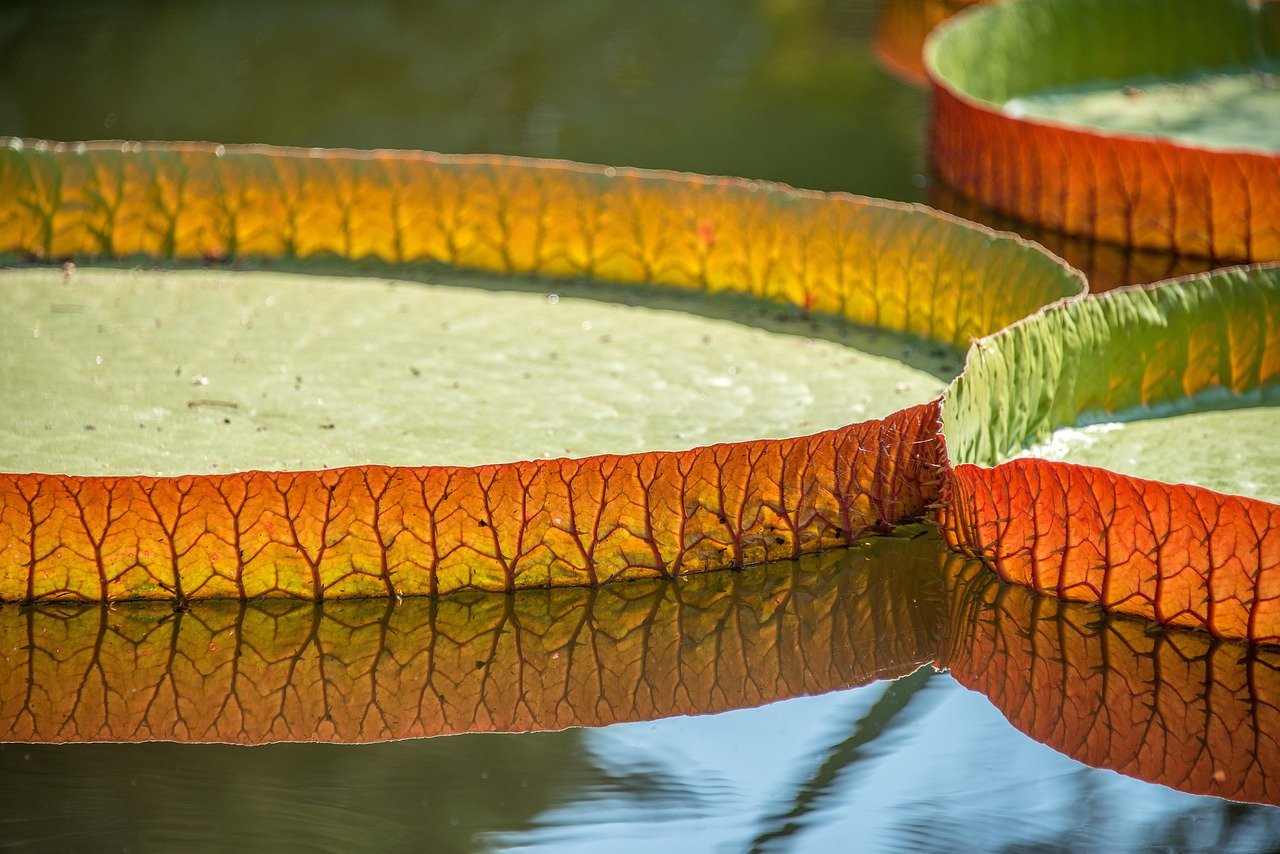
A giant water lily can be hard to overlook. Its floating leaves may stretch to three metres across, broad enough to make a small pond seem miniature. Yet one of the world’s largest water lilies went unrecognized as a distinct species for generations, growing in botanical collections under the name of a close relative.
In 2022, researchers formally described Victoria boliviana, a water lily native to Bolivia. The discovery added a third recognized species to a genus famous for enormous leaves and showy flowers. It also showed how botanical gardens can do more than display unusual plants: their living collections, alongside preserved specimens, can help answer basic questions about what a plant is.
A familiar plant with an unfamiliar identity
Before the new species was described, botanists recognized two members of the genus Victoria: V. amazonica and V. cruziana. Plants later identified as V. boliviana had been mistaken for one or the other. Their resemblance was understandable. All three are giant aquatic plants, and their dramatic circular leaves can make a striking first impression in a conservatory pond.
But size alone does not settle a species identification. Researchers compared multiple kinds of evidence, including living plants, preserved herbarium material and DNA data. The combination mattered: a plant in a garden can be studied closely, while a pressed specimen preserves evidence of what was collected in the past. Genetic comparisons can then help test whether apparent differences reflect separate lineages rather than ordinary variation within a species.
The team found that the Bolivian plants differed consistently enough from the two already recognized species to warrant their own name. The researchers published the taxonomic case in Frontiers in Plant Science. The name boliviana recognizes the country where the species is native.
What makes it different?
The most immediately visible distinction is scale: V. boliviana can produce leaves up to three metres wide. The research also used features of the plants and genetic evidence to distinguish it from its relatives. In other words, the record-breaking leaves are part of the story, but the identification rests on more than a measurement or a memorable photograph.
That is an important point in plant discovery. A striking feature may draw attention, but botanists look for a set of characteristics that reliably separates one species from another. Close relatives can share much of their appearance; plants can also vary as they grow. Scientific descriptions therefore set out evidence that other researchers can examine and compare.
The giant water lilies are not simply floating pads. They are flowering plants, and their blooms are part of the genus’s spectacle. In the giant-water-lily group, flowers open at the water’s surface and can change appearance as they develop. The leaves may dominate a visitor’s view, but flowers, reproductive structures and other botanical details help researchers understand how the plants differ and relate to one another.
Why a garden can be a place of discovery
Botanical gardens bring together living plants that might otherwise be difficult to compare. A researcher can observe growth and flowering over time, examine details that are hard to see in a dried specimen and compare plants grown under known conditions. Gardens also preserve records about where their plants came from and how they were identified—information that can become newly valuable when scientific understanding changes.
Herbaria provide a different kind of record. Each preserved specimen is a physical example tied to a collection and its documentation. By revisiting older material, scientists can ask whether plants once placed in a broad category actually include more than one species. Here, the comparison of cultivated and preserved water lilies helped researchers reassess a group that had been familiar to botanists for a long time.
This does not mean that a garden plant automatically represents a wild population perfectly. Cultivated plants may have incomplete histories, and names on labels can reflect earlier identifications. That is why researchers combine evidence and document their reasoning rather than relying on a garden label, a photograph or one unusually large leaf.
A discovery with roots in Bolivia
Victoria boliviana is native to Bolivia, and its recognition underscores the value of botanical work connected to the places where plants grow. Accurate identification gives researchers a clearer way to discuss a species and compare observations about it. It can also help direct future study toward its natural range and the conditions it depends on.
The discovery is not, by itself, proof that the plant is threatened or that its habitat has been protected. Those questions require their own evidence. What the research does provide is a more precise account of plant diversity: the giant water lily genus contains more variation than its earlier two-species classification captured.
For gardeners, this is less a recipe for adding a three-metre water lily to a backyard pond than a reminder of what gardens make possible. A living collection can be a meeting place for observation, historical records and modern science. Sometimes the plant that seems impossible to miss has been there all along—but it takes careful comparison to see it clearly.