A Venus flytrap seems to make a snap decision. In reality, its trap responds to a small sequence of signals. That bit of biological caution helps the plant avoid wasting energy on every raindrop or bit of debris that brushes its leaves.
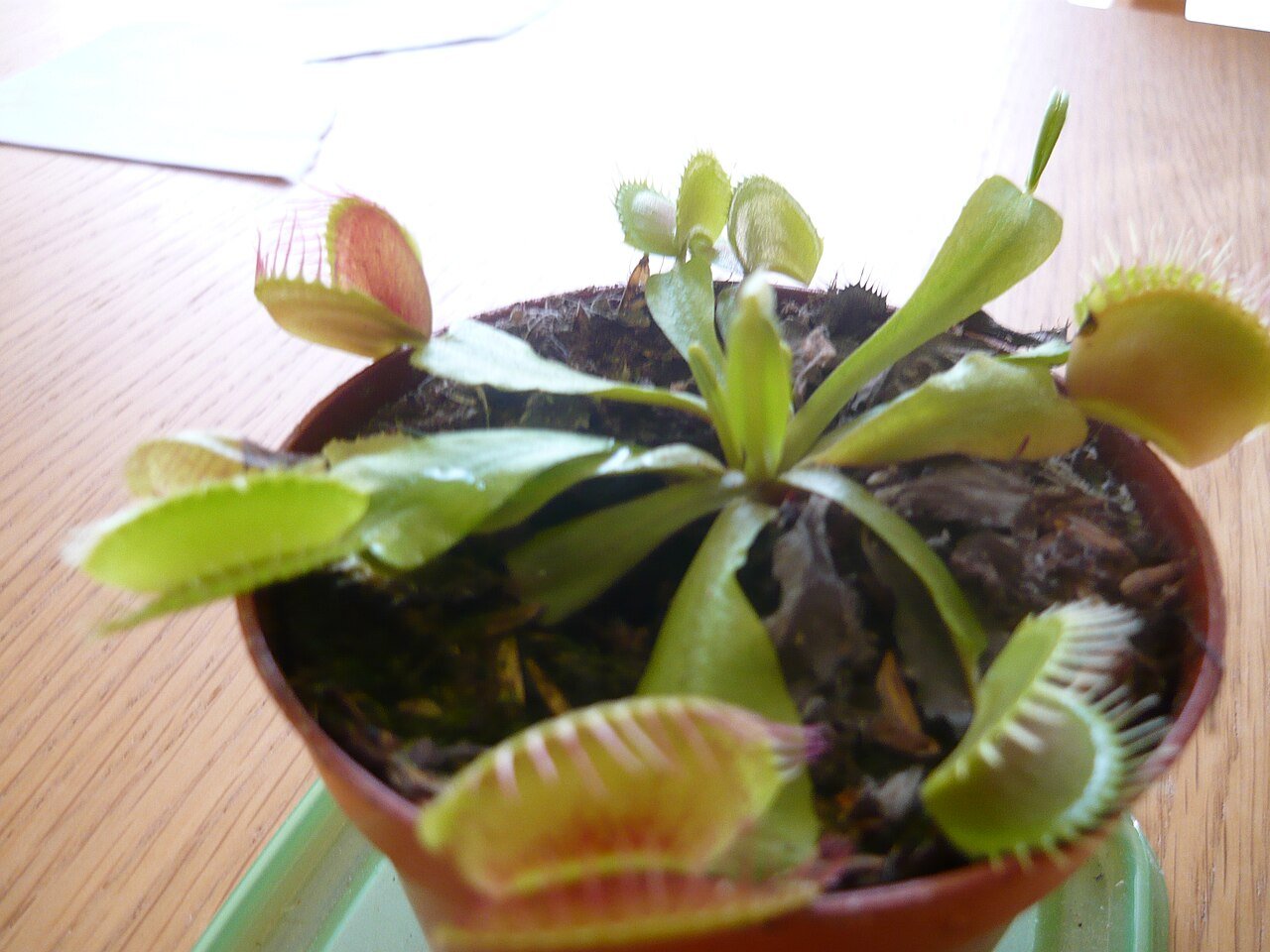
Each trap is a modified leaf with two hinged lobes and sensitive trigger hairs on the inner surfaces. When a small animal touches a hair, the plant produces an electrical signal. One touch usually isn’t enough. A second stimulus within a short interval—commonly described as about 20 seconds—can prompt the lobes to close.
That threshold is a kind of filter. A single bump may be accidental; repeated contact is more likely to come from an animal inside the trap. Research published in Current Biology examined how the flytrap’s count of prey-related electrical signals is connected to nutrient uptake. The plant is not thinking or deciding as an animal does. Rather, its living tissues respond to a pattern of signals.
A leaf that turns sunlight into a lure
The trap’s vivid inner surface and nectar help attract small insects and other invertebrates. If the right kind of visitor touches the hairs repeatedly, the trap closes quickly. Its interlocking marginal spines form a loose cage at first, allowing very small animals to escape. Continued movement can lead the lobes to seal more tightly.
Digestive fluids then break down the captured animal, and the plant absorbs nutrients including nitrogen and phosphorus. Once digestion is complete, the trap opens again. A trap does not last forever: repeated closures and the wear of daily life eventually take their toll, while the plant continues to produce new leaves.
It is easy to assume that insects power the plant. They do not. Like other green plants, a Venus flytrap gets its energy from photosynthesis. Prey supplies nutrients that are scarce in the wet, acidic, nutrient-poor soils where the species grows. Carnivory is an adaptation to a difficult habitat, not a replacement for sunlight.
A specialist of the Carolina coastal plain
Wild Venus flytraps grow naturally in a limited part of the coastal plain of North and South Carolina, with much of their range in North Carolina. Their habitat includes sunny, wet pine savannas and other open, damp areas. The plant’s needs help explain why it can be difficult to maintain in an ordinary garden: a small potting mix or a shady windowsill cannot reproduce the conditions of its home.
Those open landscapes also depend on disturbance. In fire-adapted pine habitats, periodic fire helps keep woody growth from crowding out low-growing plants. When fire is suppressed, shrubs and trees can shade the ground and change the habitat. Development and illegal collection also put pressure on wild populations. Buying nursery-propagated plants rather than taking them from the wild is one practical way to avoid adding to collection pressure.
The Venus flytrap’s reputation rests on a dramatic movement, but its more remarkable feature may be the quiet sequence behind it: a leaf senses, signals, and responds in stages. The trap is not a miniature animal. It is a specialized plant organ finely matched to a sunny, wet Carolina landscape—and to the small creatures that visit it.