Prescott is often introduced through its most recognizable places: the courthouse square, the granite formations, the forested mountains and the historic streets downtown. But one of the city’s most revealing landscapes sits a little farther out, where paved city life begins to loosen into open country.
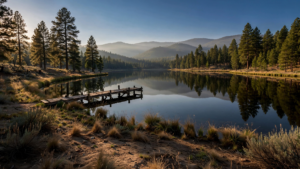
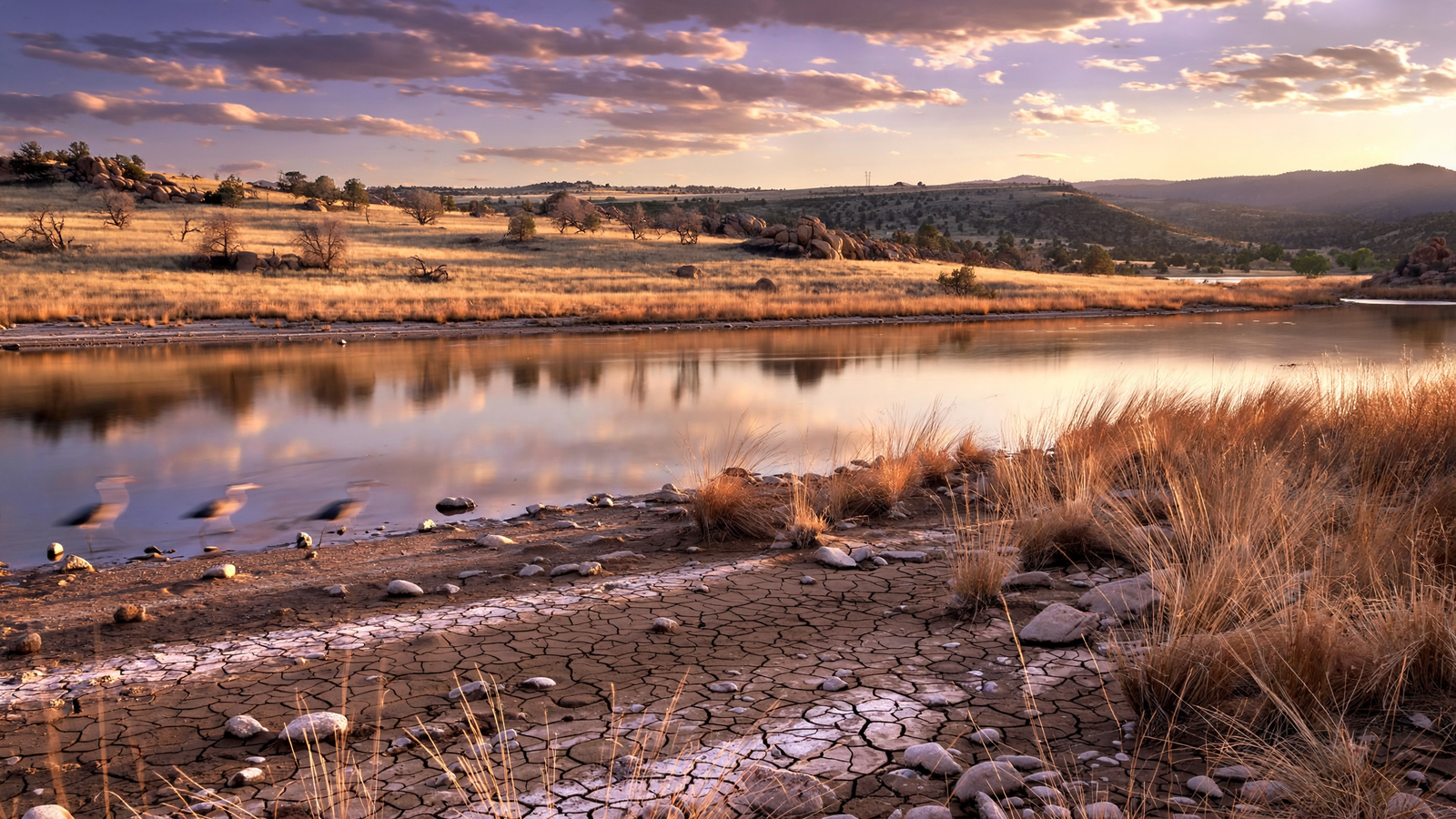
Willow Creek Reservoir is a modest public recreation area north of Prescott. It is not the largest lake in Arizona, nor is it surrounded by the dense pine forest that defines some of the region’s better-known destinations. Its character is quieter and more spacious. The reservoir gathers water in a broad, high-desert setting where cottonwoods, grassland, distant hills and rocky ground share the same view.
That combination makes Willow Creek a useful place for understanding Prescott. The city is not simply a mountain town tucked into the trees. It is also a place of open basins, seasonal water, working roads, wildlife habitat and landscapes that change dramatically with rain, drought and the angle of the sun.
A different side of the Prescott landscape
Willow Creek Reservoir lies north of Prescott, reached from the Williamson Valley Road area. The trip does not require a long backcountry expedition, but the setting feels more removed than the city’s central parks. The reservoir is part of the everyday outdoor geography of the community: close enough for a short outing, yet open enough to create a sense of distance.
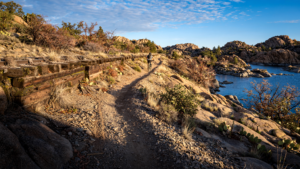
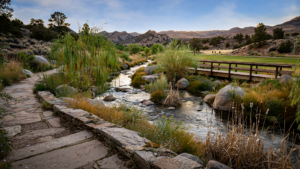
The surrounding terrain helps explain that feeling. Rather than presenting a single dramatic feature, Willow Creek brings several Arizona landscapes together. The shoreline can look green after seasonal rain and dry and golden later in the year. Low vegetation gives way to stands of trees near wetter ground. Beyond the water, the land opens toward hills and ridges that place the reservoir within the larger Prescott Basin.
It is an understated kind of beauty. There is no need for a major overlook or a strenuous trail to appreciate it. A person can stand near the water and see how quickly Prescott’s developed edges give way to a landscape governed by weather, elevation and water availability.
Water makes the place feel larger
In a dry region, even a relatively small reservoir changes the experience of the land around it. Willow Creek’s waterline creates a visual pause in the high desert. It reflects the sky, draws attention to the surrounding slopes and provides a different habitat from the drier ground nearby.
The reservoir is also used for fishing, with Arizona Game and Fish Department information listing Willow Creek among the waters available to anglers. Conditions and fish populations can change, so visitors should check current regulations and stocking information before planning a trip. The practical value of that guidance is part of what makes the reservoir a genuine community place: it is not only scenery, but a landscape people use.
Fishing gives the shoreline a slower rhythm. Unlike a destination built around a single attraction, Willow Creek rewards waiting. The important details are often small—the movement of water near the edge, the arrival of birds, the sound of wind through the trees or the gradual shift in color as afternoon becomes evening.
A reservoir with room for wildlife
Willow Creek’s importance does not depend on visitors seeing a rare animal. Reservoirs and their margins can provide useful habitat in landscapes where water is unevenly distributed. The water’s edge offers drinking and feeding opportunities, while trees and brush create cover. Open ground nearby supports a different group of species, giving the area a mixture of habitats within a relatively compact setting.
Birdwatchers may find the reservoir especially rewarding because water attracts species that are not as easily encountered in the surrounding uplands. Waterfowl, wading birds and other migrating or resident birds can use the shoreline when conditions are favorable. The exact mix changes with season, weather and water levels, which means the same visit is unlikely to look exactly like the last one.
That variability is worth emphasizing. A high-desert reservoir is not a static picture. Rain can transform the color of the surrounding grasses. Heat can pull the shoreline back. Wind can erase the lake’s reflections in a few minutes. Wildlife activity can be concentrated in the cooler parts of the day. These changes are not inconveniences that obscure the “real” Willow Creek; they are the place’s central story.
A public landscape shaped by care
Places like Willow Creek can appear simple because their infrastructure is not the main attraction. But a public recreation area depends on many ordinary systems working together: road access, posted regulations, water management, shoreline protection, fishing rules, trash collection and respect for habitat.
That makes responsible use more than a matter of etiquette. Visitors who keep dogs under control, pack out waste, avoid damaging vegetation and follow boating and fishing rules help preserve the qualities that bring people to the reservoir in the first place. Quiet recreation is not automatically low-impact; shorelines can be sensitive, and repeated disturbance can matter to wildlife even when the activity seems minor.
The best way to experience Willow Creek is therefore not to treat it as an empty piece of land. It is a shared public setting with several overlapping purposes. People come to fish, watch birds, walk, photograph the landscape or simply sit near the water. Wildlife uses the same margins for its own reasons. The reservoir works when those uses remain compatible.
Why Willow Creek belongs in the Prescott story
Prescott’s identity is often described through history and architecture, but its physical setting is just as important. The city sits at a meeting point between ponderosa pine country, granite terrain, open grasslands and the drier landscapes that extend toward central Arizona. Willow Creek makes that transition visible without requiring a long drive into the forest.
It also shows how a place can be valuable without being famous. The reservoir does not need the symbolic status of a historic courthouse or the geological drama of the Granite Dells. Its contribution is more everyday. It gives residents and visitors a nearby place to notice weather, water and wildlife. It offers a setting for recreation that does not demand a major itinerary. And it preserves a sense of openness at the edge of a growing community.
That last quality may become increasingly important. As towns expand, familiar open spaces can become harder to find. A public reservoir provides more than an attractive view; it gives a community a shared reference point. People can return through different seasons and see how the same landscape responds to wet years, dry years, summer heat and winter cold.
How to visit with the landscape in mind
Willow Creek is best approached as a place for observation rather than a checklist. Check current access information and fishing regulations before leaving, and expect conditions to vary. Bring water, sun protection and appropriate supplies for a high-desert outing. Early and late in the day are often the most comfortable times for walking and wildlife watching, while changing weather can make the shoreline feel entirely different from one visit to the next.
Allow time to look beyond the reservoir itself. The surrounding hills, grassland and trees explain why the water matters. Watch how birds use the shoreline. Notice where vegetation thickens and where the land turns open again. The reservoir is most interesting when understood as one part of a larger ecological pattern.
Willow Creek does not announce itself with a grand entrance or a famous backstory. Its appeal is cumulative: water in a dry region, open views near a mountain city, habitat at the edge of developed land and the simple possibility of spending an hour without rushing. For Prescott, that is more than a scenic amenity. It is a reminder that a city’s sense of place can be held in the quieter spaces between its better-known landmarks.