Along the Florida Keys, a new kind of gardening is taking place beneath the surface. Instead of soil and seedlings, restoration teams are working with coral fragments, underwater nurseries and carefully selected reef sites.
The goal is ambitious: help rebuild coral reefs that have been weakened by disease, warming seas, pollution and repeated storms. The work is part of a broader effort to give one of the country’s most important marine ecosystems a better chance to recover.
From small fragments to living colonies
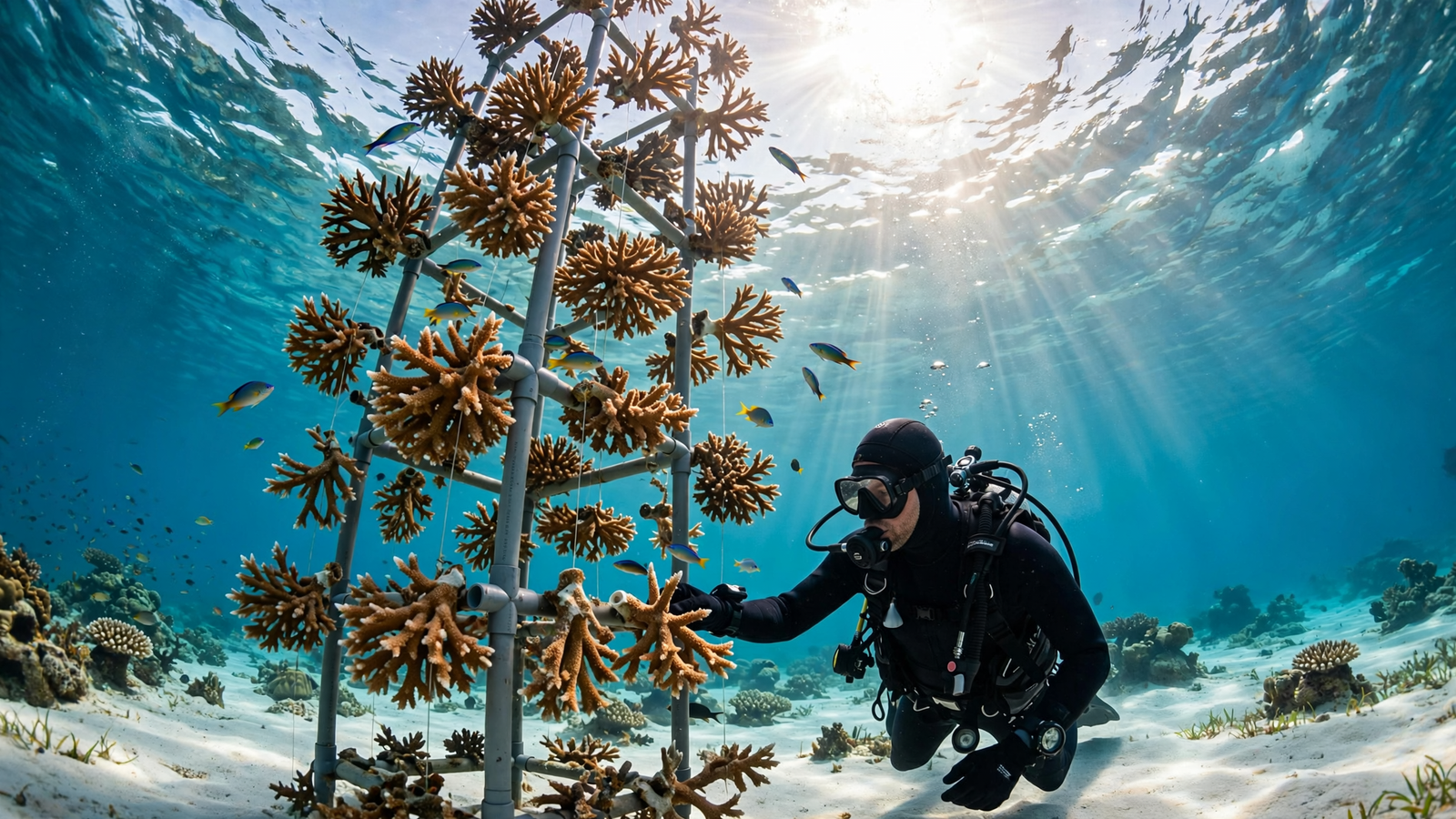
Coral restoration begins with pieces of living coral collected from healthy colonies or rescued from areas threatened by construction and other disturbances. In nurseries, those fragments are attached to structures designed to keep them elevated above the seafloor, where they can grow with fewer hazards.
Once the colonies are large enough, restoration teams transport them to selected reef sites and attach them to the limestone surface. The new corals are then monitored for growth, survival and signs of stress.
This approach does not recreate an entire reef overnight. It is more like rebuilding a forest one tree at a time. But every surviving colony can provide habitat for fish and invertebrates, add structure to the seafloor and eventually contribute reproductive material to the surrounding reef.
A plan built around seven important reefs
The National Oceanic and Atmospheric Administration’s Mission: Iconic Reefs program focuses on seven major reef sites in the Florida Keys National Marine Sanctuary. The strategy combines coral propagation with measures intended to improve reef conditions, including work on herbivorous animals such as sea urchins and reef fish that help control algae.
That combination matters because planting coral alone cannot solve every problem. Young corals need clear water, suitable habitat and enough grazing activity to prevent fast-growing algae from overwhelming the reef. Restoration is therefore being treated as an ecosystem project rather than a simple transplanting exercise.
Why genetic diversity matters
Restoration groups are also paying closer attention to the genetic variety of the corals they raise. A reef built from too few parent colonies could be vulnerable to the same disease or environmental stress. Using many genetically distinct corals can make restored sites more resilient and preserve traits that may become valuable as ocean conditions change.
Researchers are also experimenting with different coral species and restoration methods. Some projects focus on branching corals, which can grow relatively quickly and create shelter for marine life. Others work with massive corals that grow more slowly but can form long-lasting reef structure.
Recovery will take time
Florida’s reefs remain under serious pressure, and restoration is not a substitute for reducing warming, pollution and disease. Coral nurseries cannot guarantee that every outplanted colony will survive. Storms, marine heat waves and changing water quality can still undo years of work.
Even so, the nursery model represents a practical shift from documenting reef decline to actively rebuilding living habitat. The effort also gives scientists a way to test which corals and techniques work best under real ocean conditions.
The most encouraging part is that restoration is becoming a coordinated, large-scale enterprise involving federal agencies, universities, nonprofits, divers and local communities. The Florida Keys’ reefs are not being restored by one dramatic intervention, but through thousands of small acts of cultivation and care—each one aimed at keeping a living ecosystem in the water long enough to recover.