In Prescott, history does not live only in books or behind glass. It also survives in a building, a landscape and a collection assembled by one determined woman who believed Arizona’s past belonged to everyone.
That woman was Sharlot Mabridth Hall, a writer, poet, journalist, public official and preservationist whose work helped establish one of northern Arizona’s most important historical institutions. The museum that carries her name began with a concern that was simple but urgent: the territory’s story was changing quickly, and much of its evidence could vanish if nobody gathered it.
A young writer arrives in Arizona
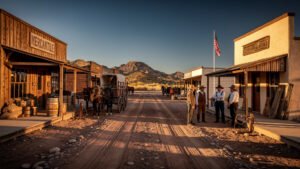
Hall was born in 1870 in Lincoln County, Kansas. Her family moved west to Arizona in 1882, when she was still a child. The territory she encountered was a place of mining camps, military posts, ranches, Indigenous nations, transportation routes and rapidly growing towns. It was also a place where written records were scattered and many everyday objects were treated as disposable.
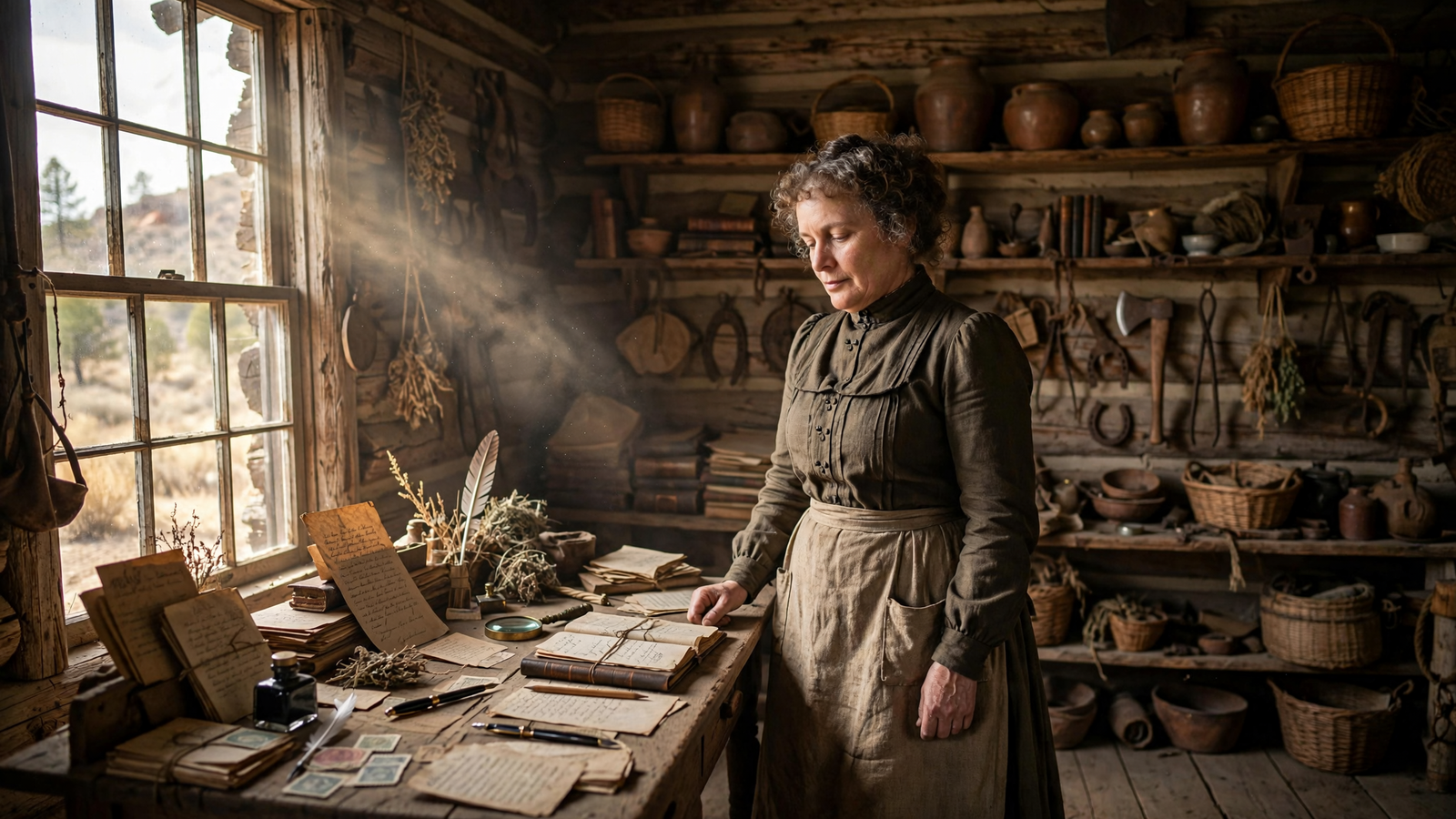
Hall began publishing poetry and articles while still young. Her writing brought attention to the landscapes and people of the Southwest, but her interests extended beyond literature. She understood that the history of a region was not made only by governors, generals or wealthy entrepreneurs. It was also present in household tools, letters, clothing, photographs, oral traditions and the built environment.
That broad view would shape the institution she later created in Prescott.
Arizona’s first woman territorial historian
In 1909, Arizona Territorial Governor Richard Sloan appointed Hall territorial historian. The position placed her close to the official records of a territory approaching statehood, but it also gave her a public platform from which to encourage historical preservation.
Hall’s appointment was notable in an era when senior government and scholarly positions were overwhelmingly held by men. Yet her significance was not limited to breaking a professional barrier. She used the role to make history more expansive. Her work included researching Arizona’s past, gathering materials and promoting the idea that communities should preserve their own records before they were lost.
Arizona became a state in 1912, but Hall continued to write and collect. Her career moved between public history and journalism, and she remained deeply connected to Prescott and the surrounding region. She wrote about Arizona’s landscapes and people at a time when outside accounts often reduced the territory to a romantic frontier image. Hall’s work offered a more rooted perspective, shaped by long residence and close observation.
Saving a building—and creating a museum
The physical center of Hall’s legacy is the historic building now known as the Governor’s Mansion at the Sharlot Hall Museum. The structure was built in 1864 at Fort Whipple, a military installation near Prescott. It was later moved into Prescott, where it served as the territorial governor’s residence during the territory’s early years.
By the 1920s, the building represented more than an old house. It was one of the few surviving structures directly connected to Arizona’s territorial government. Hall recognized that its value could not be measured simply by age or architectural style. It was a container for memory: a place where the territory’s early political history could still be experienced at human scale.
In 1927, Hall acquired the building and made it part of her larger preservation effort. The following year, the Sharlot Hall Museum opened to the public. Hall lived and worked on the grounds, turning the site into a place where visitors could encounter documents, artifacts and stories from Arizona’s past.
The museum’s early years were not built around a large staff or a major public budget. They depended heavily on Hall’s energy, knowledge and willingness to gather materials that others might overlook. Her approach was practical: save what could be saved, explain where it came from and make it available to the public.
A different kind of frontier story
Hall’s historical vision matters because it resisted the idea that the past is only a collection of dramatic episodes. Frontier history is often told through battles, famous outlaws, political milestones and stories of individual risk. Hall’s collecting widened the frame.
Objects from domestic life could reveal how families adapted to a new environment. Agricultural tools could show how communities made a living. Letters and photographs could preserve relationships that would never appear in official reports. Regional materials could also point toward the presence and influence of Indigenous peoples, Mexican communities, miners, ranchers, soldiers and migrants whose experiences shaped Arizona in different ways.
That kind of preservation is easy to underestimate because it rarely produces a single spectacular artifact. Instead, it creates a network of evidence. A museum becomes stronger when a visitor can see not just what leaders decided, but how ordinary people lived with the consequences.
Her legacy in Prescott
Hall died in 1943, but the museum continued to grow after her death. Today, the Sharlot Hall Museum preserves buildings, objects, photographs, manuscripts and other materials connected to the history of central and northern Arizona. Its campus provides a physical link between Prescott’s territorial beginnings and the modern city that developed around them.
Hall’s achievement was not simply founding a museum. She helped establish a habit of historical attention. She showed that preservation begins before a story becomes famous, while its evidence may still be found in attics, barns, offices and family collections. She also demonstrated that public history can be both scholarly and welcoming: careful about evidence, but open to people who are encountering the past for the first time.
In that sense, Sharlot Hall’s most lasting contribution is larger than the institution named for her. She helped Arizona see that its history was not something to wait for someone else to interpret. It was something communities could collect, protect and share themselves.