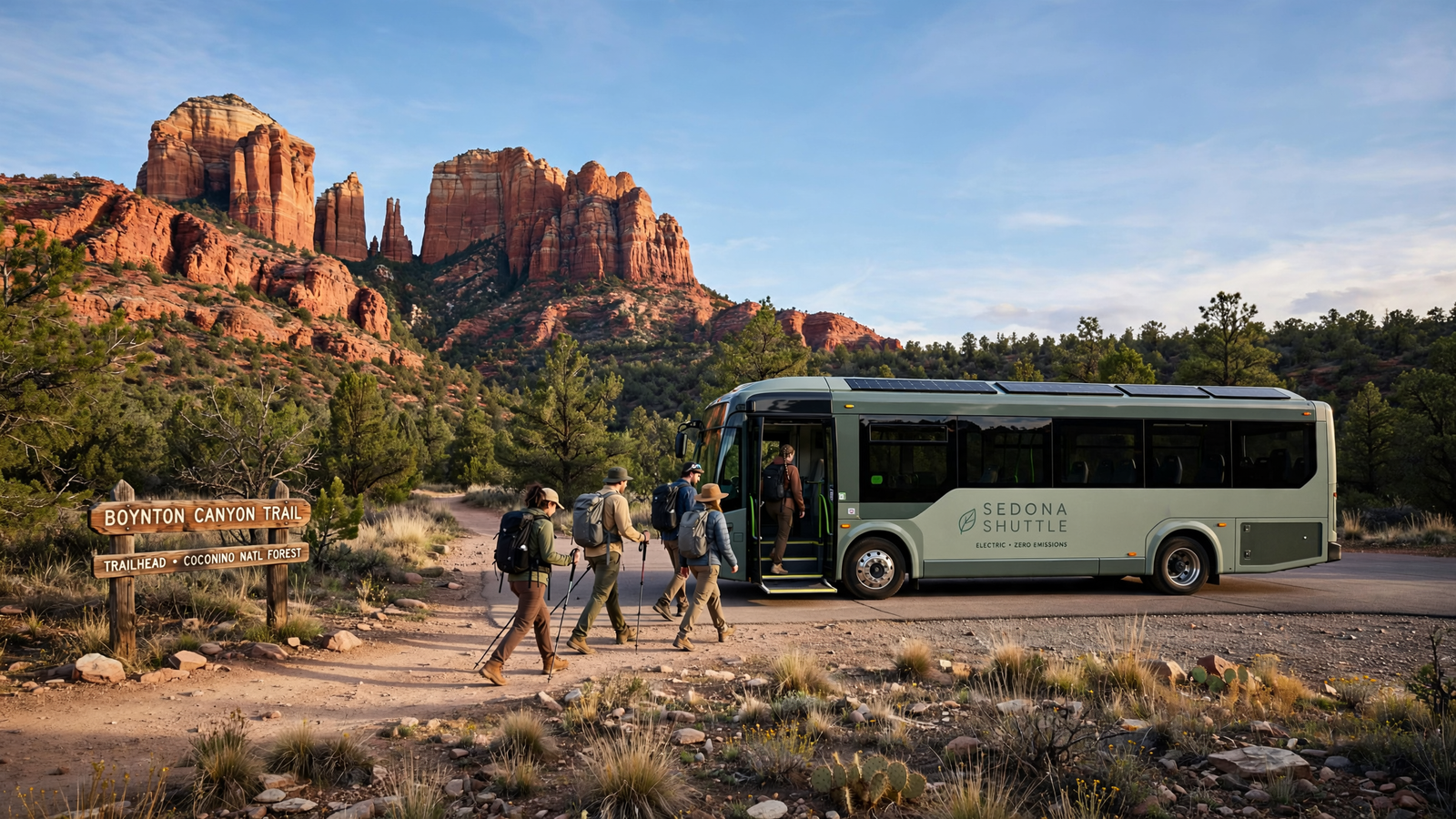
On a busy morning in Sedona, the red-rock landscape can seem to disappear behind a long line of cars. Trailhead parking fills early, narrow roads become crowded, and a short hike can begin with a frustrating search for a place to leave the vehicle.
The Sedona Shuttle offers a different way into that landscape. The free public service carries visitors from park-and-ride locations to several of the city’s most popular trail areas, making access to the surrounding red rocks less dependent on a private car.
A different beginning to a trail day
Operated through the region’s public transportation system, the shuttle serves trailheads and recreational destinations that have become difficult to manage during Sedona’s busiest periods. Riders can leave their cars at designated lots and continue by bus, rather than circling for parking near a trail.
That change is practical, but it also changes the feeling of the visit. A trail day begins in a shared public space, with hikers, residents and visitors moving together toward the same landscape. The experience is less about competing for a parking spot and more about reaching the trail itself.
The system includes service associated with popular destinations such as Soldier Pass, Cathedral Rock, Dry Creek and other high-demand trail areas. Routes and operating schedules vary, so visitors are directed to check the current Sedona Shuttle schedule before traveling.
Protecting access by managing demand
Sedona’s trails are part of a larger red-rock environment that includes fragile desert soils, narrow canyon roads and habitat managed by the U.S. Forest Service. Heavy visitation can affect more than traffic. Repeated walking outside established routes can damage biological soil crusts and increase erosion, while roadside parking can create safety problems and restrict emergency access.
A shuttle cannot solve every pressure created by tourism, and it does not remove the need for visitors to stay on designated trails, carry water and respect closures. But it gives the community one of the tools needed to manage demand without making the landscape less accessible.
That balance matters in a place whose appeal depends on being experienced outdoors. Keeping cars away from the most crowded trailhead approaches can make room for quieter roads, safer crossings and a clearer view of the land that brings people to Sedona in the first place.
A public service for residents and visitors
The shuttle is also a reminder that outdoor access is a community infrastructure question. Sedona is not simply a backdrop for weekend recreation; it is a lived-in city in Yavapai and Coconino counties, with residents navigating the same roads and public spaces as visitors.
Free trailhead transportation gives travelers another option while helping the city and its partners respond to seasonal demand. For residents, it can reduce some of the daily pressure created by visitor traffic. For visitors, it offers a more predictable start to a hike and a chance to see the red rocks without treating every overlook as a parking lot.
The larger achievement is modest but meaningful: access to a famous landscape is becoming a shared service rather than a private contest. In Sedona, that may be one of the most useful ways to keep the trails open, the roads safer and the experience of the place closer to what people came to find.