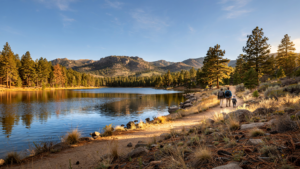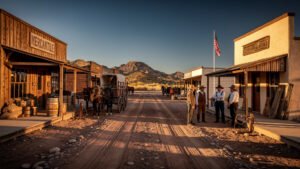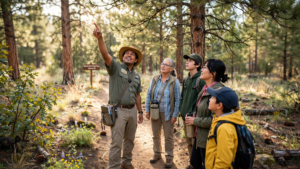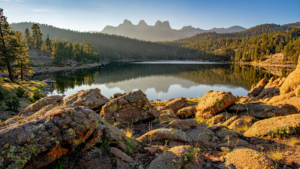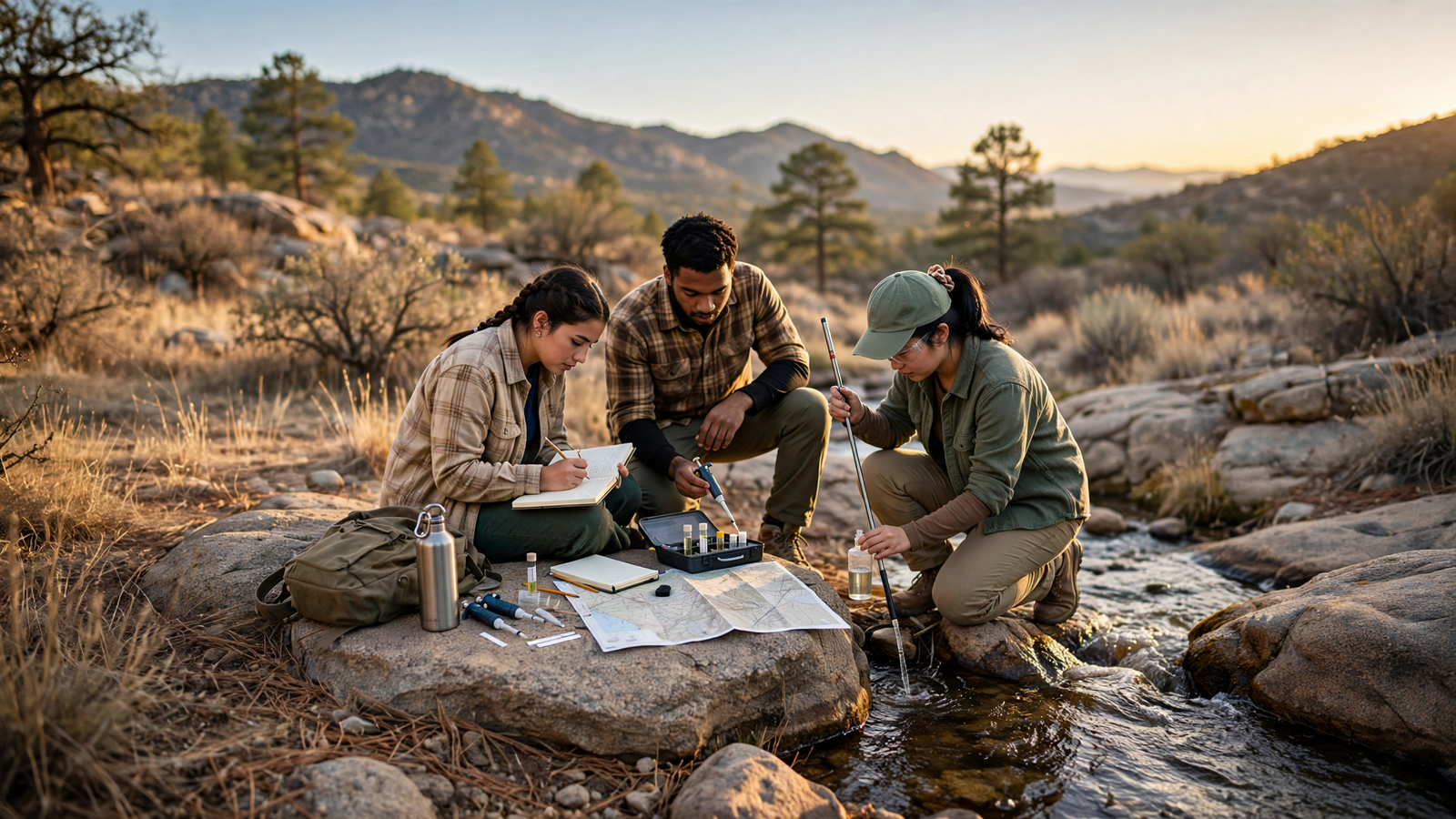
In Prescott, education has long been tied to the landscape beyond the classroom. The surrounding mountains, forests, high-desert valleys, and working communities are not simply scenery. They are part of the setting in which the city understands itself—and part of the curriculum at Prescott College.
Founded in the 1960s as an experiment in higher education, the college developed a model built around experiential learning. Students might study ecology outdoors, examine social questions through community work, or connect academic research to the practical challenges facing the Southwest. The approach has changed over time, but the central idea has remained remarkably consistent: knowledge becomes more useful when people have to encounter the world it describes.
A college created as an experiment
Prescott College was established in 1966 during a period when many Americans were questioning the structure of traditional institutions. Its founders imagined a college that would be small, interdisciplinary, and closely connected to real-world experience. Rather than organizing learning entirely around large lecture halls and rigid departmental boundaries, the school emphasized close relationships between students and faculty, independent work, and education outside conventional classroom settings.
That idea suited Prescott. The city was already known for its historic downtown and mountain setting, but it was also a place where questions about land, water, community development, and rural life could be seen at a human scale. A college built around those questions could use the region itself as a kind of extended campus.
The school’s early history was not simple. Like many experimental institutions of its era, Prescott College faced financial and organizational pressures. Its residential undergraduate program was suspended in the 1970s, while the institution continued serving adult and graduate students through other forms of study. The college later rebuilt its residential undergraduate program, eventually creating the combination of residential, adult, graduate, and online education it offers today.
That history matters because Prescott College was not simply a conventional college with an environmental theme added later. Its distinctive identity emerged from repeated attempts to rethink what a college should be, how students should be evaluated, and where learning should happen.
The landscape as a classroom
Experiential education can mean many things, but at Prescott College it has often involved direct engagement with places and people. The school’s academic programs include areas such as environmental studies, conservation biology, adventure education, counseling, education, social justice, and sustainability. Those subjects naturally lead students beyond campus boundaries.
A student studying conservation may need to understand not only ecological systems but also land management, public policy, and the people who live near protected areas. A student in adventure education has to think about leadership, risk, group dynamics, and the physical realities of the outdoors. A student working in social justice or community development may learn as much from local organizations and residents as from a textbook.
This approach does not mean that field experience replaces reading, writing, research, or theory. It means those forms of learning are connected. A stream can become a site for ecological observation, but also for questions about water rights, drought, recreation, habitat, and public responsibility. A neighborhood organization can become a setting for service, but also for examining the history and limits of well-intentioned outside intervention.
For Prescott, the model makes geographic sense. The city sits in a transition zone between Arizona’s lower desert and its higher-elevation forests. Within a relatively short distance are ponderosa pine landscapes, granite formations, riparian corridors, ranchlands, and communities facing the effects of wildfire and water scarcity. Students do not have to travel across the country to encounter major environmental and social issues. Many are present in the region around them.
Learning that leaves the campus
One of the most important features of Prescott College’s model is that it treats community relationships as part of education rather than as an occasional supplement. Field placements, internships, research projects, and service-learning opportunities can connect students with schools, nonprofits, public agencies, conservation groups, and other organizations.
That connection has two sides. Students gain experience with the complexity of work that cannot be simulated easily in a classroom. Community partners, when the relationship is carefully designed, gain research, labor, and new ideas. The arrangement is not automatically equal or successful; meaningful community-based education requires clear expectations, accountability, and respect for local knowledge. But the possibility is important: a college can be a participant in a place rather than an institution that merely sits inside it.
The college’s programs for adult learners extend that idea in another direction. Many students arrive with work histories, family responsibilities, military experience, or years of informal learning. A traditional academic structure can treat that background as separate from education. Prescott College’s flexible programs are designed to connect prior experience with formal study, allowing students to pursue degrees while continuing to live and work in their communities.
That has helped give the institution a broader sense of who a college campus is for. Prescott’s residential students may experience the school through campus life and field courses, while graduate and adult students may encounter it through online classes, intensive sessions, mentoring, or locally based projects. The result is less a single student culture than a network of people using the college in different ways.
A small institution with a large subject
Prescott College’s scale is part of its character. It does not have the resources or population of a major research university, and it does not try to imitate one. Its strengths are more concentrated: close faculty contact, interdisciplinary study, field-based learning, and a willingness to organize education around questions that do not fit neatly into one department.
Environmental education is central to the college’s public identity, but its deeper subject is the relationship between people and place. That relationship can be studied through conservation, teaching, counseling, community organizing, public health, outdoor leadership, or the arts. The common thread is an insistence that ideas should be tested against lived conditions.
For a mountain town such as Prescott, that insistence creates an unusual civic presence. The college brings young people, returning students, researchers, educators, and practitioners into a community already negotiating growth, wildfire, housing, tourism, water, and the protection of open land. Not every student project will transform the region, and not every partnership will last. But the steady presence of people asking these questions can strengthen a town’s ability to see its own challenges more clearly.
Why Prescott College still matters
Higher education is often described in terms of buildings, rankings, enrollment, and degrees. Those measures are useful, but they do not capture everything a college contributes to a place. Prescott College offers a different measure: how effectively can an institution help people pay attention to the world around them?
Its answer has been to put experience near the center of the academic process. The forest is not only a backdrop. A community organization is not merely a site for volunteer hours. A difficult social question is not something to be left behind when a class ends. Each can become material for sustained study, provided students approach it with discipline and humility.
That makes the college one of Prescott’s more distinctive places. It is not a museum preserving the past or a trail offering a temporary escape from town. It is a working educational community, continually asking how learning can become more connected to responsibility.
In a region where environmental and social decisions have immediate consequences, that question has practical value. Prescott College’s lasting contribution may be its refusal to separate education from the places where people live. Its campus is in Prescott, but its classroom is the wider world.