Long before Prescott became a destination for mountain trails, historic buildings, and summer evenings on Courthouse Plaza, the surrounding high country was being drawn into the map of the United States. One of the places where that process became visible was Fort Whipple, a former military post on the northern side of the city.
Today, the fort is not encountered as a single preserved frontier scene. Its history is spread across surviving buildings, institutional grounds, museum collections, roads, and the larger landscape around Prescott. That scattered quality is part of what makes the place worth noticing. Fort Whipple is not simply a monument to soldiers. It is a record of how a military installation helped establish Prescott as an administrative and civic center—and how that process changed the lives of the Native peoples who already called the region home.
A post before there was a town
Fort Whipple was established in late 1863, during the Civil War era, when the United States was trying to strengthen its presence across the newly organized Arizona Territory. The first post was located near Del Rio Springs, north of present-day Prescott. In 1864, the military installation moved to a more permanent site in the Granite Creek area.
That move mattered because Prescott was also taking shape at roughly the same time. The settlement was founded in 1864 and soon became the territorial capital. The fort and the town developed together, linked by the practical needs of government, transportation, security, and supply.
From the beginning, however, the story was more complicated than a simple account of settlement. The region was part of the homeland of Yavapai and Apache peoples. Military campaigns, forced movement, and the expansion of American institutions placed intense pressure on Native communities throughout central Arizona. Any honest understanding of Fort Whipple has to hold both sides of that history at once: the fort helped anchor a new territorial center, and its presence was part of a larger system of military occupation and displacement.
Why the location mattered
Fort Whipple stood in a landscape that offered several advantages. The area around Prescott had reliable springs and creeks compared with much of Arizona’s drier interior, along with timber, open grassland, and access to routes leading toward mining districts and other settlements.
The post also occupied a strategic position near the emerging territorial capital. Soldiers could support government operations, protect supply routes, and respond to conflict in a region where mining camps and transportation corridors were expanding quickly. The fort became part of the infrastructure that allowed Prescott to function as more than a temporary frontier settlement.
That infrastructure was not glamorous. It included roads, warehouses, quarters, stables, medical facilities, communications, and the people who maintained them. Military posts were communities as well as defensive sites. Officers, enlisted personnel, civilian workers, families, merchants, and visitors all passed through the fort’s orbit.
Seen from that angle, Fort Whipple offers a useful correction to the familiar image of the Old West as a collection of isolated heroes and dramatic episodes. The territory was built through institutions and daily labor as much as through gunfights or prospecting strikes. A post like Fort Whipple helped connect distant places to a growing network of administration and commerce.
The fort and the making of Prescott
Prescott’s early identity was closely tied to its role as a territorial capital. The town’s location made it a natural meeting point for officials, military personnel, miners, traders, and travelers. Fort Whipple reinforced that importance.
It also influenced the city’s physical and social development. Military activity brought demand for food, equipment, transportation, construction, and skilled services. Local businesses benefited from the presence of a permanent government installation, while the fort’s roads and communication links helped tie Prescott to the wider territory.
Over time, the military role of the original post changed. The United States Army eventually left Fort Whipple, but the site did not become empty or irrelevant. Its buildings and grounds were adapted for other public uses, allowing the place to remain part of Prescott’s institutional landscape.
That continuity is easy to overlook. Historic places often survive not because they remain frozen in their first form, but because later generations find new uses for them. Fort Whipple became connected with veterans’ services, medical care, and public history. In that sense, its story is not only about the nineteenth century. It is also about how communities reuse difficult and complicated places rather than erase them.
A landscape of overlapping memories
The Fort Whipple area sits within a part of Prescott where several layers of Arizona history meet. The landscape evokes the territorial period, the Army’s presence, the growth of the city, the history of veterans’ care, and the continuing presence of Native communities whose history predates the fort by centuries.
That overlap makes the site more valuable than a narrowly defined military exhibit. It can prompt broader questions: Who had authority over the land? Which stories were preserved, and which were left out? How did a frontier post become part of a modern city? What does it mean to preserve a place whose history includes both civic development and coercion?
Those questions are especially important in Prescott, where historic identity is a major part of the city’s public life. Preserving history does not require turning every old building into a celebration. It can also mean making room for complexity and acknowledging that the creation of territorial institutions came with real costs for Native peoples.
What remains to be seen
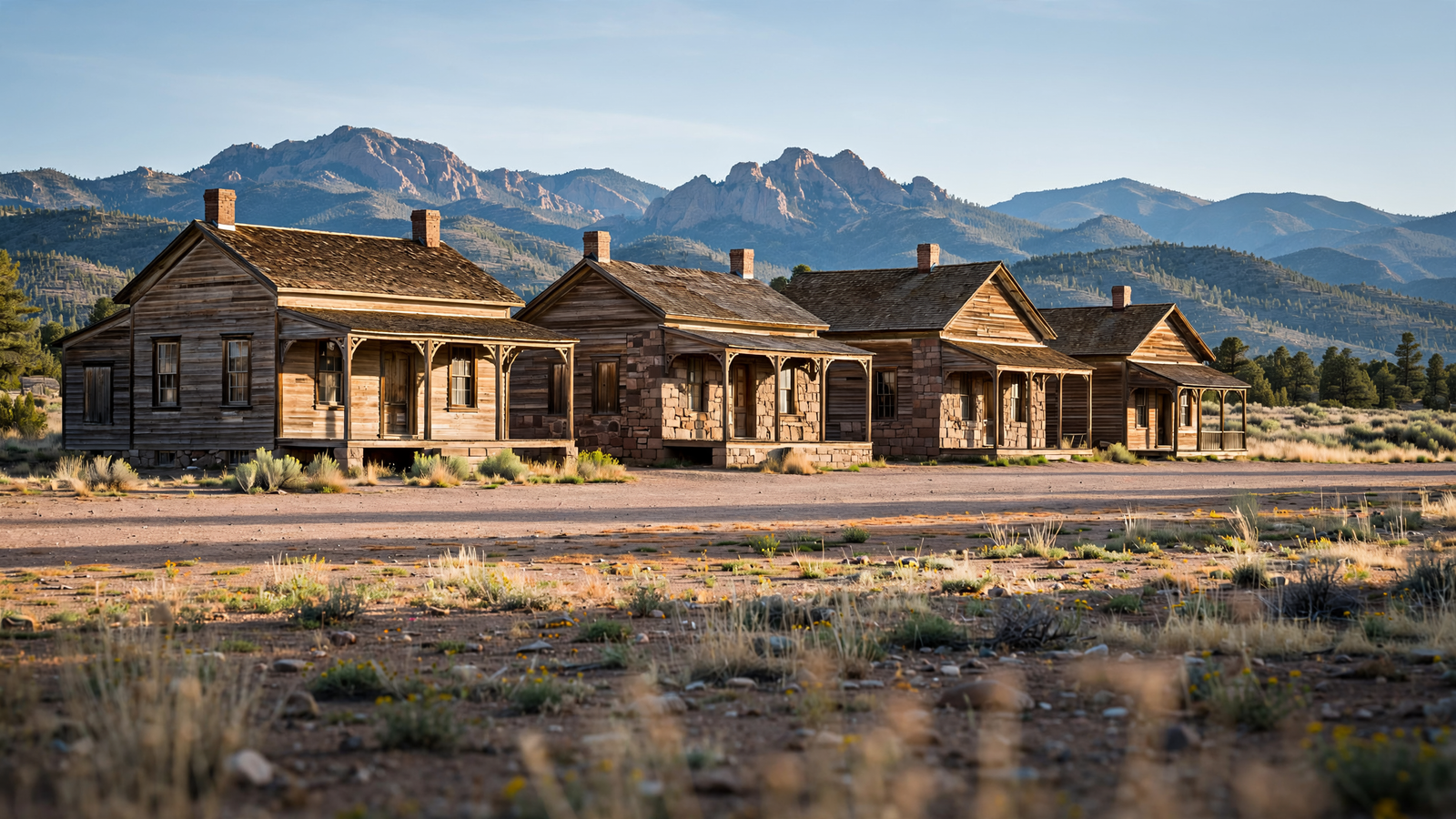
Visitors should not expect Fort Whipple to resemble a reconstructed frontier fort with a complete row of nineteenth-century buildings. Much of the original military landscape has changed, and portions of the site are associated with active institutional uses. Access to individual buildings or collections may be limited or scheduled, so checking current information before planning a visit is important.
Even so, the fort’s presence can be understood through the historic landscape, archival photographs, maps, surviving structures, and museum material connected with the post. The story is also visible beyond the site itself—in Prescott’s street plan, its early civic institutions, and the city’s emergence as the territorial capital.
For people exploring Prescott, Fort Whipple offers a different kind of historical experience from the more polished landmarks downtown. It is less about one famous building than about understanding how a place works across time. A military post became part of a town; a frontier installation became part of a public-service landscape; and a complicated territorial story became one of the foundations of a modern Arizona community.
A place that keeps asking for context
Fort Whipple’s most important legacy may be its ability to connect subjects that are often treated separately. Military history, Native history, territorial government, veterans’ care, transportation, and the growth of Prescott all meet here.
That makes the site a valuable reminder that places are rarely only one thing. A fort can be a military installation, a workplace, a source of opportunity for a nearby town, and an instrument of government expansion. Later, it can become a hospital campus, a historic resource, or a collection of memories that different communities interpret in different ways.
Prescott’s popular image is often built around its courthouse, saloons, forests, and western traditions. Fort Whipple adds another layer: the institutional story beneath the mythology. It shows how a mountain town became connected to the machinery of a young territory—and why understanding that past requires both appreciation for what remains and care about what the official story has sometimes left unsaid.