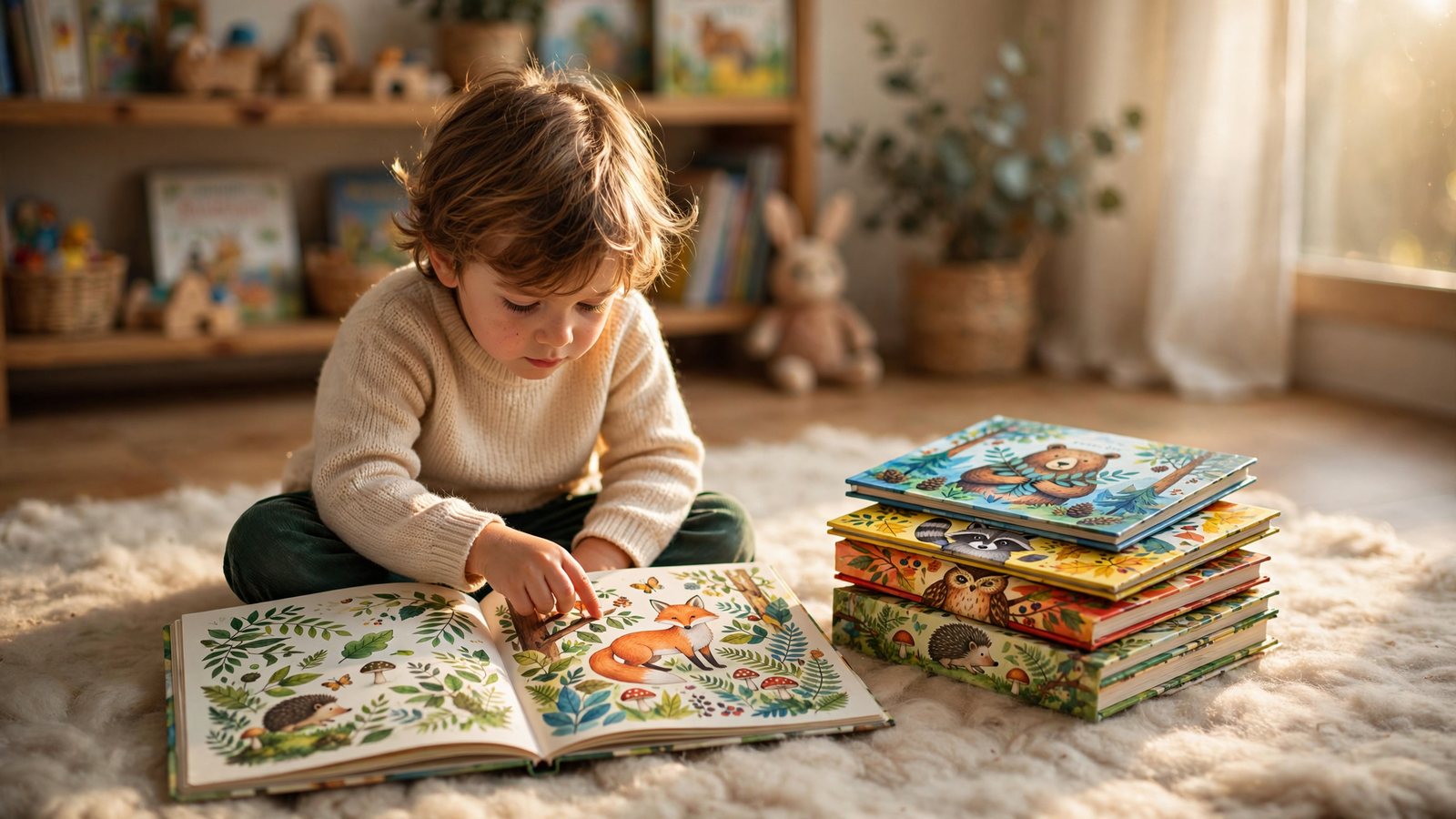
Once a month, a child somewhere in the United States may find a new book waiting in the mailbox. The envelope is addressed to the child, not the parent. The book is free. The family does not have to buy it, return it, or prove that it qualifies for help.
That simple ritual is the heart of Dolly Parton’s Imagination Library, a book-gifting program that has grown from a small regional project into one of the most recognizable early-literacy efforts in the world.
The program’s central idea is disarmingly practical: give young children books of their own, often enough that reading becomes part of the rhythm of family life. It is a form of kindness that arrives repeatedly, in a package small enough to fit through a mail slot.
A promise that began in East Tennessee
Parton launched the Imagination Library in 1995 in her home region of Sevier County, Tennessee. The project was created through the Dollywood Foundation, the charitable organization she established with a broader mission of helping children and communities.
The personal reason behind the program has been part of its public story from the beginning. Parton has said that her father, who was unable to read, inspired her desire to help children experience the opportunities that literacy can open. The first program was local: children from birth through age five received one book each month, regardless of their family’s income.
The first book mailed through the program was The Little Engine That Could, a choice that placed encouragement and persistence at the center of the project. The point was never simply to distribute reading material. It was to help create an early relationship between a child and the idea that books belong in everyday life.
At first, the program served children in one Tennessee county. Its growth came through a partnership model. Local organizations, including libraries, schools, foundations and community groups, could bring the program to their own areas by raising the local funds needed to cover the books and delivery. The Dollywood Foundation supplied the operating framework, book-selection process and administrative support. For related reading, see The Little Free Pantry: How a Box by the Sidewalk Became a Neighborhood Habit of Care.
Why ownership matters
A public library can be an extraordinary resource, but a library book is borrowed. The Imagination Library offers something different: a child receives a book addressed to them and gets to keep it.
That distinction matters in homes where children may have few books, limited transportation or little spare money for new reading material. A personal shelf can make reading visible. A child can reread the same story, carry it around, share it with a sibling or bring it to bed. The book becomes part of the household rather than a temporary visitor.
The monthly schedule matters, too. One book can be a welcome surprise. A book every month creates expectation. It gives adults a recurring reason to sit down with a child, look at pictures, ask questions and follow a story together.
Early childhood specialists have long emphasized that talking, singing and reading with young children help build the language experiences that support later learning. The Imagination Library does not replace a classroom, a library or a strong early-childhood program. Its contribution is more intimate: it places a tool for shared attention directly in the home.
A carefully chosen book, not just any book
The program’s books are selected by a committee of early-literacy and publishing specialists. The selection process considers the child’s age, the quality of the writing and illustrations, and the way a book can encourage interaction between children and the adults reading with them.
Children receive books in stages designed for their development. The youngest readers may receive sturdy board books suited to small hands. Older preschoolers receive longer stories and books that can introduce new ideas, vocabulary and perspectives.
Families do not choose from a catalog. That is part of the program’s design. The monthly arrival is meant to preserve the pleasure of discovery while ensuring that each child receives a sequence of books prepared for their age group.
The program has also made room for representation. Its selection materials describe an effort to include books that reflect different cultures, family experiences and ways of seeing the world. For a child, seeing a familiar life in a story can be affirming. Encountering an unfamiliar life can make the world feel larger without requiring a lesson or a lecture.
Local generosity makes the national network work
The Imagination Library may carry Parton’s name, but its day-to-day reach depends on local partners. In participating communities, a library system, school district, nonprofit organization, foundation or civic group typically helps fund and promote the program. For related reading, see Foster Grandparents: How Older Arizonans Turn Time Into a Gift for Children.
That arrangement gives communities a meaningful role. Local supporters are not merely donating to a distant cause; they are helping put books into the hands of children who live nearby. They may organize enrollment drives, explain the program to families, raise money for postage and books, or work with educators who know which neighborhoods are being missed.
The model also makes the program adaptable. A rural library can participate. So can an urban nonprofit, a tribal community or a statewide initiative. The basic promise remains consistent while the local route to families can differ.
Availability is therefore determined locally. Families can check the Imagination Library website to see whether the program operates in their area and, where it does, enroll eligible children. The usual age range is birth through the fifth birthday, though local enrollment details and rollout schedules can vary.
From one county to millions of children
The program’s expansion has been substantial. According to the Dollywood Foundation, the Imagination Library has mailed hundreds of millions of books since its founding and now reaches children in communities across the United States, Canada, the United Kingdom, Australia and the Republic of Ireland.
Those totals are impressive, but they can hide the human scale of the effort. The program is ultimately made up of individual deliveries: a first book for a baby, a familiar character welcomed by a preschooler, or a story that gives a tired parent an easy way to begin a conversation.
Research connected with the program has examined questions including children’s access to books, family reading habits and early literacy outcomes. As with any book-gifting initiative, the presence of a book does not guarantee that a child will become a strong reader. Reading development depends on many things, including health, language, school quality, family time and access to other supports.
Still, access is a necessary beginning. A child cannot reread a book that never comes home. A parent cannot easily build a reading routine around an empty shelf. By addressing that basic barrier, the program creates an opportunity without asking families to navigate a complicated system. For related reading, see The Tool Library: How Borrowing a Drill Can Make Home Repair Feel Possible.
The quiet power of repetition
Large charitable projects are often described through their biggest numbers. The more revealing measure here may be repetition. The same promise is delivered month after month: another book, another chance to read, another object that says a child’s curiosity is worth investing in.
That repetition turns generosity into infrastructure. It does not depend on a single holiday drive or a one-time event. It becomes part of a family’s calendar.
There is also dignity in the simplicity of the exchange. Families do not have to identify themselves publicly as being in need. Children are not separated into “deserving” and “undeserving” groups. Every enrolled child receives the same basic gift, selected with care and sent directly to them.
In that sense, the Imagination Library offers a useful lesson about kindness. Help does not always have to arrive as an emergency response. Sometimes it works better as a dependable habit, designed around what people can use and repeated long enough to become ordinary.
A small doorway into a larger world
A free book cannot solve every challenge facing a child or a community. But it can open a door. It can give a toddler a new word, give a parent a shared ritual, give a preschooler a story to tell and give a household one more reason to pause together.
That is what makes Dolly Parton’s project such a durable piece of good news. It began with one person’s memory of what reading could make possible and grew through the work of local people who believed that a child should not have to wait for opportunity to find them.
Every monthly package carries the same modest message: here is something for you. Open it. Read it again if you like. Keep it.
Use: Founding history, the East Tennessee launch, the program’s purpose and the first book distributed.
Use: Program structure, enrollment information, local availability and the birth-to-age-five eligibility framework.
Use: Research background and information about studies examining the program and early literacy.
Use: Authoritative background on the role of shared reading, conversation and early language experiences.