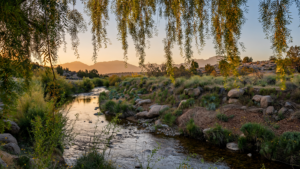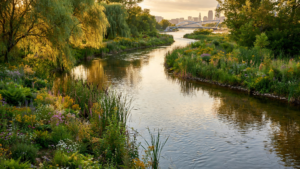
On a map, the National Wildlife Refuge System can look less like a single institution than a constellation. Its lands and waters are scattered across the country: coastal marshes, desert springs, prairie potholes, forested islands, Arctic tundra, river bottoms and grasslands shaped by fire.
Together, they form one of the largest conservation networks in the United States. The system includes more than 570 national wildlife refuges and dozens of wetland management districts, protecting hundreds of millions of acres for fish, wildlife, plants and the habitats that sustain them.
Many of these places are not famous in the way Yellowstone or the Grand Canyon is famous. Their names may be known mainly to nearby communities, hunters, birders, anglers, biologists and families who return every year. Yet their importance is national. Refuges provide breeding grounds, migration routes, wintering habitat and safe ground for species whose lives depend on finding the right place at the right time.
A conservation idea begins with a small island
The system’s origin story reaches back to Florida’s Indian River Lagoon. In 1903, President Theodore Roosevelt established Pelican Island as the country’s first federal bird reservation after learning that plume hunters were killing birds for feathers used in women’s hats.
The designation was modest in size, but large in implication. The federal government was asserting that wildlife habitat could be protected for its own public value—not simply opened for development, extraction or private use.
That idea expanded over the following decades. New refuges were created to protect migratory birds, conserve wetlands and preserve habitat for species under pressure. Some were established around rivers and coastal estuaries. Others protected grasslands, forests, islands or desert water sources. A system that began with a small pelican colony eventually became a national patchwork of places managed for the long-term survival of wildlife. For related reading, see The Emergency Alert System: How Radio and Television Became America’s Public Warning Network.
The National Wildlife Refuge System is administered by the U.S. Fish and Wildlife Service. Its basic mission is straightforward: conserve fish, wildlife, plants and their habitats for the benefit of present and future generations.
More than a collection of scenic places
A refuge is not simply a park with a different sign. Each one is managed according to its purpose, landscape and wildlife needs. At one refuge, that may mean restoring tidal marsh. At another, it may mean maintaining nesting islands, protecting a desert spring or managing grassland for species that evolved with periodic fire.
That work is often practical and unglamorous. Refuge staff and partners remove invasive plants, repair water-control structures, restore stream channels, monitor wildlife populations and use prescribed fire where appropriate. They may close a portion of a refuge during nesting season or limit access to sensitive habitat. In other places, they create trails, overlooks and educational programs so people can experience wildlife without damaging the places they came to see.
The result is a form of conservation that depends on attention over time. Habitat recovery rarely arrives as one dramatic event. It is built through repeated decisions: where water should flow, when a field should be burned, which species need protection and how people can use a landscape without exhausting it.
A national network for species on the move
Wildlife does not recognize state boundaries, county lines or property fences. A bird that breeds in the northern United States may spend winter along the Gulf Coast. A salmon may pass through several jurisdictions during its life. Sea turtles cross oceans before returning to beaches where they were born.
Refuges help keep portions of those journeys possible. A coastal marsh can provide food for migrating shorebirds. A prairie wetland can offer resting habitat to waterfowl. A protected river corridor can give fish and mammals a place to feed, reproduce or move through a developed landscape. For related reading, see The Klamath River: How a Dam Removal Project Is Making Room for Salmon Again.
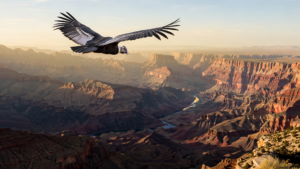
For endangered and threatened species, a refuge can be especially important because it provides a place where recovery work can be concentrated. Biologists may protect nesting sites, raise animals for reintroduction, control predators or invasive species, and track whether a population is growing. The system supports habitat for hundreds of species listed under the Endangered Species Act, including animals such as whooping cranes, manatees, sea turtles and California condors.
Success does not always mean a species is removed from the endangered list. Sometimes it means a population becomes more stable, a breeding area is secured or a once-empty habitat begins to support young animals again. Conservation is often measured in small signs: a nest that produces fledglings, a fish counted farther upstream, a plant returning after invasive vegetation is removed.
Public lands with a public invitation
Refuges also represent a distinctive promise: conservation does not have to mean locking people out of nature. Where it is compatible with wildlife protection, the system provides opportunities for wildlife observation, photography, fishing, hunting, environmental education and interpretation.
That balance can be visible at a boardwalk over a marsh, a trail beside a restored wetland or an observation platform overlooking a rookery. A child watching a heron lift from the reeds may not see the hydrology, policy and habitat management behind the scene. But the experience can become an early lesson in how public decisions shape the living world.
Access also gives local communities a reason to value places that might otherwise be viewed only as undeveloped land. Refuge visitors spend money in nearby towns, support guides and outfitters, and build relationships with landscapes that are managed for more than immediate economic return. In rural areas, refuges can remain working parts of a community’s identity while protecting wildlife habitat at the same time.
The pressures outside the boundary
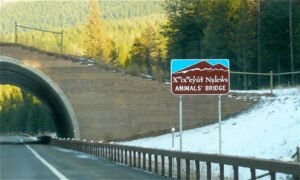
Refuges cannot solve every conservation problem by themselves. Wildlife may spend only part of its life inside protected lands. Pollution can arrive from upstream. Water withdrawals can affect wetlands. Roads and development can divide habitat. Rising temperatures and shifting precipitation can change the timing of migration, flowering and breeding. For related reading, see The Wildlife Overpass: How Arizona Is Making I-17 Safer for Animals and Drivers.
Those pressures make partnerships essential. The Fish and Wildlife Service works with states, tribes, conservation groups, universities, private landowners and local communities. In many landscapes, the protected refuge is one piece of a larger habitat corridor. Conservation becomes more durable when a river, grassland or coastal system is cared for beyond the refuge boundary as well.
That approach also reflects a useful reality: public conservation is not only about preserving a snapshot of the past. Managers must decide how to help ecosystems remain functional as conditions change. Sometimes that means restoring historical habitat. Sometimes it means protecting a new route or water source that wildlife is beginning to use.
Why the system still matters
The National Wildlife Refuge System is easy to overlook because its work is distributed. There is no single entrance gate, skyline or landmark that represents all of it. Its achievements are spread across thousands of miles and recorded in healthier wetlands, returning birds, protected shorelines and landscapes that remain available to the public.
Its greatest contribution may be the room it creates: room for a flock to rest, for a wetland to absorb floodwater, for a threatened animal to breed, for a native plant to return and for people to encounter wildlife on terms that do not require owning the land.
More than 120 years after Pelican Island received federal protection, that idea remains active. The refuge system shows that national conservation is not only a matter of setting aside spectacular wilderness. It is also the patient work of holding together ordinary-looking places that wildlife quietly depends on—and making sure those places remain part of the American landscape.
Use: System overview, mission, refuge network and conservation activities.
Use: Origins of the system and the 1903 establishment of Pelican Island.
Use: Federal framework for refuge purposes, compatibility and public uses.
Use: Independent conservation context and overview of the system’s national role.