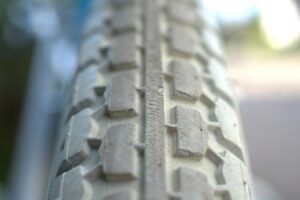
Tire tread helps your car grip the road, especially when it is wet. You can check its depth at home without removing a wheel or lifting the car. A tread-depth gauge gives a measurement; a penny offers a quick screening check.
Use this guide to check all four tires, notice uneven wear and decide when it is time to get professional advice. A tread check is useful, but it does not replace an inspection if a tire is damaged or behaving unusually.
What you will need
- A tread-depth gauge, available at many auto-parts stores, or a penny.
- A place to park on level ground with enough light to see the tread.
- Paper or a phone to note readings, if you are using a gauge.
Steps: Check tread with a gauge
- Park safely. Park on level ground, switch off the engine and set the parking brake. Check the tires when the car is stationary; do not crawl beneath it or put any part of your body under the vehicle.
- Look over each tire. Check the tread and visible sidewall for obvious damage, such as a bulge, deep cut or exposed cords. If you see damage, do not rely on a tread reading to decide whether the tire is safe; ask a tire professional to inspect it.
- Find the main tread grooves. These are the deeper channels running around the tire. Do not measure on the raised tread-wear indicator bars, which sit inside some grooves, or on a small stone or other object lodged in the tread.
- Use the gauge as directed. Gauge designs differ, so follow the instructions that came with yours. In general, place its measuring tip in a groove and hold the gauge’s base flat across the tread blocks. Read the measurement without tilting the tool.
- Check several places across the tread. Take readings in the inner, middle and outer portions of the tread. Repeat at more than one point around the tire, since wear may not be even. Keep clear of the tire’s raised wear bars when choosing a spot.
- Repeat on all four tires. Note the readings and pay attention to the lowest one on each tire. A single measurement may miss a worn patch.
- Compare readings and act. In the United States, NHTSA advises replacing tires when tread is worn to 2/32 of an inch. If a reading is at or near that point, arrange a tire inspection or replacement discussion promptly. Local rules may differ, and a professional can help assess the tire’s overall condition.
Quick screening: the penny test
If you do not have a gauge, a penny can help you spot tread that is close to the commonly used U.S. 2/32-inch replacement point. It is a screening method, not a precise measurement.
- Hold a penny with Lincoln’s head facing down.
- Place it into a main tread groove. Choose a location away from a wear-indicator bar and any debris.
- Check how much of the head is covered. If you can see all of Lincoln’s head, the tread is worn to around 2/32 of an inch or less at that spot. Have the tire assessed and plan for replacement.
- Repeat in several places. Check across the tread and around each tire. If results vary, use the lowest-looking area as a reason to get a more accurate gauge reading or professional inspection.
What to notice besides the number
Many tires have tread-wear indicator bars molded into the grooves. As the tread wears down, the bars become level with the surrounding tread. If you see that, the tire has reached its wear indicators and should be assessed for replacement. A gauge is useful for checking the tread more precisely.
Compare the inner, middle and outer readings. If one area is wearing faster than another, or one tire is wearing much more than its partner, make a note of it and ask a tire professional to investigate. The pattern can be a clue that something needs attention, but a visual check alone cannot identify the cause.
Also look for cracks, bulges, cuts, exposed cords or objects embedded in a tire. A damaged tire may need attention even if its tread is still deep. If you notice a new vibration, repeated pressure loss or other change while driving, arrange an inspection rather than waiting for the next tread check.
Tips and things to know
- Do not judge a tire by one spot. Wear can differ across the width and circumference, so check several locations.
- Keep notes. Recording readings can make changes easier to notice at a later check.
- Tread depth is only one part of tire condition. Age, damage, pressure and other factors also matter. Follow your vehicle and tire manufacturers’ guidance and seek professional help if you are unsure.
- Do not use the penny test as a precise measurement. A gauge gives a numerical reading and makes it easier to compare spots.
A few minutes with a gauge—or a penny for a quick screen—can help you find worn or uneven tread before it catches you by surprise. Check every tire in several places, note the lowest readings and ask a tire professional about anything near the replacement point or showing damage.