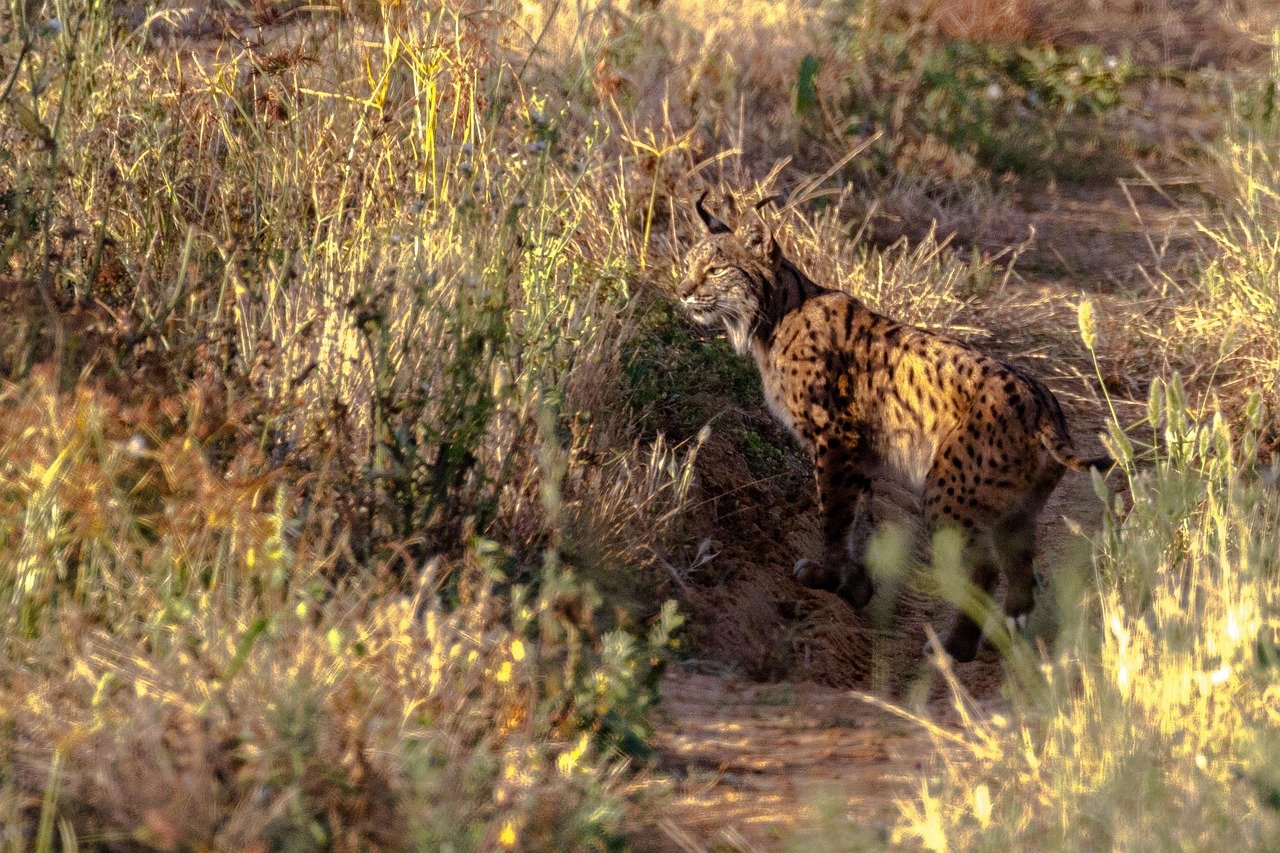
The Iberian lynx is a specialist hunter with a very particular favorite: the European rabbit. That dependence once helped make the cat’s decline especially severe. As rabbit populations fell, the lynx lost much of the food it needed to survive. Today, the rabbit is also central to one of Europe’s most notable conservation recoveries.
In 2002, monitoring counted just 94 Iberian lynxes in the wild, confined to two isolated populations in southern Spain. Two decades later, the 2023 census recorded 2,021 animals in Spain and Portugal. In June 2024, the International Union for Conservation of Nature (IUCN) changed the species’ global Red List status from Endangered to Vulnerable—a sign that the risk of extinction has fallen, not that the risk has disappeared.
A cat tied to a shrinking food supply
The Iberian lynx (Lynx pardinus) is native to the Iberian Peninsula. It is smaller than the Eurasian lynx, with distinctive ear tufts, a short tail and a spotted coat. Unlike a generalist predator that can readily switch among many kinds of prey, it relies heavily on rabbits. That makes the health of rabbit populations a practical measure of whether lynx habitat can support the cats.
In the 20th century, rabbit numbers were hit by disease, including myxomatosis and rabbit haemorrhagic disease. Habitat loss and fragmentation added pressure, while road collisions and other human-caused deaths made it harder for small, separated lynx populations to recover. By the early 2000s, the species’ survival depended on more than protecting the places where the last cats remained: conservationists also had to rebuild populations and reconnect suitable areas.
Recovery took more than breeding cats
Captive breeding became one part of the response. The aim was not simply to raise lynxes in human care, but to prepare animals for release into the wild and help establish new populations. Reintroductions widened the species’ footprint beyond its last strongholds. At the same time, conservation projects worked to improve habitat, support rabbit populations and reduce hazards such as dangerous road crossings.
Those elements fit together. A released lynx needs enough prey and a landscape in which it can find food, shelter and a mate. If a road cuts through that landscape, a growing population can still lose animals to traffic. And if new groups remain isolated, their long-term prospects may be weaker. Conservation therefore has to work at the scale of a connected landscape, often across land managed by different public bodies and private owners.
Project work under the European Union’s LIFE programme has helped coordinate efforts in Spain and Portugal, including releases and measures intended to connect populations. The 2023 census counted 1,730 lynxes in Spain and 291 in Portugal. That spread is important: a species once reduced to two small groups now occupies multiple areas, giving it more room to grow and reducing the chance that one local setback will affect every animal.
What the population milestone means
The IUCN’s 2024 reassessment recognized the long-term increase and the impact of sustained conservation work. The move to Vulnerable is a genuine achievement: it means the lynx is no longer judged to face the same level of extinction risk as it did when its numbers were at their lowest. It also reflects a recovery measured over years, rather than a single successful release or breeding season.
But a category change is not a finish line. Vulnerable still means the species faces a substantial risk of extinction in the wild. The population remains concentrated on the Iberian Peninsula, and its dependence on rabbits leaves it exposed when prey numbers fall. Roads and fragmented habitat continue to matter, while maintaining genetic diversity and establishing viable populations in more areas remain important goals.
The count of 2,021 is also a snapshot, not a guarantee that growth will continue at the same pace. Keeping the gains will require regular monitoring and the less visible work that makes releases possible: managing habitat, helping rabbits recover, reducing avoidable deaths and maintaining cooperation among regions and countries.
A recovery with a clear lesson
The Iberian lynx story is often told through its rising numbers, but the deeper lesson is how those numbers were made possible. Captive breeding could supply animals; it could not, by itself, provide food or safe territory. Reintroductions could establish new groups; they could not, alone, ensure those groups would remain connected. Recovery depended on combining those approaches with habitat and prey management.
That combination has moved the Iberian lynx away from the brink. The achievement is not that the species is now safe, but that conservation has created a larger, more widely distributed population with a better chance of persisting. For a predator whose future is tied so closely to the rabbit—and to the landscape both animals need—the work continues well beyond the headline census figure.