Arizona’s most important water reserve may be one residents never see.
Across the state, water is being stored beneath the ground in natural aquifers. The system is part of Arizona’s long-term strategy for managing an unpredictable supply, particularly in a state where population growth, prolonged drought and pressure on the Colorado River have made every acre-foot more valuable.
A bank without a visible reservoir
The Arizona Water Banking Authority was created in 1996 to store the state’s unused portion of Colorado River water. Rather than allowing that water to pass through the system unused, the authority can put it underground at designated storage sites or use it to offset groundwater pumping at participating facilities.
That second method is known as a groundwater savings facility. In a simplified example, a farm that might otherwise pump groundwater receives surface water instead. The groundwater remains in the aquifer, effectively preserving it for later use.
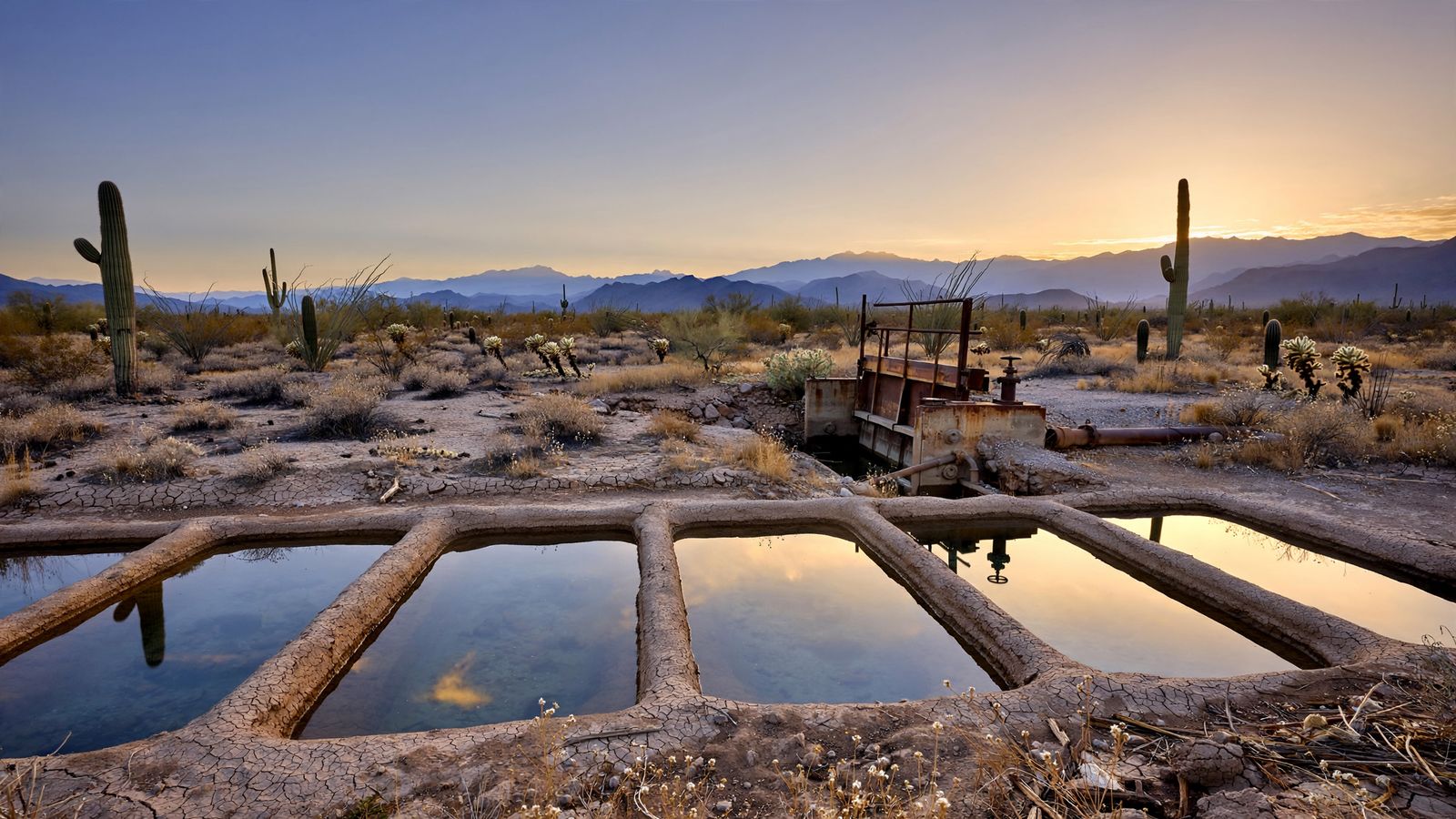
At underground storage facilities, water is delivered into basins designed to let it seep through layers of soil and rock. The aquifer becomes the reservoir. Arizona records the stored water through long-term storage credits, which represent water that may be recovered in the future under state rules.
Why store water underground?
Underground storage avoids many of the problems associated with open reservoirs. Water is not exposed to the same level of evaporation, an especially important consideration in Arizona’s hot, dry climate. Aquifers also spread across broad areas, allowing water to be held closer to the communities and ecosystems that may eventually need it.
The system is not a limitless solution. Storage sites have physical limits, recovering water requires wells and infrastructure, and credits do not create new water. A stored supply can help communities manage a shortage, but it cannot erase the decline of a river or replace conservation.
Still, the bank gives Arizona something a river shortage alone cannot provide: time. Water stored in earlier, wetter years can be assigned to particular purposes during drought or other periods of reduced supply.
A reserve with several jobs
The authority’s stored water supports multiple public goals. Some supplies are intended for municipal and industrial use. Other water is connected to the needs of communities that have historically lacked reliable access to the state’s major water systems. The bank also maintains reserves for shortage conditions and emergencies.
Arizona’s underground storage network operates alongside other conservation tools, including groundwater-management rules, reclaimed-water projects, agricultural efficiency efforts and planning by cities and water providers. Each addresses a different part of the state’s water challenge.
The larger lesson is easy to miss because the infrastructure is mostly invisible. Arizona’s water security is not built only through canals, dams and treatment plants. It is also built by placing water underground when it is available, tracking what has been saved and preserving options for years when the supply is less dependable.
That approach cannot guarantee abundance. It can, however, turn some of Arizona’s occasional water surplus into a carefully managed reserve—one that waits beneath the desert until the state needs it.