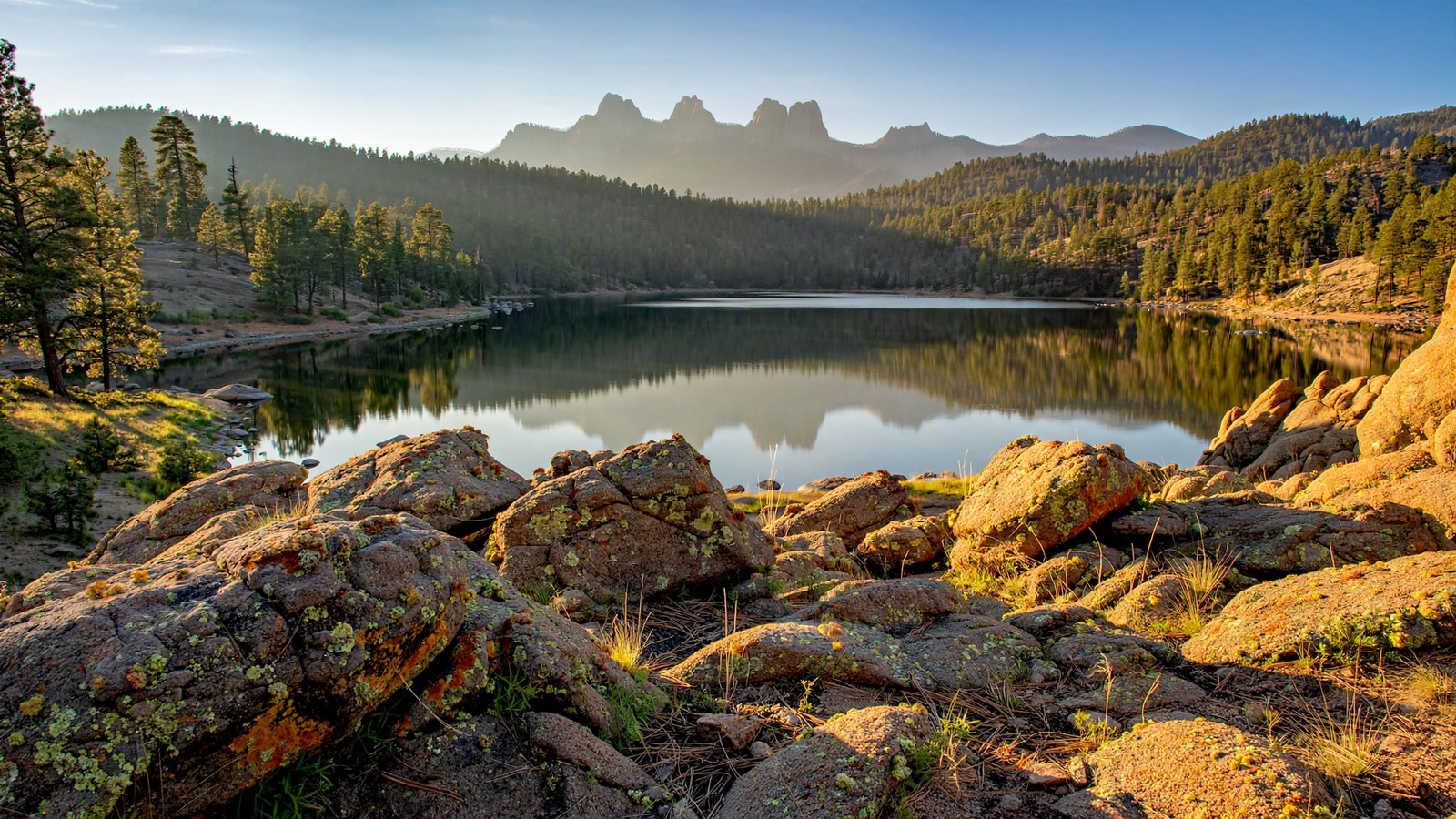
There are places near Prescott where the city seems to loosen its grip. The roads become quieter, the ponderosa pines gather more closely, and the granite that defines so much of the surrounding landscape begins to appear in broad, weathered forms. Granite Basin is one of those places.
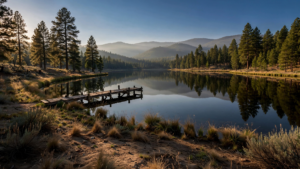
Located in the Prescott National Forest a short drive northwest of town, Granite Basin Recreation Area is not a single attraction so much as a compact mountain landscape. A lake sits among forest and rock. Trails lead into the surrounding hills. Picnic areas create room for an unhurried afternoon. The result is a place that does not ask visitors to choose between scenery and access: both are part of the experience.
That combination helps explain Granite Basin’s particular appeal. It feels like a destination, but it does not require an expedition. A person can come for a walk, a quiet view, a picnic beneath the trees or time beside the water, then be back in Prescott without spending the entire day on the road.
A mountain landscape close to town
Granite Basin lies about six miles northwest of Prescott, reached from Iron Springs Road. Its location places it within easy reach of the community while preserving the sense of entering a different environment. The recreation area is part of the Prescott National Forest, a large public-land landscape that surrounds the city with forests, mountains, grasslands and high-desert country.
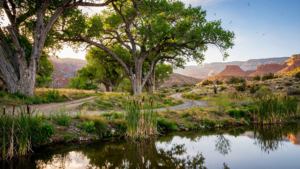
That setting matters. Prescott is often associated with its historic downtown and Courthouse Plaza, but the city’s character is also shaped by the public land around it. The national forest provides the larger frame: a place where residents and visitors can move from paved streets into a working landscape of trees, trails, wildlife habitat and watersheds.
Granite Basin offers a particularly approachable introduction to that setting. The area has enough variety to reward a longer visit, yet its central features are easy to understand. Forest provides shade and texture. Granite gives the terrain its shape. The lake gathers the view into a reflective center.
Where granite becomes a setting, not just a landmark
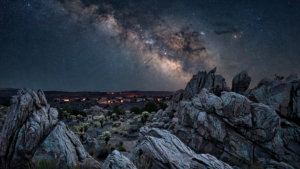
Granite in the Prescott region is more than a dramatic backdrop. It is part of the area’s underlying geology and one of the reasons the landscape feels so distinct. At Granite Basin, exposed rock and rounded formations meet stands of pine, creating the kind of scenery that changes with the weather and the hour.
Morning light can sharpen the edges of the rock. Afternoon shadows make the trees feel deeper. After a storm, the granite may hold a darker color while the surrounding vegetation appears newly washed. These changes are subtle, but they encourage repeat visits. The place is not consumed in a single overlook or photograph; it is experienced through movement and attention.
The trails help make that possible. Routes in and around the recreation area give hikers a way to see the basin from different angles and to move beyond the immediate shoreline. Some visitors come for a short outing, while others use the area as a starting point for a more substantial walk through the Prescott National Forest. The broader trail network also reflects the way public lands serve multiple kinds of recreation, including hiking, horseback riding and mountain biking on appropriate routes.
That variety is part of the area’s strength, but it also calls for the ordinary courtesies of shared public land. Staying on designated trails, yielding appropriately, keeping dogs under control and carrying out waste help preserve the experience for the next visitor. In a landscape that can appear rugged and resilient, small disturbances can still accumulate.
The lake gives the basin a different rhythm
Granite Basin Lake changes the character of the place. Water in the high country is never just decoration. It draws birds and other wildlife, reflects the surrounding rock and trees, and gives visitors a reason to pause rather than simply pass through.
The lake also creates a different kind of recreation from the trails. A walk can be measured in distance, but time beside the water is often measured in observation: a breeze moving across the surface, a bird crossing the shoreline, or clouds shifting above the pines. Fishing is among the activities associated with the lake, while the surrounding day-use areas make it possible to build a simple outing around lunch, conversation and scenery.
Because Granite Basin is a managed recreation area rather than an untouched wilderness, its appeal comes from balance. Roads, picnic facilities and maintained trails make the landscape accessible. The forest and rock retain enough presence to make the visit feel removed from town. That balance is one of the quiet achievements of public recreation: providing a welcome without erasing the character of the place being visited.
A public landscape with several kinds of visitors
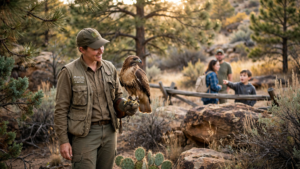
Granite Basin does not belong to one narrow definition of outdoor recreation. It can be a family picnic place, a trailhead, a fishing destination, a bird-watching stop or a setting for someone who simply wants to sit beneath the trees. Those uses may overlap, but they do not have to compete if visitors approach the area with awareness.
This is especially important in a region where summer heat, drought and wildfire risk shape everyday life. The Prescott National Forest advises visitors to check current conditions, fire restrictions and alerts before heading out. Weather can change quickly in the mountains, and seasonal restrictions may affect where fires are permitted, whether certain roads are open and what precautions are necessary.
Preparation does not make a visit less spontaneous. It helps protect the qualities that make the visit worthwhile. Bringing water, planning for limited services and knowing the rules for camping, fires and pets are simple ways to treat the basin as a living public resource rather than a disposable backdrop.
Why Granite Basin belongs in Prescott’s story
Prescott has no shortage of places that attract attention. Some are historic, some are dramatic and some are closely tied to the city’s identity. Granite Basin is quieter than many of them, but that quiet is precisely its contribution.
It shows how a community’s sense of place can extend beyond its built center. A town is not defined only by its streets, buildings and institutions. It is also shaped by the nearby landscapes that give residents room to breathe and visitors a way to understand the region on its own terms.
At Granite Basin, the experience is not about conquering a peak or checking off a rare destination. It is about the relationship among a small mountain lake, weathered granite, ponderosa forest and the people who come to share the setting. That modest scale is part of the charm. The area offers enough beauty to feel memorable without demanding spectacle.
For someone new to Prescott, Granite Basin can serve as an introduction to the high-country environment around the city. For someone who already knows the area, it can remain useful precisely because it supports ordinary visits: an early walk, an afternoon picnic, a few hours of fishing or a familiar trail seen in a different season.
The best public places often become valuable in this way. They do not need to be constantly reinvented. They need to remain accessible, cared for and recognizable enough that people can return to them. Granite Basin offers Prescott that kind of place—a nearby landscape where the forest, water and granite make room for a slower day.