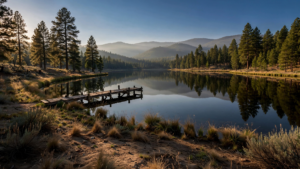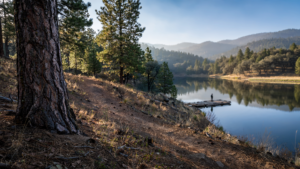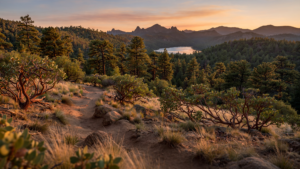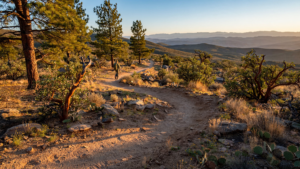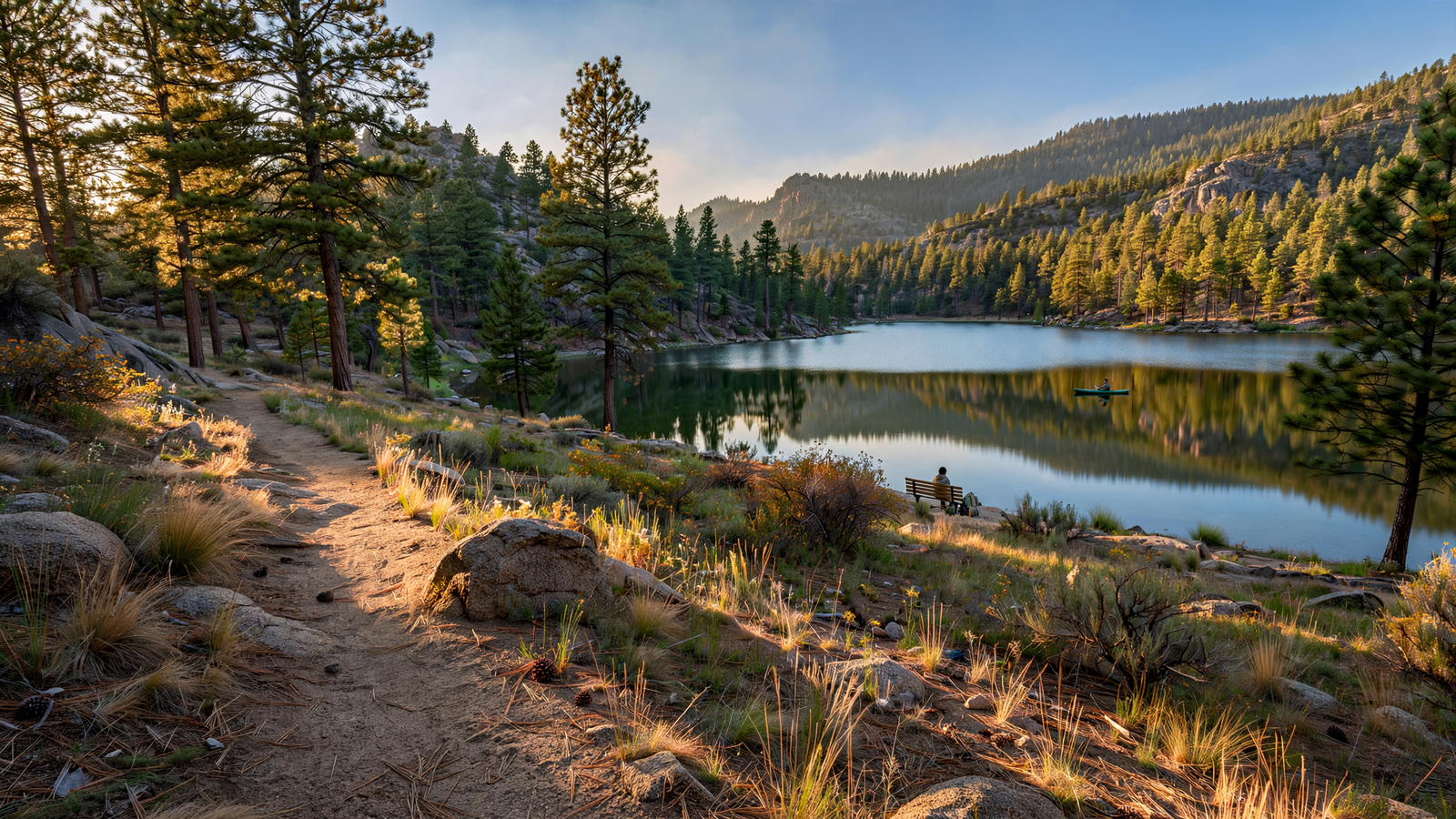
In Yavapai County, a short drive can change the character of the day. Prescott’s streets give way to ponderosa pine, granite, juniper, and cooler mountain air. Near the southern edge of the Prescott Basin, Lynx Lake gathers many of those high-country qualities into one compact public landscape.
The lake is not Arizona’s largest reservoir, nor is it the most dramatic destination in the state. Its appeal is more practical and enduring. People come to fish, walk, paddle, camp, watch birds, or simply sit beside the water beneath tall pines. Because those activities fit together without requiring a major expedition, Lynx Lake has become one of the places that helps define outdoor life around Prescott.
A mountain lake close to town
Lynx Lake lies in the Prescott National Forest, roughly five miles southeast of Prescott. The lake sits at about 5,600 feet in elevation, high enough for a noticeably different climate from the low desert and close enough to town for a half-day visit.
That combination is central to the place. Lynx Lake feels removed without being remote. The drive from Prescott passes through the forested landscape of the Bradshaw Mountains, but visitors do not need specialized equipment or a long backcountry approach to reach the shoreline. A family can arrive for an afternoon, while campers and anglers can stay longer.
The setting also gives the lake its visual character. Ponderosa pines rise around open slopes, with juniper, oak, and granite appearing across the surrounding forest. Water occupies only part of the scene. The larger experience is the meeting of a constructed reservoir with an older mountain ecosystem.
Water shaped for recreation
Lynx Lake is a human-made reservoir, but it has become part of the everyday geography of the Prescott area. The U.S. Forest Service manages the recreation area as a place for camping, boating, fishing, picnicking, hiking, and wildlife viewing. For related reading, see Goldwater Lake: How Prescott Keeps a Mountain Reservoir Part of Everyday Life.
Small boats and non-motorized watercraft are common on the lake. The Forest Service limits boating in ways intended to protect the character and safety of the reservoir, so visitors should check current rules before launching. Swimming is not the main purpose of the site, and the lake’s changing conditions mean that visitors should treat the water with caution rather than assuming it functions like a supervised beach.
Fishing is one of Lynx Lake’s most established uses. The Arizona Game and Fish Department identifies the lake as a destination for anglers, with species and stocking information subject to change over time. Rainbow trout are among the fish associated with the lake, while other warm-water species may also be present. Licenses, limits, seasons, and methods are governed by current Arizona regulations.
The fishing matters for more than recreation. A lake near a population center gives new and experienced anglers a manageable place to learn how mountain reservoirs work: how wind changes a shoreline, how temperature affects fish, and how seasonal conditions influence access. It is an outdoor classroom as much as a destination.
Trails that keep the shoreline in view
The Lynx Lake area is supported by several trails and forest roads, allowing visitors to experience the landscape at different speeds. The most accessible walks stay near the water and pass through pine forest, while longer routes connect the lake to the surrounding Prescott National Forest.
The Lynx Lake Loop is the best-known shoreline route. It is not a flat urban path; roots, rocks, dust, and changing grades are part of the mountain setting. Still, the trail offers a way to see the lake as a living edge rather than a single overlook. The water appears and disappears among trees, coves create changing perspectives, and the forest often feels more significant than the reservoir itself.
For visitors who want a shorter outing, the area’s picnic and day-use facilities make it possible to enjoy the setting without committing to a long hike. That range of options is one reason the lake works for different kinds of visitors. A person can bring a fishing rod, a notebook, a lunch, or binoculars and find a suitable way to spend time outdoors.
As with any forest trail, conditions can change quickly. Summer thunderstorms may bring lightning and muddy ground. Winter storms can leave snow or ice, while dry periods can increase dust and wildfire danger. Checking Prescott National Forest alerts before leaving is part of using the place responsibly.
A small refuge for mountain wildlife
Lynx Lake’s public value extends beyond the activities visitors plan. The reservoir and its surrounding vegetation create a patchwork of water, forest edge, meadow-like openings, and rocky ground. Those transitions are useful to wildlife. For related reading, see Goldwater Lake: How Prescott Turned a Reservoir Into an Everyday Mountain Place.
Birdwatchers may encounter waterfowl near the lake and forest species in the surrounding pines. Mule deer, squirrels, rabbits, and other mammals use the broader landscape. The area is also part of a much larger forest ecosystem where predators, prey, insects, and plants respond to seasonal water and changing temperatures.
That does not mean every visit produces a wildlife sighting. The more dependable lesson is that public recreation areas can hold ecological value even when they are heavily used. Keeping dogs under control, leaving animals undisturbed, storing food securely, and carrying out trash help preserve the conditions that make those encounters possible.
The lake also illustrates an important distinction in Arizona landscapes: water does not have to be naturally occurring to become ecologically meaningful. A reservoir changes drainage patterns and habitat, bringing both benefits and management challenges. Its presence supports recreation and some wildlife use, while the surrounding forest requires careful attention to erosion, invasive species, drought, and wildfire.
Living with fire and drought
The ponderosa pine landscape around Lynx Lake is beautiful, but it is not static. Fire has always been part of the ecology of southwestern forests. Decades of altered fire patterns, drought, warming temperatures, and dense vegetation can increase the risk of severe wildfire.
Forest managers use thinning, prescribed fire, closures, and public education as tools for reducing risk and improving forest resilience. Visitors encounter the results in practical ways: a trail may close during a fire restriction, a campfire may be prohibited, or a familiar road may become temporarily unavailable because of hazardous conditions.
These rules can feel inconvenient when the weather is pleasant. They are also part of the bargain that allows public forests to remain open over the long term. A spark from a vehicle, campfire, or discarded cigarette can travel far in dry vegetation. Following current restrictions protects the lake, the forest, nearby communities, and emergency personnel. For related reading, see Granite Basin Lake: How a Small Prescott Reservoir Makes Room for Desert Life.
Drought presents another long-term challenge. Reservoir levels fluctuate, and a mountain lake can look different from one season to the next. Lower water may expose shorelines, change launching conditions, and affect fish habitat. Those changes are reminders that Lynx Lake is not an isolated recreational object. It depends on regional precipitation, watershed health, infrastructure, and careful management.
Why the place remains useful
Lynx Lake’s lasting importance comes from its ordinary usefulness. It does not ask visitors to choose between a complicated itinerary and a meaningful outdoor experience. A morning by the water, a short walk under the pines, or an hour watching clouds move across the Bradshaw Mountains can be enough.
That accessibility also gives the lake a role in local memory. People return for familiar campsites, favorite fishing spots, annual family outings, and the simple relief of cooler air. A place becomes part of a community not only through grand events but through repetition: the same road taken on a summer afternoon, the same trail walked in a different season, the same shoreline seen under changing light.
For visitors from outside Prescott, Lynx Lake offers a concise introduction to the region’s high-country character. It shows how pine forest, granite, wildlife, managed water, and public recreation can occupy one landscape. For residents, it functions as something more valuable: a nearby place where time can slow down without requiring a major plan.
Planning a responsible visit
Conditions and facility availability can change, so the best first step is to consult the Prescott National Forest’s official Lynx Lake information before traveling. Check for road, trail, campground, boating, fire, and weather updates. The Arizona Game and Fish Department is the appropriate source for current fishing licenses, regulations, and stocking information.
- Bring sufficient water, sun protection, and layers; mountain weather can change quickly.
- Stay on designated trails and use established campsites and fire rings when fires are allowed.
- Follow all fire restrictions and never assume that a previously permitted campfire is still legal.
- Keep dogs leashed or under reliable control and do not approach wildlife.
- Pack out trash, fishing line, and food scraps.
- Expect limited or uneven connectivity and plan to have directions and emergency supplies available offline.
Lynx Lake is a modest place by national standards, but that is part of its strength. It makes the high country available in manageable pieces: a path, a shoreline, a stand of pines, a quiet afternoon. In a county known for dramatic terrain and long distances, the lake offers a different kind of discovery—an everyday public landscape that remains useful because people can return to it again and again.
Use: Location, recreation opportunities, facilities, access guidance, and management information.
Use: Fishing destination information and guidance to current Arizona fishing rules.
Use: Forest-wide alerts, closures, fire information, recreation updates, and safety context.