In Arizona’s high country, water does not need to be abundant to be important. A small reservoir can become a meeting place for birds, fish, hikers, families, and the plants that gather wherever the ground stays damp a little longer.
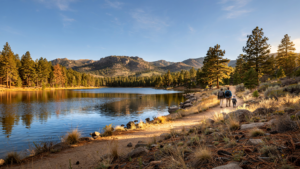
That is the quiet appeal of Granite Basin Lake, a recreation area in the Prescott National Forest northwest of Prescott. It is not one of Arizona’s famous destination lakes, and it does not need to be. Its value comes from scale: within a relatively compact landscape, visitors can see how a mountain reservoir fits into a much larger system of granite, juniper, chaparral, pine forest, seasonal runoff, and public land.
Granite Basin is useful precisely because it is approachable. A visitor can come for an afternoon beside the water, walk one of the surrounding trails, watch for birds, or use the area as a starting point for understanding the landscape around Prescott. The setting offers a reminder that an outdoor place does not have to be immense to be ecologically meaningful or personally memorable.
A reservoir in a high-desert landscape
Granite Basin Lake sits in the Prescott Basin, a transition zone where desert influences meet the cooler uplands of central Arizona. Prescott’s elevation and surrounding mountains produce a landscape that looks different from the Sonoran Desert farther south. Ponderosa pine and oak appear alongside juniper, manzanita, scrub, and exposed granite. The result is neither purely desert nor fully mountain forest, but a varied high-country environment shaped by elevation and limited water.
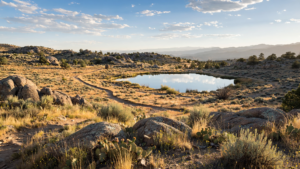
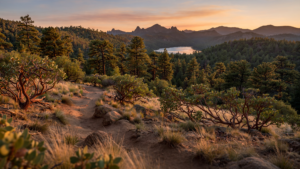
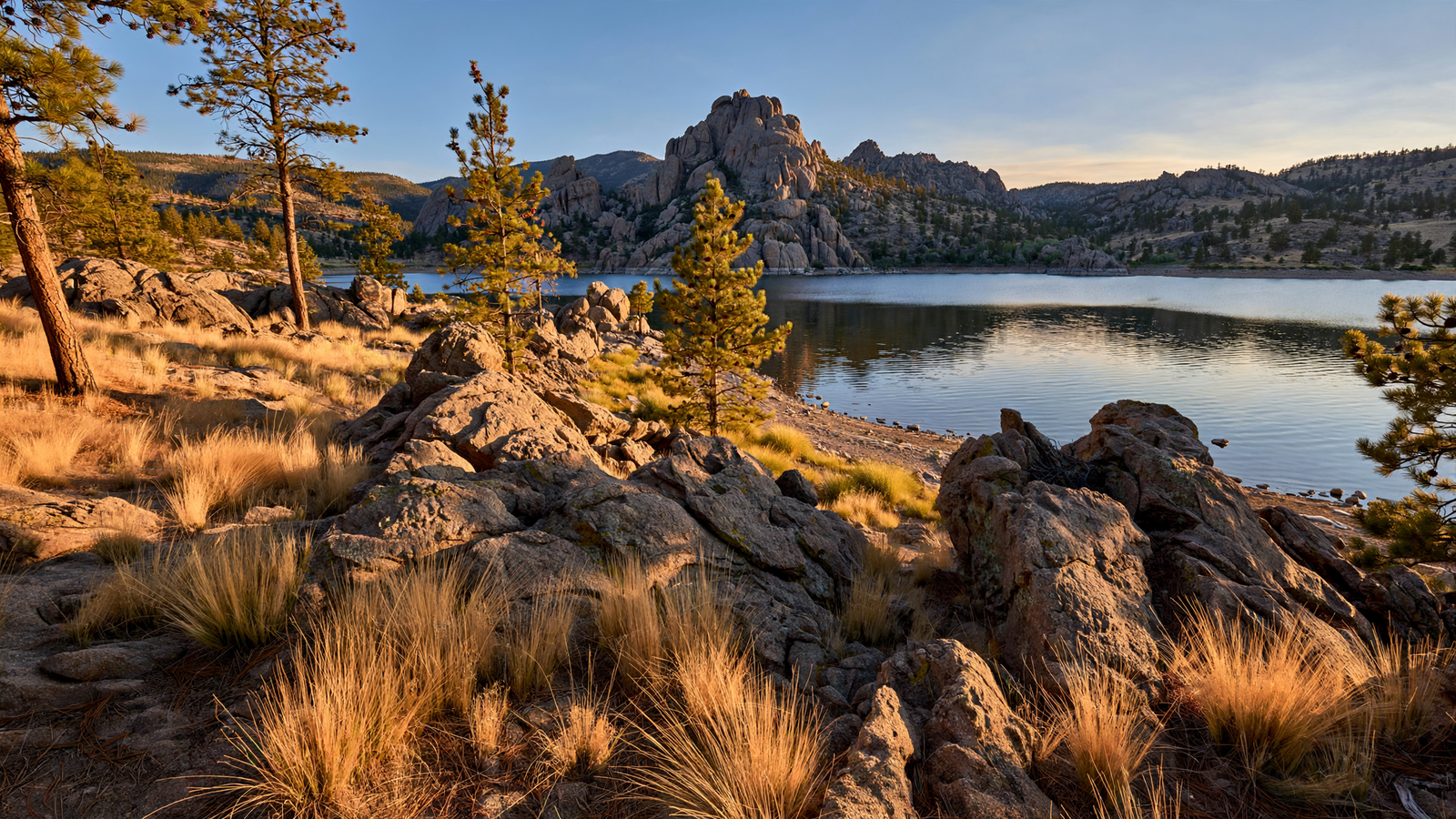
The reservoir gives that environment a visible center. Water collects in a basin surrounded by rounded rock formations and hillsides covered with drought-adapted vegetation. During warmer months, the shoreline becomes a place where the difference between dry ground and available water is easy to see. Plants concentrate near the edge, insects gather over the surface, and birds use the basin as one stop within a broader network of upland habitats.
That does not mean the lake is a natural wetland or an untouched wilderness. It is a managed recreation area within a working national forest. Its story is instead about coexistence: a human-built water feature becoming part of a living landscape while serving public recreation and wildlife needs.
Why small waters matter
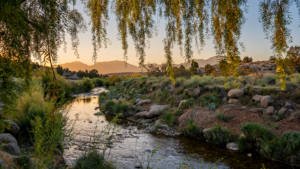
In an arid region, even modest water bodies can have an outsized effect on how people and animals use the land. A reservoir does not replace a river, and it cannot provide the same habitat as a naturally flowing stream. But it can create a dependable open-water feature in a landscape where standing water is limited and often seasonal. For related reading, see Watson Woods: The Prescott Preserve Where a Desert Creek Still Makes Room for Life.
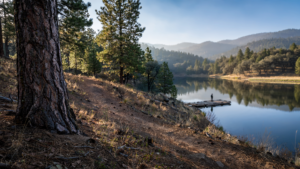
Granite Basin Lake is managed as a fishing destination, and the Arizona Game and Fish Department identifies it among the waters where anglers can find warm-water species and, at appropriate times, stocked trout. Conditions change with weather, water levels, management decisions, and the season, so visitors should check current regulations before fishing.
The lake also supports a quieter form of wildlife watching. Waterfowl and other birds may use the shoreline, while mammals and smaller animals are drawn to the vegetation and cover around the basin. The surrounding forest and brush provide habitat beyond the water itself. For visitors, that combination makes the area more interesting than a simple picnic site: the lake is a window into how wildlife moves through a patchwork of habitats.
These benefits are best understood as part of a connected landscape. Granite Basin is surrounded by public lands rather than isolated in an urban park. The reservoir, trails, forest, rock outcrops, and nearby drainages function together, even when visitors experience only one portion of the area during a single outing.
Trails that explain the place
The recreation area’s trails offer more than exercise. They help visitors read the basin’s geography.
Shorter routes near the lake make it possible to enjoy the shoreline without committing to a long hike. Other trails climb into the surrounding hills, where the view expands from the reservoir to the broader Prescott landscape. From higher ground, the lake’s small size becomes part of the lesson: a narrow band of water can organize an entire pocket of recreation and habitat.
Trail conditions vary with storms, heat, wildfire effects, maintenance, and seasonal use. Some routes include uneven ground, exposed rock, and limited shade. The forest’s elevation can make temperatures feel more comfortable than in lower desert communities, but summer sun remains serious, and winter weather can change quickly.
For a responsible visit, the basics matter. Carry more water than seems necessary, protect against sun, wear shoes suited to rocky terrain, and check the Prescott National Forest’s current notices before leaving. Visitors should also stay on established routes where possible, keep dogs under control, and avoid disturbing wildlife or collecting natural objects. For related reading, see Goldwater Lake: How Prescott Keeps a Mountain Reservoir Part of Everyday Life.
Granite as scenery and structure
The lake’s name points to one of the defining features of the Prescott area: granite.
Across the basin, weathered granite appears in boulders, outcrops, slopes, and broad formations. These rocks are not merely scenic backdrops. They influence drainage, soil depth, vegetation, and the shape of the trails. Water moves differently across exposed rock than through forest soil, and plants find different opportunities in cracks, pockets, and sheltered ground.
Granite also gives the recreation area a strong sense of identity. The reservoir is pleasant on its own, but the surrounding stone keeps it from feeling interchangeable with any other lake. The relationship between water and rock is what makes the setting distinctly Prescott: a constructed basin placed within an older geological landscape.
Visitors do not need a geology background to notice the pattern. Look across the lake and the landscape can seem arranged in layers—water below, granite around it, brush and woodland above, and open sky beyond. A walk around the area turns that view into a sequence of smaller observations: lichens on rock, cones beneath trees, tracks near the shoreline, and the changing texture of the ground.
A public place with different kinds of quiet
Granite Basin Lake can be social, especially on pleasant weekends, but it also offers several kinds of solitude. Someone fishing from shore may spend hours watching a float. A family may use the picnic area as a base for a short walk. A photographer may be more interested in reflections, storm light, or the contrast between granite and vegetation than in the reservoir itself.
That flexibility is one of the area’s strengths. It does not require every visitor to pursue the same experience. A lake can be a destination, a trailhead, a classroom, or simply a place to pause before returning to town.
Its proximity to Prescott makes that possible. The area is close enough for a short outing but removed enough to offer a change in sound and pace. Road access, seasonal conditions, and recreation-area rules should always be checked before traveling, but the basic appeal remains stable: Granite Basin provides an accessible introduction to the public lands around the city. For related reading, see Granite Creek Corridor: How Prescott Is Making Room for Water, Wildlife, and Daily Life.
How to visit with the landscape in mind
The best way to experience Granite Basin is to treat it as more than a waterside stop. Spend time looking beyond the lake. Notice where vegetation thickens, where trails cross rock, and how the view changes as elevation increases. If fishing, follow Arizona regulations and any posted limits. If picnicking, pack out food scraps and waste. If hiking, remember that dry landscapes are fragile; shortcuts can widen trails and damage slow-growing plants.
Wildfire awareness is especially important in central Arizona. Visitors should follow current fire restrictions, use only permitted facilities when fires are allowed, and never leave a fire unattended. A recreation area can remain beautiful and welcoming only when the people using it recognize how quickly dry vegetation and wind can turn a small mistake into a major threat.
It is also worth visiting in more than one season. Spring may bring fresh growth and migrating birds. Summer offers long days but requires careful heat planning. Autumn changes the quality of the light and can bring cooler hiking conditions. Winter may quiet the area and occasionally transform the surrounding peaks with snow. Each season reveals a different relationship between the reservoir and its setting.
A small place that makes a larger landscape visible
Granite Basin Lake does not compete with Arizona’s largest lakes or most dramatic wilderness areas. Its importance is more everyday and more durable. It gives Prescott residents and visitors a place where water, forest, rock, and public access can be experienced together without an expedition.
That makes the reservoir a useful gateway to Yavapai County’s broader geography. Around Prescott, the landscape is shaped by boundaries that are easy to overlook: between desert and forest, developed land and open space, recreation and habitat, engineered water and natural drainage. Granite Basin Lake brings those relationships into one view.
The result is a place that rewards attention rather than spectacle. Sit beside the water long enough, and the basin begins to explain itself. The lake is small, but the landscape gathered around it is not.
Use: Authoritative information about the national forest, recreation management, alerts, conditions, and visitor responsibilities.
Use: Recreation-area information, access context, facilities, and local visitor guidance.
Use: Fishing regulations, licenses, stocking information, and current rules relevant to Arizona waters.
Use: Local context for Granite Basin recreation and its relationship to Prescott-area outdoor use.