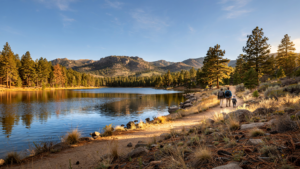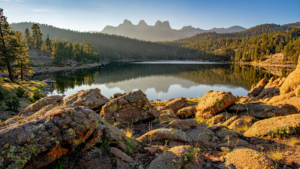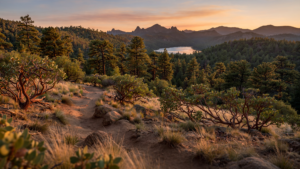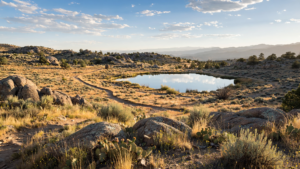
Prescott is often introduced through its historic square, its granite formations, or the pine-covered public lands that surround the city. But the forest is more than scenery. It is also a living system that needs regular care, especially in a region where drought, heat, and accumulated vegetation can make wildfire more difficult to control.
That is why planned fire has become an important part of the landscape around Prescott. The work is not dramatic in the way a wildfire is dramatic. It may involve thinning small trees, clearing excess brush, creating breaks in continuous vegetation, or carefully applying fire under controlled conditions. Yet these gradual efforts can influence how a future wildfire behaves—and how much room firefighters have to protect communities, roads, watersheds, and forests.
A forest shaped by fire
The ponderosa pine forests of central Arizona developed with fire as part of their natural rhythm. Historically, many low- and moderate-intensity fires moved through forest floors, consuming grasses, needles, fallen branches, and young trees. These fires did not always kill mature pines. Instead, they helped keep some areas more open and reduced the amount of combustible material available for a larger, more intense fire.
Modern communities changed that pattern. Fire suppression protected homes and infrastructure, but it also meant that many smaller fires no longer occurred as often as they once did. At the same time, drought, insect damage, development at the edge of wildlands, and a warmer climate have increased the challenge of managing forests and protecting people.
The result is not one simple problem with one simple solution. Forest managers cannot recreate the past exactly, and prescribed fire is not appropriate everywhere or in every season. But reducing excess fuels can give a landscape more resilience. It can also make a wildfire less likely to move rapidly through continuous layers of grass, brush, and small trees.
What prescribed fire actually means
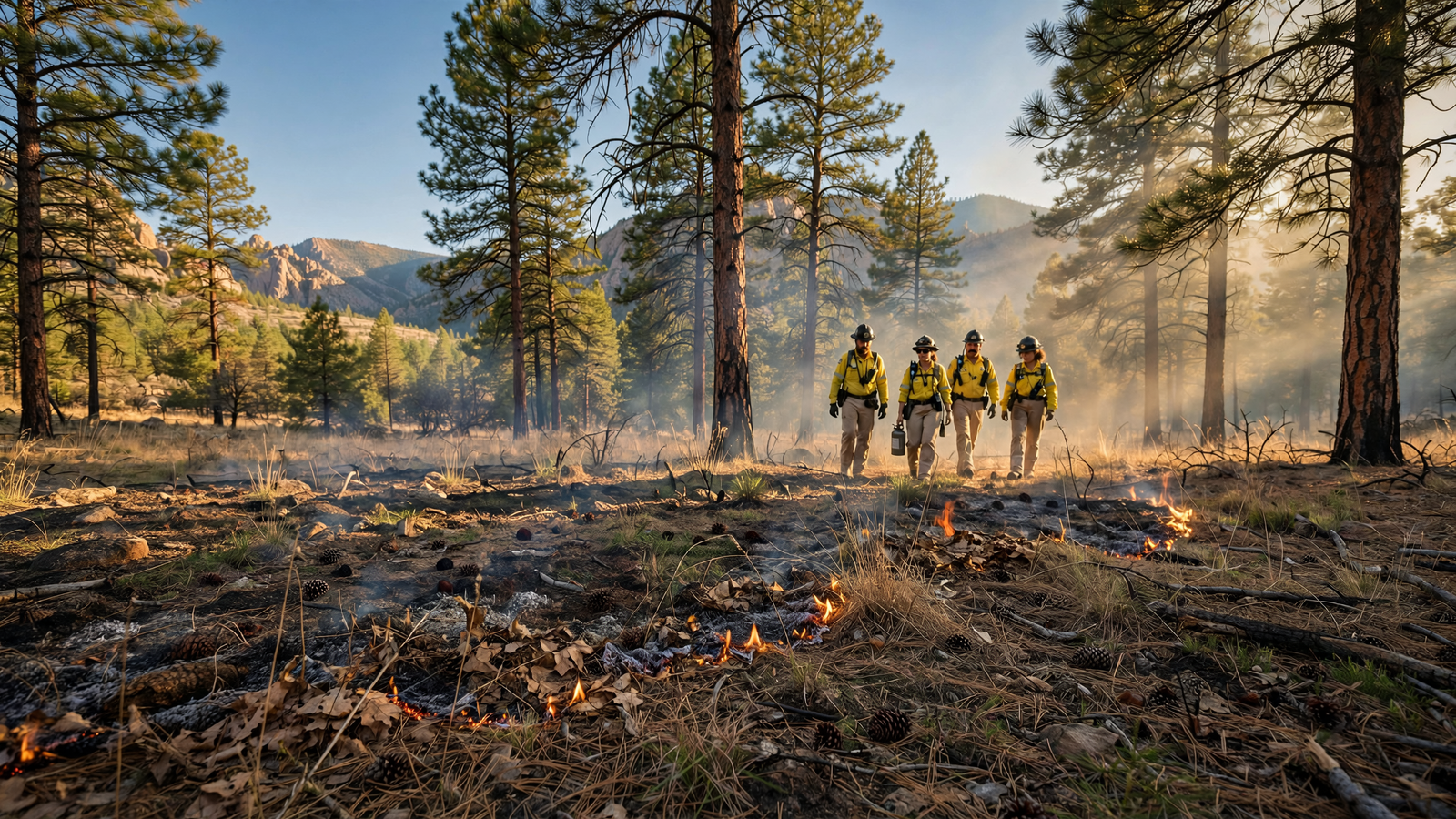
Prescribed fire is fire applied under a written plan and within specific weather, fuel, smoke, and safety conditions. Before a burn begins, crews evaluate factors such as wind direction, humidity, fuel moisture, temperature, air quality, and the location of nearby homes or roads. If conditions do not meet the plan, the burn can be postponed.
That careful process is one reason prescribed fire may look slow from the outside. The objective is not simply to burn an area. The objective is to burn it in a way that produces a desired result while keeping smoke, flames, and risk within manageable limits.
Depending on the site, that result might include reducing surface fuels, opening space between trees, encouraging grasses and wildflowers, preparing a larger treatment area, or making an existing road or natural feature more useful as a fire-control line. Some projects combine mechanical thinning with prescribed fire because large branches, dense young trees, or slash may need to be removed before fire can be used safely.
Why Prescott is part of a larger landscape
Prescott sits within a patchwork of city neighborhoods, private property, ranchland, state land, and the Prescott National Forest. Wildfire does not stop at an ownership boundary, so fire planning cannot stop there either.
The Forest Service manages a large public-land landscape around the community, while the City of Prescott and other local agencies work on neighborhood preparedness, emergency planning, vegetation management, and public education. Arizona’s state fire agencies and local fire departments also contribute to the broader effort.
This shared responsibility matters because a treatment on one parcel may be most useful when it connects with work on another. A thinned area, a maintained road, a drainage, or a previously burned site can become part of a larger network that helps slow fire growth and improve firefighter access.
It also means that residents have a role. Homes in forested or brush-covered areas can be affected by embers well before the main flame front arrives. Keeping roofs and gutters clear, trimming vegetation near structures, maintaining access for emergency vehicles, and creating defensible space are practical steps that complement public-land projects.
The value of a slower kind of protection
One of the most important features of fuels work is that its success may be measured by an event that never becomes catastrophic. If a future wildfire encounters an area with less continuous fuel, it may burn with lower intensity in that particular place, giving crews more options. If smoke conditions allow, firefighters may be able to use the treated area as part of a broader strategy.
That does not mean a treated forest is fireproof. Prescribed burning cannot guarantee that a home will be protected, and no single project can eliminate wildfire risk. Wind, drought, slope, ember travel, and the size of an approaching fire all matter. The benefit is more modest and more realistic: treatments can change conditions on the ground and improve the odds that people will have time and space to respond.
There are ecological benefits as well. Carefully planned fire can return nutrients to the soil, maintain more open pine stands, and create a changing mix of vegetation and habitat. Wildlife does not experience a treated forest as a uniform park. Instead, a mosaic of recently burned, recovering, mature, and denser areas can provide different conditions over time.
That variety is especially important in a landscape where uniform, dense vegetation can increase competition for limited water. A forest with fewer small trees and less accumulated debris may be better positioned to withstand periods of drought, although forest treatments cannot remove the effects of prolonged climate stress.
Smoke is part of the public conversation
Prescribed fire can improve long-term safety, but it can also create short-term inconvenience. Smoke may settle in valleys or move toward roads and neighborhoods. That is why agencies consider air quality and weather before starting a burn, and why public notices are an important part of the process.
Residents who see smoke near Prescott should rely on official updates rather than assume that every plume represents an uncontrolled wildfire. The Forest Service and local fire agencies use public information channels to announce planned operations when possible, while emergency alerts provide information about active incidents and evacuation needs.
The distinction is useful, but it does not make smoke irrelevant. People with asthma, heart or lung conditions, older adults, children, and anyone sensitive to smoke may need to limit outdoor activity or close windows during affected periods. Good prescribed-fire planning includes both the ecological objective and the public-health responsibility.
A place where preparation becomes visible
For people walking, driving, or living near the forest, fuels work can initially look like disruption. A familiar stand of trees may appear more open after thinning. Darkened ground may remain after a prescribed burn. Some trails or roads may close temporarily while crews complete work or monitor the site.
Over time, however, the landscape tells a more complicated story. New grasses and plants can emerge. Fallen needles and branches are no longer piled as deeply on the forest floor. Trees have more growing space. The treatment becomes less conspicuous even as it remains part of the forest’s recent history.
That visible change can help Prescott residents understand wildfire preparation as an ongoing form of place-making. The goal is not to separate the city from the forest. Prescott’s identity depends in part on its relationship with the surrounding public lands. The goal is to make that relationship safer and more durable.
What comes next for Prescott’s forest
The work will not be finished after one burn season. Forest conditions change, and treated areas may need maintenance. New development can place more homes near wildland edges. Drought can alter the timing and safety of prescribed fire. Agencies must continue to balance public safety, air quality, wildlife habitat, recreation, watershed protection, and the practical limits of available crews and funding.
That long view is perhaps the most encouraging part of Prescott’s fire-adaptation effort. It replaces the idea that wildfire safety is something addressed only during an emergency with a broader understanding of stewardship. Preparation happens in cooler months, in project planning meetings, along forest roads, in neighborhood yards, and through conversations about smoke and risk.
Prescott’s surrounding forest will always be shaped by fire. The choice is not whether fire belongs in the landscape; it already does. The more useful question is whether communities and land managers can help determine when, where, and how that fire returns. Through prescribed burning, mechanical treatment, public education, and household preparation, Prescott is working toward a forest that remains a defining part of the place without leaving its future entirely to chance.