For much of the 20th century, the Iberian lynx seemed to be disappearing from Europe. Its habitat was fragmented, its main prey had declined sharply and outbreaks of disease among wild rabbits made survival even more difficult. By the beginning of the 21st century, fewer than 100 mature Iberian lynx were thought to remain.
Today, the species is moving in the opposite direction. The latest coordinated census reported more than 2,000 Iberian lynx living in the wild across Spain and Portugal. That does not make the cat safe yet, but it marks one of the most encouraging large-mammal recoveries in modern conservation.
From fewer than 100 adults to more than 2,000 animals
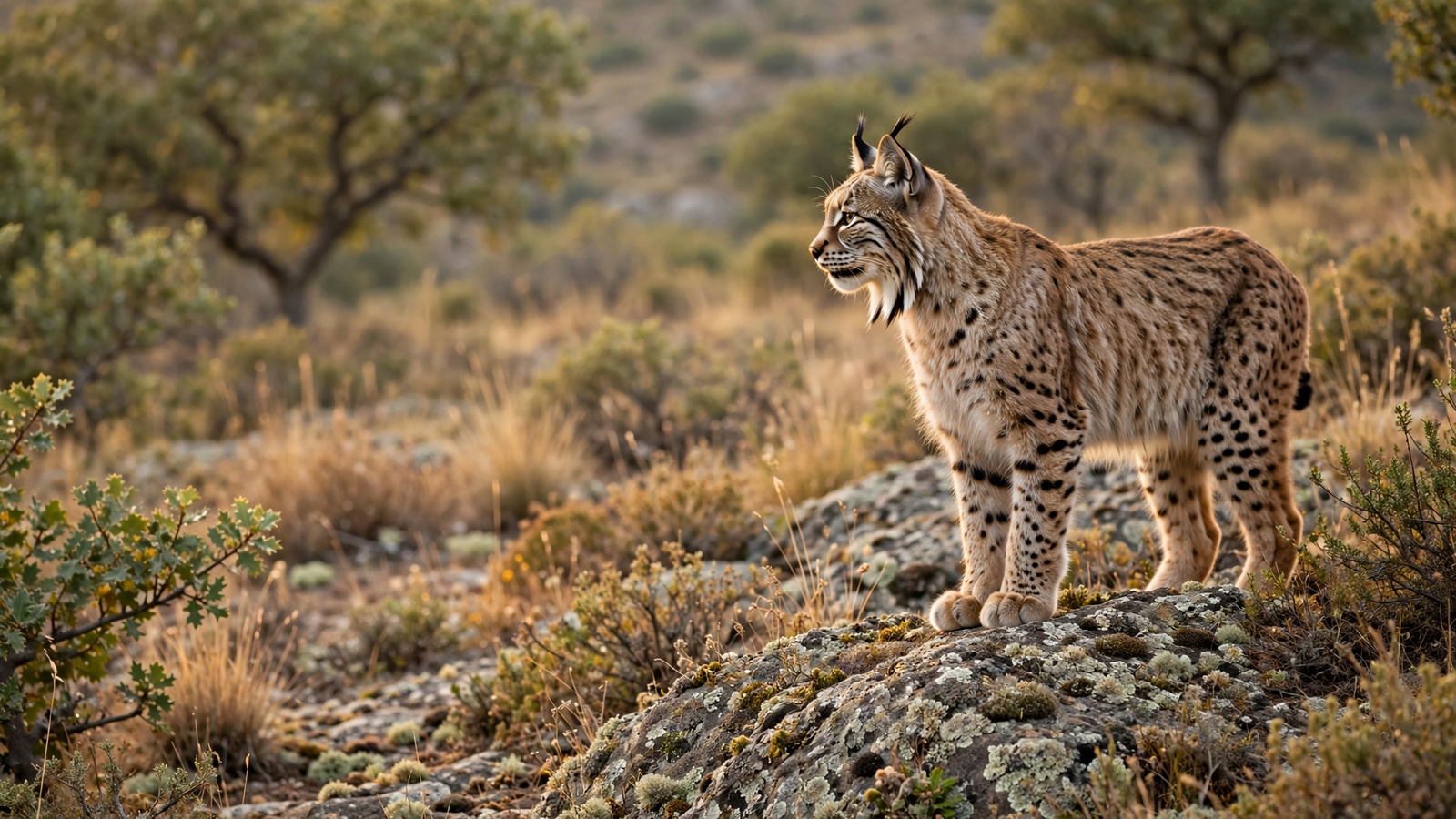
The Iberian lynx, sometimes called the Spanish lynx, is found only on the Iberian Peninsula. It is smaller than the Eurasian lynx, with a distinctive beard-like ruff, black ear tufts and a short tail tipped in black.
According to the 2023 population assessment reported by Spanish and Portuguese conservation authorities, the wild population reached 2,021 animals. Spain accounted for the large majority, while Portugal’s population had also become firmly established after years of reintroduction and habitat work. The count included adults, juveniles and cubs, rather than only breeding animals.
The number is especially significant because the Iberian lynx had once occupied much more of the peninsula. As forests and scrublands were divided by roads, farms and development, isolated groups became vulnerable. The collapse of the European rabbit—the lynx’s essential prey—added another severe pressure.
In 2002, the International Union for Conservation of Nature classified the Iberian lynx as Critically Endangered. In 2024, after documenting a sustained increase, the IUCN moved the species to the less severe Endangered category. The change reflects real progress, while also recognizing that the recovery remains incomplete.
A recovery built around the rabbit
Protecting the lynx has required protecting an entire landscape. European rabbits can make up most of the cat’s diet, so conservation programs have worked to improve rabbit habitat, provide shelter and manage the diseases that have repeatedly reduced rabbit numbers.
In some areas, conservation teams create small patches of vegetation and refuge structures where rabbits can feed and reproduce. They also monitor disease outbreaks and restore habitat mosaics—an arrangement of scrub, woodland, grassland and open areas that can support both prey and predator.
This approach illustrates an important principle of wildlife recovery: saving a threatened species is rarely a matter of protecting the animal alone. The lynx needs connected territory, healthy prey populations and enough space for young animals to disperse and establish new home ranges.
Captive breeding and carefully planned releases
Captive breeding became another major part of the effort. Specialized centers in Spain and Portugal developed breeding programs designed to preserve genetic diversity and produce animals suitable for release. The young lynx are raised with as little human contact as possible before being transferred to carefully selected areas.
Releases have helped reconnect isolated populations and establish lynx in places where the species had vanished. Conservationists use camera traps, radio transmitters and field surveys to follow the animals after release. These tools help teams learn where the cats travel, whether they find prey and how successfully they reproduce.
Portugal’s Guadiana Valley has been one of the most visible examples of this work. After the Iberian lynx disappeared from the country, animals bred through conservation programs were released and monitored. Reproduction in the wild followed, turning reintroduction from a one-time experiment into the foundation of a new population.
Roads remain a serious challenge
The recovery has not removed the threats. Road deaths continue to claim Iberian lynx, particularly when young animals leave their birth areas to search for territory. Conservation authorities have responded with wildlife crossings, fencing, warning systems and changes to road management in high-risk locations.
Habitat fragmentation is another concern. A population can appear to be growing while still remaining vulnerable if its groups are cut off from one another. Connecting breeding areas allows animals to move, find mates and maintain healthier genetic exchange.
Climate change may add further pressure by altering vegetation, water availability and the conditions that support wild rabbits. For that reason, researchers and land managers are treating the current recovery as a platform for continued work, not as a final victory.
Why this recovery matters beyond one species
The Iberian lynx’s return demonstrates what long-term conservation can accomplish when governments, scientists, landowners, zoos and local communities work toward the same goal. It also shows why early action matters. The species came close to extinction, but enough animals and knowledge remained for a coordinated recovery to begin.
Its comeback has benefits beyond the cat itself. Protecting Mediterranean scrublands and open woodland preserves habitat for birds, reptiles, insects and other mammals. Wildlife crossings improve landscape connectivity for many species. Supporting rabbit populations helps sustain a wider food web.
The Iberian lynx is still Endangered, and its future depends on maintaining the work that produced this progress. But the story has already changed. Instead of asking whether the species can survive at all, conservationists can now focus on expanding connected populations and making the recovery durable.
That is the hopeful lesson of the lynx: extinction is not always an irreversible outcome. With patient research, practical habitat work and cooperation across borders, a species that once stood at the edge can begin to reclaim its place in the wild.