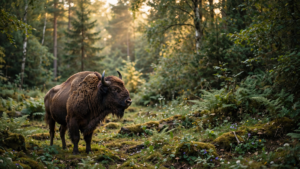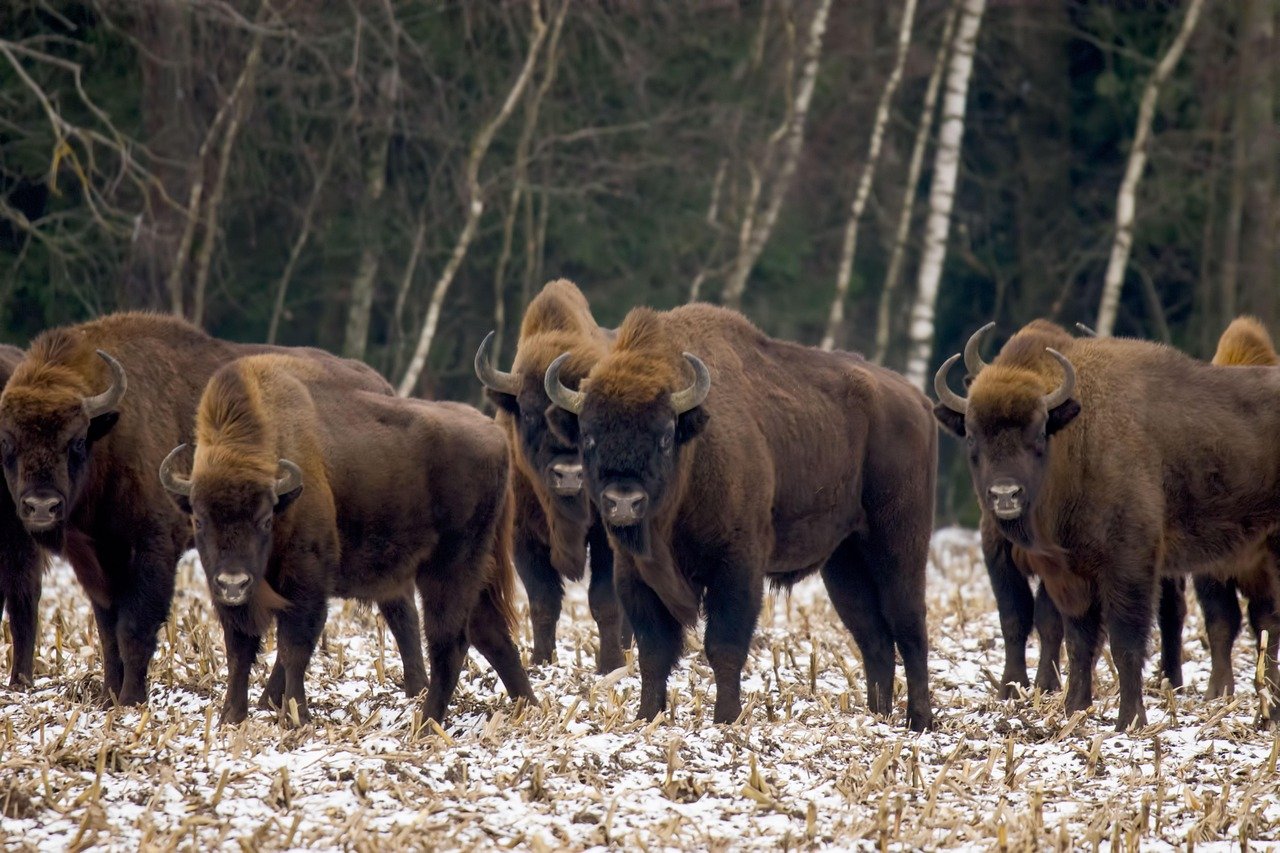
When the last European bison in the Caucasus was killed in 1927, an essential large-animal engineer vanished from these mountains. Conservationists have spent the last century rebuilding the species from a handful of zoo populations. Now, thanks to a coalition of Azerbaijani and international partners, Europe’s largest land mammal is once again shaping forests in the Greater Caucasus.
The reintroduction project centered at Shahdag National Park began with the construction of a rewilding and acclimatization centre in the Ismayilli section of the park. Dozens of animals have arrived from European zoos and breeding programmes, and the herd that began with small founder groups and soft releases has steadily expanded. International partner organisations—including IDEA (International Dialogue for Environmental Action), WWF, the European Association of Zoos and Aquaria (EAZA), and Tierpark Berlin—have overseen transports, veterinary care, and monitoring as the animals adapt to their new home. ([iucn.org](https://iucn.org/story/202411/return-bison-azerbaijan))
Numbers that matter
The herd has grown from the project’s earliest releases to a substantive founder population: World Wildlife Fund’s magazine reports that, after additional reintroductions including a transport of 18 animals in early 2026, the Shahdag herd “now numbers around 90.” That rise reflects both further translocations and successful local reproduction. ([worldwildlife.org](https://www.worldwildlife.org/news/magazine/winter-2026/european-bison-return-to-the-caucasus/))
Births are a key milestone for any reintroduction. Azerbaijan’s media and WWF Azerbaijan reported that multiple calves were born during the 2026 breeding season; one account noted “Eight bison calves have been born this year in Shahdag National Park,” underlining that animals brought in just a few years earlier are now contributing offspring. ([azernews.az](https://www.azernews.az/culture/262081.html))
How the team is making it stick
Reintroductions follow a cautious, staged method: animals spend time in fenced acclimatization areas, receive veterinary care and health screening, and are fitted with GPS or VHF collars so teams can monitor movements and survival after release. Project monitoring uses camera traps, collar data and annual censuses to track the herd’s size and condition. Those measures help managers understand where bison feed and how they affect plant communities—information that guides future releases and local outreach. ([wildbison.az](https://wildbison.az/index.php/monitoring-results/))
Locally based infrastructure supports the program: project partners say a designated 305-hectare area in Shahdag’s Ismayilli district has been reserved for the species and for a breeding complex where animals adapt before entering the wider national park. That local capacity—along with school- and community-level outreach—aims to build tolerance and benefit-sharing for people who live near the animals. ([azernews.az](https://www.azernews.az/culture/262081.html))
Why bison make a difference
Bison are ecological engineers. They consume large amounts of vegetation—WWF notes individual animals can eat the equivalent of many tens of kilograms daily—creating open patches, trampling dense undergrowth, and returning nutrients to soil through their droppings. Those effects increase habitat heterogeneity and can help restore mountain forest dynamics and meadow systems that had been altered in the bison’s absence. Managers view those landscape processes as a major benefit of restoring a native, large herbivore to the Caucasus. ([worldwildlife.org](https://www.worldwildlife.org/news/magazine/winter-2026/european-bison-return-to-the-caucasus/))
Ambitious but measured goals
Project partners have set concrete population targets. International reporting and programme documents cite plans to build a viable founder population of roughly 100 animals within the coming years; different partners have described slightly different timelines (targets reported for 2028 and 2029), but the shared objective is clear: establish a self-sustaining, free-roaming population large enough to maintain genetic health and ecological function. ([files.preslib.az](https://files.preslib.az/projects/cop29/en/xronika_pdf/xr733.pdf))
The European bison’s comeback in Shahdag is also part of a broader conservation arc. The species’ global status improved on the IUCN Red List after decades of coordinated breeding and reintroduction across Europe, and the Caucasus restoration is one of several recent efforts to extend the animal’s range and ecological role. Nevertheless, specialists stress that risks remain—limited genetic diversity, disease threats and habitat fragmentation mean ongoing management and international cooperation are still essential. ([iucn.org](https://iucn.org/news/species/202012/european-bison-recovering-31-species-declared-extinct-iucn-red-list?utm_source=openai))
From cages to mountains: what comes next
Reintroductions are long-term work. For Shahdag, the immediate steps are continued monitoring, further carefully planned translocations to improve genetic diversity, and expanding local stewardship so residents see tangible benefits from wildlife-based tourism and ecosystem restoration. If the population keeps growing and calves continue to survive to adulthood, the Caucasus could once again host regular herds of European bison—restoring a part of the region’s natural history and helping mountain ecosystems recover some of the processes they lost in the 20th century. ([iucn.org](https://iucn.org/story/202411/return-bison-azerbaijan))
The story in Shahdag is not a closed success yet, but it is the kind of pragmatic, science-informed conservation that offers a hopeful model: decades of coordinated breeding, patient acclimatization, and local engagement can return a vanished megafaunal player to the landscape and begin to heal ecosystems once more.