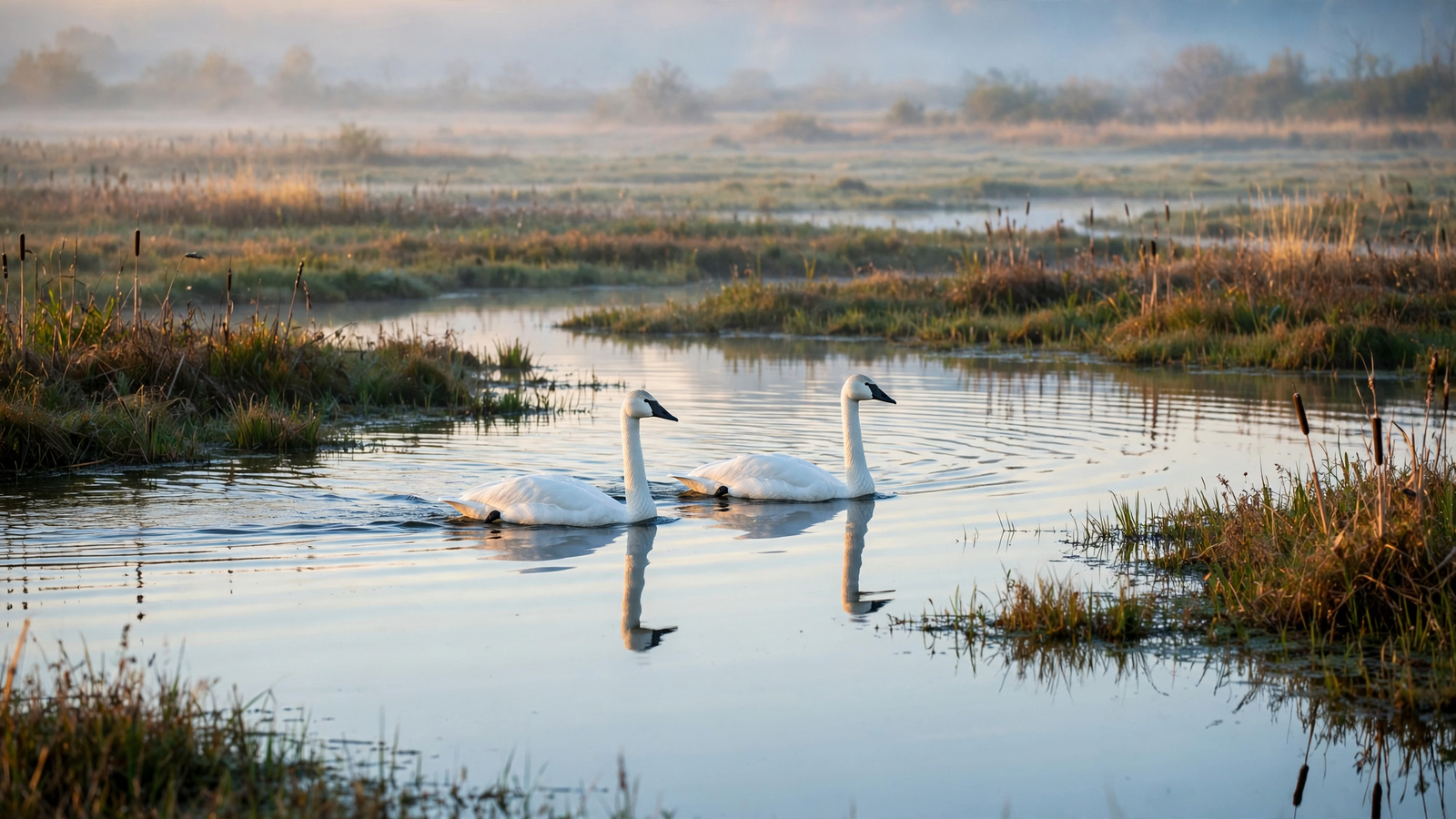
In wetlands across the northern United States, a deep, resonant call is becoming familiar again. Trumpeter swans—North America’s largest native waterfowl—are gathering on lakes, rivers and marshes that once held few or none of them.
The return is one of the quieter successes in modern American conservation. It did not come from a single dramatic intervention, but from decades of habitat protection, careful releases, population monitoring and cooperation among wildlife agencies, private landowners and volunteers.
A bird brought close to disappearance
Trumpeter swans were once widespread across much of North America. Their size and bright white plumage made them valuable targets for hunters, while the feathers and skins were used in clothing and other goods. By the early 20th century, hunting and habitat loss had reduced the species to a small number of surviving groups in the lower 48 states.
The situation was especially severe outside Alaska and Canada. Conservation groups estimate that fewer than 70 trumpeter swans remained in the contiguous United States at the lowest point. A small population survived around Montana’s Red Rock Lakes, while other birds persisted in remote areas farther north.
Restoration took patience
Beginning in the 1960s, wildlife managers and conservation organizations began rebuilding populations through a combination of protection and reintroduction. Young swans were moved to suitable wetlands, where they could grow, learn local migration routes and eventually return to breed.
That work required more than releasing birds. Teams had to identify wetlands with dependable food and open water, reduce disturbance during nesting season and track the movements of growing flocks. In places such as Minnesota, Wisconsin and the Pacific Northwest, restoration programs also worked with farmers and other landowners whose fields and ponds became important feeding or nesting areas.
Trumpeter swans are well suited to this patient approach. Adults form long-term pair bonds, and established pairs often return to the same general breeding areas. When wetlands remain protected and food is available, a successful pair can help build a local population over many years.
From rare sight to returning population
The results are visible in the numbers. The Trumpeter Swan Society’s most recent continentwide survey counted more than 63,000 trumpeter swans in North America, including tens of thousands in the lower 48 states. The exact total changes with migration and survey conditions, but the broader direction is clear: the species has moved from the edge of disappearance to a sustained recovery.
The birds are now found in restored or protected habitat across several regions, including the Great Lakes, the upper Midwest, the Rocky Mountain states and the Pacific Northwest. Some flocks spend winter in urban and suburban wetlands, giving people an opportunity to see conservation progress without traveling to a remote wilderness.
The recovery also demonstrates why habitat matters. Swans need shallow water, aquatic plants and secure nesting sites. Protecting those places benefits many other wetland species, from ducks and herons to amphibians and native fish.
A conservation success still in progress
Trumpeter swans are no longer in the same peril they faced a century ago, but their future still depends on clean water, functioning wetlands and responsible wildlife management. Lead fishing tackle, disease, collisions and habitat loss can all threaten local flocks.
For now, their return offers a hopeful lesson. A species does not always need a single breakthrough to recover. Sometimes the decisive change is a long series of practical choices—protecting a marsh, restoring a nesting site, counting birds carefully and giving a population enough time to grow. The reward is a sound that once nearly vanished, now carrying across American water again.