In the clear, cool rivers of the Ozarks, a conservation effort is helping an unusual native return to the places where it belongs. The Ozark hellbender—one of North America’s largest salamanders—is being raised, monitored, and released through partnerships that connect zoos, wildlife agencies, researchers, and local communities.
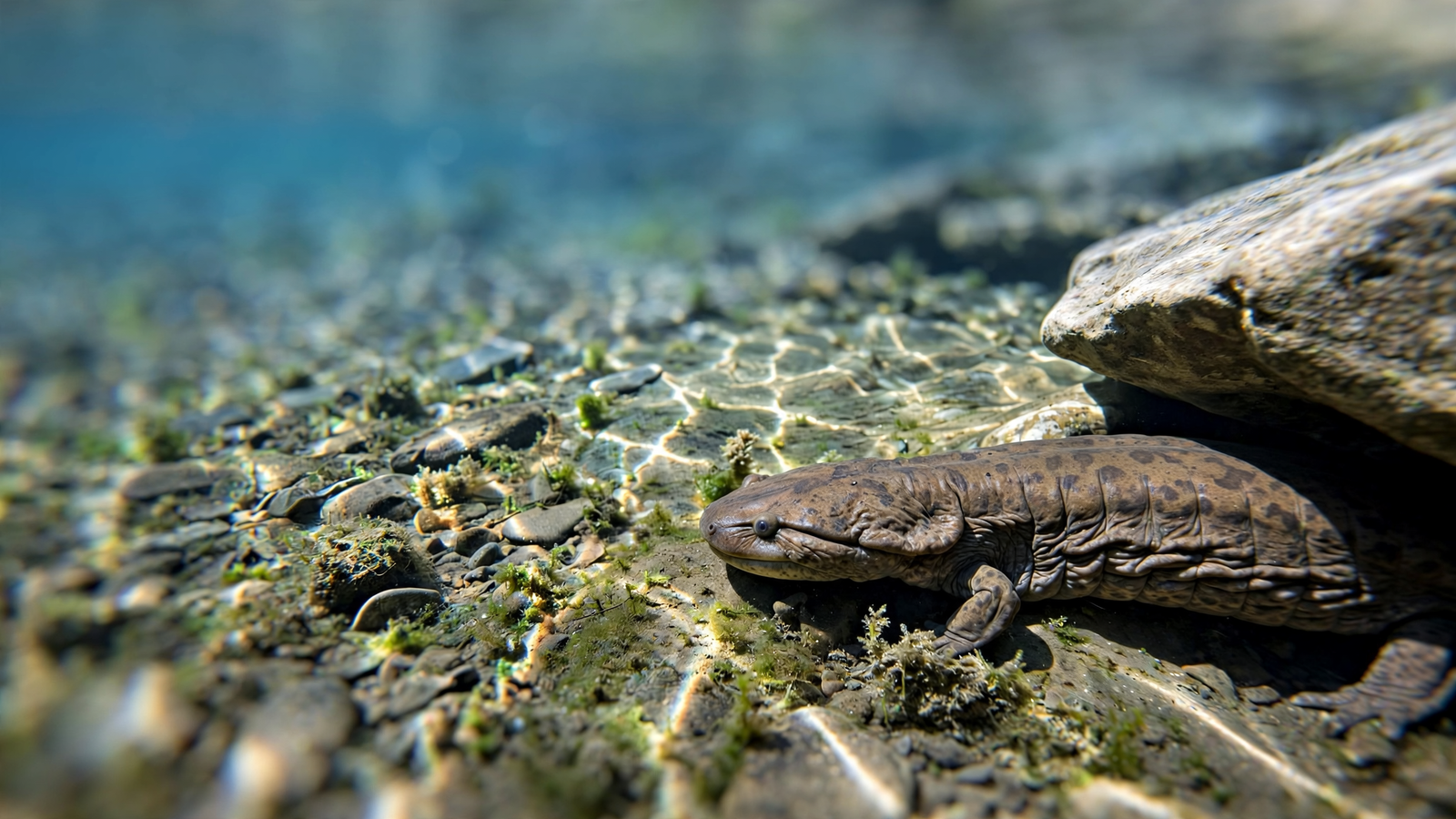
The work is important because the Ozark hellbender is found only in a small part of the country: parts of southern Missouri and northern Arkansas. Unlike many familiar salamanders, it spends nearly its entire life underwater. Its flattened body, loose folds of skin, and paddle-like tail are adaptations for living beneath rocks in fast-moving streams.
Those streams are also the animal’s greatest protection. Hellbenders need clean, well-oxygenated water and stable river bottoms where they can shelter and lay eggs. Sediment from erosion, changes to stream habitat, water pollution, disease, and other pressures have made survival more difficult. The Ozark subspecies was listed as endangered under the federal Endangered Species Act in 2011.
Raising young hellbenders for the wild
One reason for optimism is that conservationists have learned how to breed hellbenders under human care. The Saint Louis Zoo has worked with the Missouri Department of Conservation and other partners to produce young animals for restoration projects. The process is delicate: eggs and larvae require carefully controlled water conditions, specialized food, and protection during their most vulnerable stages.
Before release, some young hellbenders spend time in protected streamside or in-stream enclosures. These “head-starting” efforts allow the animals to grow larger while they remain connected to natural water conditions. Larger juveniles generally have a better chance of avoiding predators and coping with the challenges of a river.
When the animals are released, the work does not end. Biologists can identify individuals with small tracking tags and later search for them in the river. Those observations help researchers learn whether captive-bred hellbenders are dispersing, growing, surviving, and eventually reproducing. Each answer improves the next generation of releases.
A recovery effort built around the river
The breeding program is only one part of the larger strategy. Protecting hellbenders also means protecting the streams themselves. Land-management practices that reduce erosion, projects that improve water quality, and efforts to preserve natural river structure can benefit the salamanders as well as fish, insects, mussels, and the people who depend on healthy waterways.
That makes the hellbender a useful measure of progress. A river that can support this sensitive amphibian is likely providing the clean, connected habitat needed by many other species. The animal’s return is therefore not simply a story about putting more salamanders in the water; it is a test of whether the river can support life over the long term.
Recovery will take patience. Young hellbenders mature slowly, and conservationists cannot declare success after a single release. But captive breeding has transformed a once-daunting challenge into a practical conservation tool. With continued monitoring and habitat protection, the Ozark hellbender has something it lacked only a few years ago: a growing, carefully managed path back into the wild.