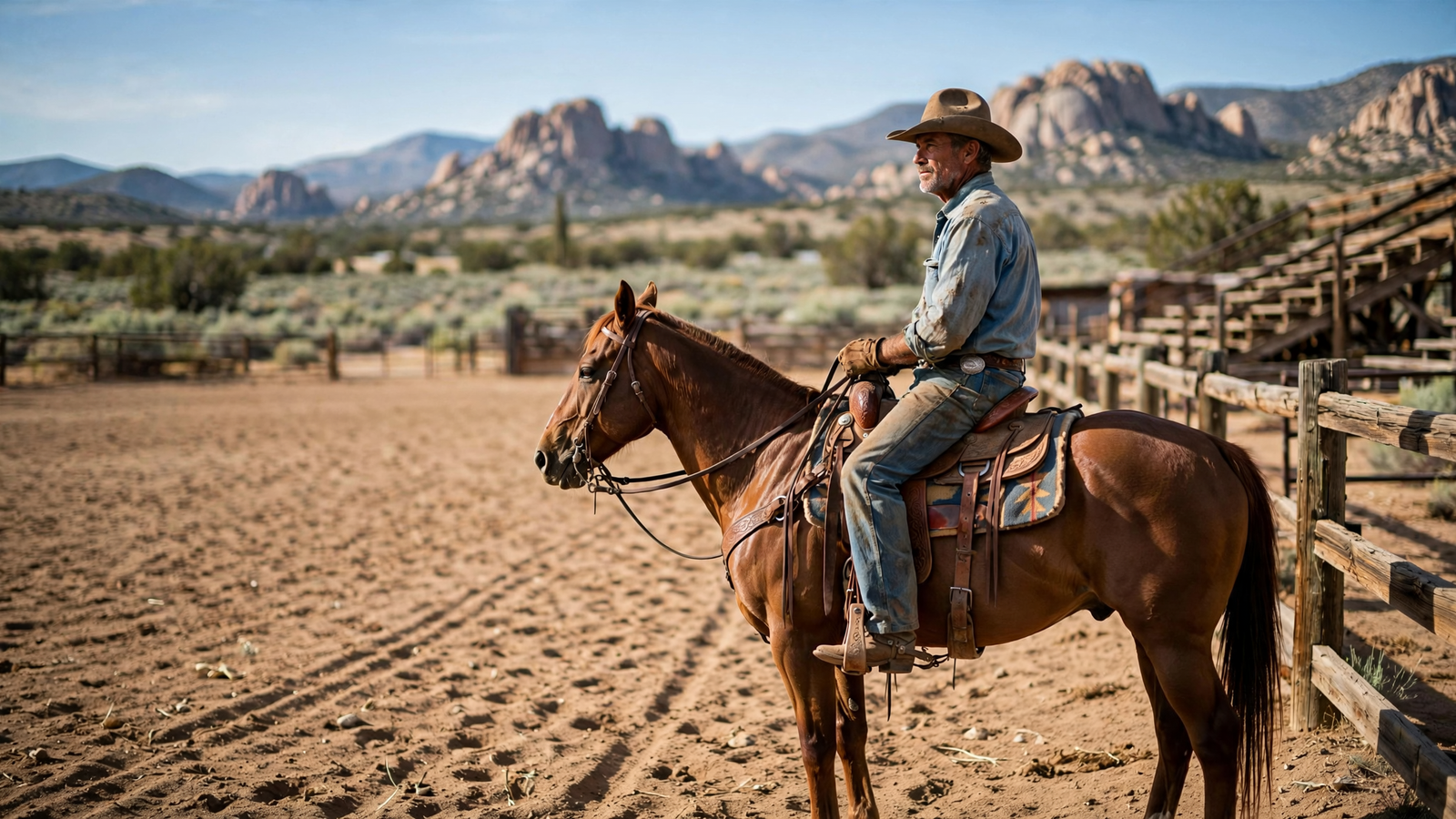
Every summer, Prescott makes room for a tradition that is larger than a single competition. The town’s annual rodeo brings horses, riders, livestock, musicians, visitors and longtime residents together around an event that began in the territorial era and still occupies a recognizable place in the community’s calendar.
Known as the World’s Oldest Rodeo, Prescott Frontier Days traces its beginning to 1888. That date places the event only a few decades after Prescott’s founding and before Arizona became a state. The rodeo is therefore not simply a recurring entertainment program. It is one of the clearest ways the city’s frontier past remains connected to its present.
That connection helps explain why the rodeo has endured. It is rooted in the practical skills of ranching and horsemanship, but it also functions as a civic gathering. The result is a place-based tradition: something that could not be separated from Prescott’s history, landscape and identity without losing much of its meaning.
A rodeo born in territorial Arizona
Prescott was established in 1864 as the first territorial capital of Arizona. By the late nineteenth century, the surrounding region had developed a network of ranches, mines, military routes and commercial communities. Horses were essential to nearly every part of that world, and the skills associated with working livestock were both useful and admired.
Prescott Frontier Days dates its first rodeo to July 4, 1888. Independence Day was already a natural occasion for public festivities, and a western competition fit the town’s setting. Events such as bronc riding, roping and other tests of horsemanship transformed working abilities into a public spectacle.
Over time, the celebration became identified with Prescott itself. The name “Frontier Days” reflects the event’s connection to the city’s territorial beginnings, while “World’s Oldest Rodeo” emphasizes its unusual longevity. The title is not merely a marketing phrase in the local story; it is a shorthand for the fact that Prescott has repeatedly returned to this tradition across generations.
The rodeo’s history also shows how community institutions survive. An event that lasts more than a century cannot depend only on the people who create it. It needs organizers, competitors, sponsors, volunteers, working facilities and audiences willing to keep showing up. Each generation inherits the event and changes it slightly while preserving its central character.
What makes Prescott’s rodeo a place story
Many American towns host rodeos. Prescott’s distinction is the way the event is woven into the town’s physical and social landscape.
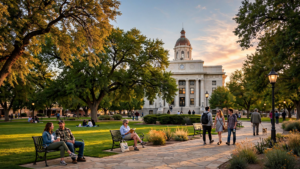
The rodeo grounds sit within the city rather than at a remote destination separated from everyday life. During the annual celebration, the surrounding streets and businesses become part of the experience. Downtown Prescott, with its historic Courthouse Plaza and western commercial identity, helps frame the event. The rodeo is experienced not just from the grandstand but through the movement of people across town.
That arrangement gives the celebration a distinctive rhythm. A visitor may arrive for a competition and encounter a broader community festival: parades, music, food, western clothing, public gatherings and the informal conversations that come with a longstanding local event. The rodeo becomes one part of a larger expression of Prescott’s character.
It also creates a meeting point between different versions of the American West. The rodeo draws on ranch work and livestock traditions, but it is also a modern professional sporting event. Competitors train seriously, travel through established rodeo circuits and perform under formal rules. Fans may come for the history, the spectacle, the athleticism or the social experience. Those reasons can coexist.
The athletic world inside the show
Rodeo is sometimes reduced to a collection of dramatic images: a rider leaving the chute, a horse bucking, a cloud of dust. The actual competitions demand a more precise kind of skill.
Timed events require coordination between people and animals in a matter of seconds. In roping events, competitors must read movement, position themselves and control a rope accurately. Barrel racing depends on speed and tight turns, with horse and rider working as a single unit. Roughstock events require balance, timing and the ability to respond to an animal’s unpredictable movement.
Those performances are built on preparation that spectators do not always see. Competitors must develop strength and judgment, care for their horses and understand the behavior of livestock. The best runs look instinctive because the participants have practiced the underlying decisions repeatedly.
The event also reflects changes in the broader sport. Women’s participation, particularly in barrel racing, is an established and highly visible part of modern rodeo. Professional rodeo has developed formal organizations, standardized event structures and safety practices that distinguish today’s competitions from their nineteenth-century beginnings.
Prescott’s tradition has therefore remained recognizable without being frozen in time. The central relationship between rider, horse, livestock and open space is old. The organization, professionalism and expectations surrounding the competition continue to evolve.
Why the annual return matters
Long-running traditions give a community a shared point of reference. People can remember attending as children, bringing their own families years later or recognizing the event as one of the signals that summer has arrived. That kind of continuity is difficult to manufacture. It grows through repetition and personal memory.
For Prescott, the rodeo also reinforces a sense of historical scale. The city is known for its Victorian downtown, surrounding mountains and connection to Arizona’s territorial past. The rodeo adds another layer: a living tradition that links the present to the skills and celebrations of an earlier western community.
That does not mean the past should be treated as a simple or complete story. Rodeo represents one part of western history, and the frontier image it preserves can leave out many people whose labor and experiences also shaped Arizona. A responsible appreciation of the event makes room for that complexity. It recognizes the rodeo as a cultural tradition while avoiding the idea that it tells the whole story of the West.
Its continued presence is nevertheless meaningful. Historic buildings preserve the shape of earlier communities, while recurring public events preserve their habits of gathering. Prescott’s rodeo does both at once: it honors an old regional culture and provides a current reason for people to occupy the city together.
A tradition with a future
The survival of the World’s Oldest Rodeo depends on more than its age. A tradition remains relevant when new participants can find a place within it. That includes young riders learning horsemanship, families discovering the event for the first time, volunteers taking on organizational work and spectators who see the competition as part of their own relationship with Prescott.
Its future will also depend on the standards expected of modern animal sports. Humane treatment, professional oversight, participant safety and respect for the animals are not side issues; they are central to whether rodeo can continue to earn public trust. A century-old institution has to show that it can carry its history forward while responding to present-day responsibilities.
Prescott’s rodeo has already demonstrated one kind of adaptability. It began as a holiday gathering in a young territory and became a structured annual event known across the country. Yet it has not lost its local anchor. The town’s streets, businesses, volunteers and memories remain part of what makes the celebration distinct.
That is the deeper reason the rodeo matters as a Prescott place. It is not only an old contest or a summer attraction. It is a recurring act of community memory, one that brings a historic identity into the present and gives residents and visitors a reason to experience the city together.