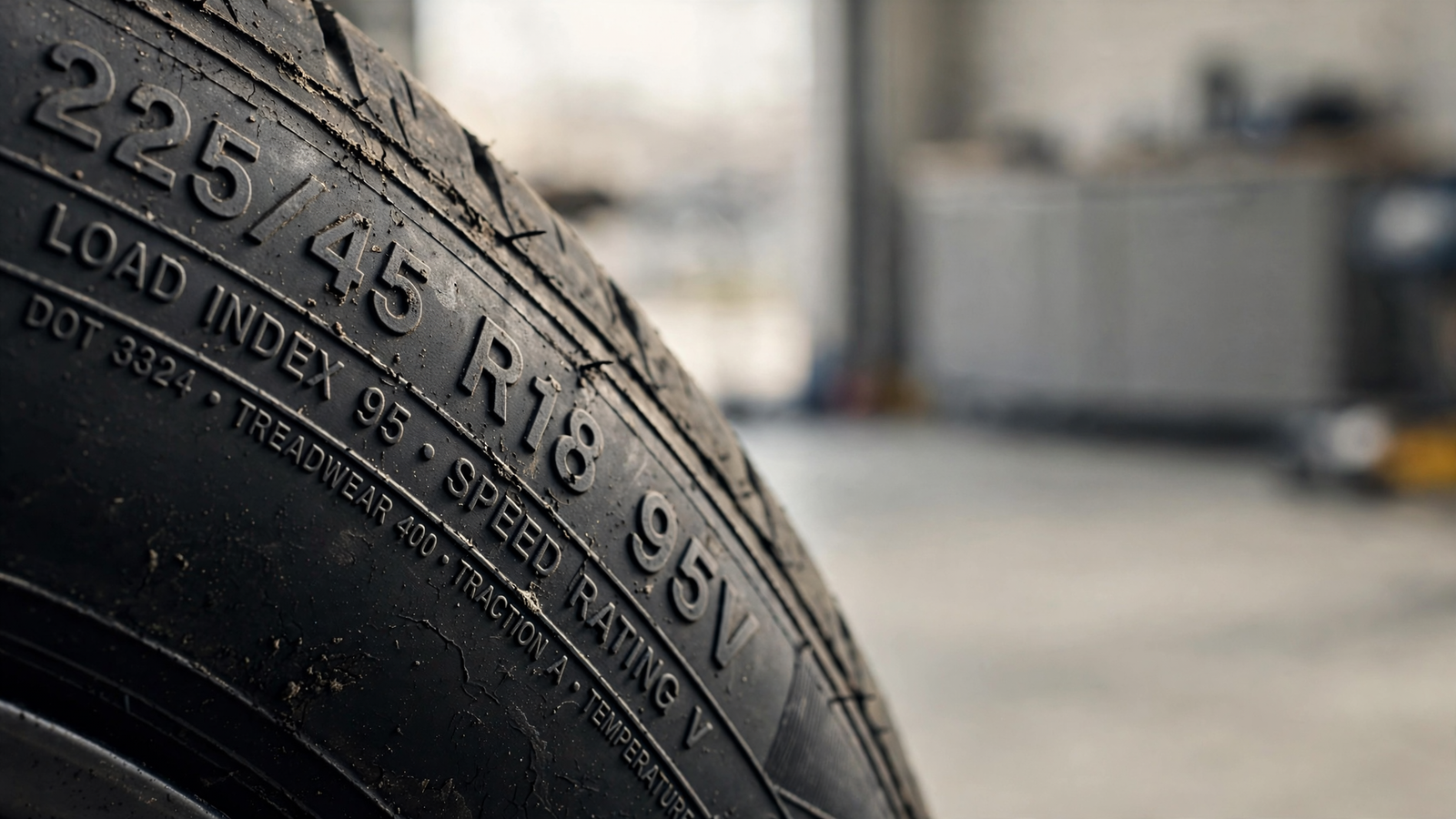
The letters and numbers molded into a tire can look like a code. Once you know where to look, they can tell you the tire’s size, construction, load rating and more.
This guide walks through a common passenger-car tire marking and explains how to use it. The most important rule: sidewall markings help identify a tire, but the vehicle’s door-jamb label or owner’s manual—not the tire’s maximum pressure—sets the recommended cold tire pressure.
Find the main tire-size code
Look for a group of characters on the sidewall, such as P215/65R15 95H. Your tire may have a different format, and not every tire uses the same letters. Read the code from left to right:
- P: Indicates a P-metric tire, a type commonly used on passenger vehicles. Some tires have no starting letter, while light-truck tires may use a marking such as LT.
- 215: The tire’s section width in millimeters, measured from sidewall to sidewall when mounted and inflated to the specified conditions.
- 65: The aspect ratio. The sidewall height is 65 percent of the tire’s width; it is not a measurement in millimeters.
- R: Radial construction, the standard construction type for most modern passenger-car tires.
- 15: The wheel rim diameter, in inches, that the tire is designed to fit.
In this example, the code describes a P-metric radial tire with a 215-millimeter width, a sidewall height equal to 65 percent of that width, and a 15-inch rim diameter.
Understand the numbers and letter after the size
In 95H, the number is the load index and the letter is the speed rating. The load index corresponds to a standardized load capacity; the speed rating identifies a standardized speed category under specified test conditions. Neither is a recommendation to drive at a particular speed or to overload the car.
These ratings matter when choosing replacement tires. Use the vehicle maker’s specifications, which you can usually find in the owner’s manual or on the vehicle information label. Don’t assume a tire is suitable just because its size appears to match: check the required load and speed ratings too. If you are unsure how a different marking compares, ask a tire retailer or qualified technician before buying.
Look for the DOT code and tire age
A tire may have a longer code beginning with the letters DOT. The final four digits of the date portion indicate the week and year the tire was made. For example, 2323 means the 23rd week of 2023.
The full code may appear on only one side of the tire, so you may not be able to see it from outside the vehicle. The date helps identify when a tire was manufactured; it does not, by itself, tell you whether a tire is safe or unsafe. Condition, use, storage and the vehicle maker’s guidance also matter. If you are concerned about a tire’s age or condition, have it inspected by a tire professional.
Don’t confuse maximum pressure with recommended pressure
The sidewall may show a maximum inflation pressure, often alongside a maximum load. That figure is not the routine pressure target for your car. For the recommended cold pressure, check the tire-and-loading information label—often on the driver’s doorjamb—or the owner’s manual. The recommended front and rear pressures may differ.
Use a tire-pressure gauge when the tires are cold, following the vehicle manufacturer’s instructions. A tire’s pressure can rise as it warms during driving, so don’t treat a warm reading as if it were a cold one. If the door label is missing or hard to read, consult the manual or contact the vehicle manufacturer or a tire professional.
What to check before replacing a tire
- Read the size on the tire currently fitted. Write down the full size code, including any prefix such as P or LT.
- Check the vehicle’s specifications. Find the tire size and any required load or speed rating in the owner’s manual or on the vehicle label.
- Compare the service ratings. Check the load index and speed rating, not just the width and rim diameter. Ask a qualified tire retailer if the markings do not match the vehicle’s stated requirements.
- Confirm the intended use. A tire’s sidewall can also carry markings for a tire type or other feature. Make sure the replacement is appropriate for your vehicle and driving conditions.
Things to know
- A tire’s sidewall code describes the tire; the vehicle label tells you the recommended pressure for that vehicle.
- Different tire types may use different marking formats. Don’t try to interpret an unfamiliar code by guessing.
- Sidewall information is only one part of choosing a replacement. The vehicle maker’s requirements and a professional’s advice can help resolve mismatches or unusual cases.
Reading a sidewall gets easier when you break it into parts: size, service ratings, and manufacturing date. Keep the vehicle’s own tire specifications nearby, and you’ll have a more useful starting point when checking your tires or shopping for replacements.