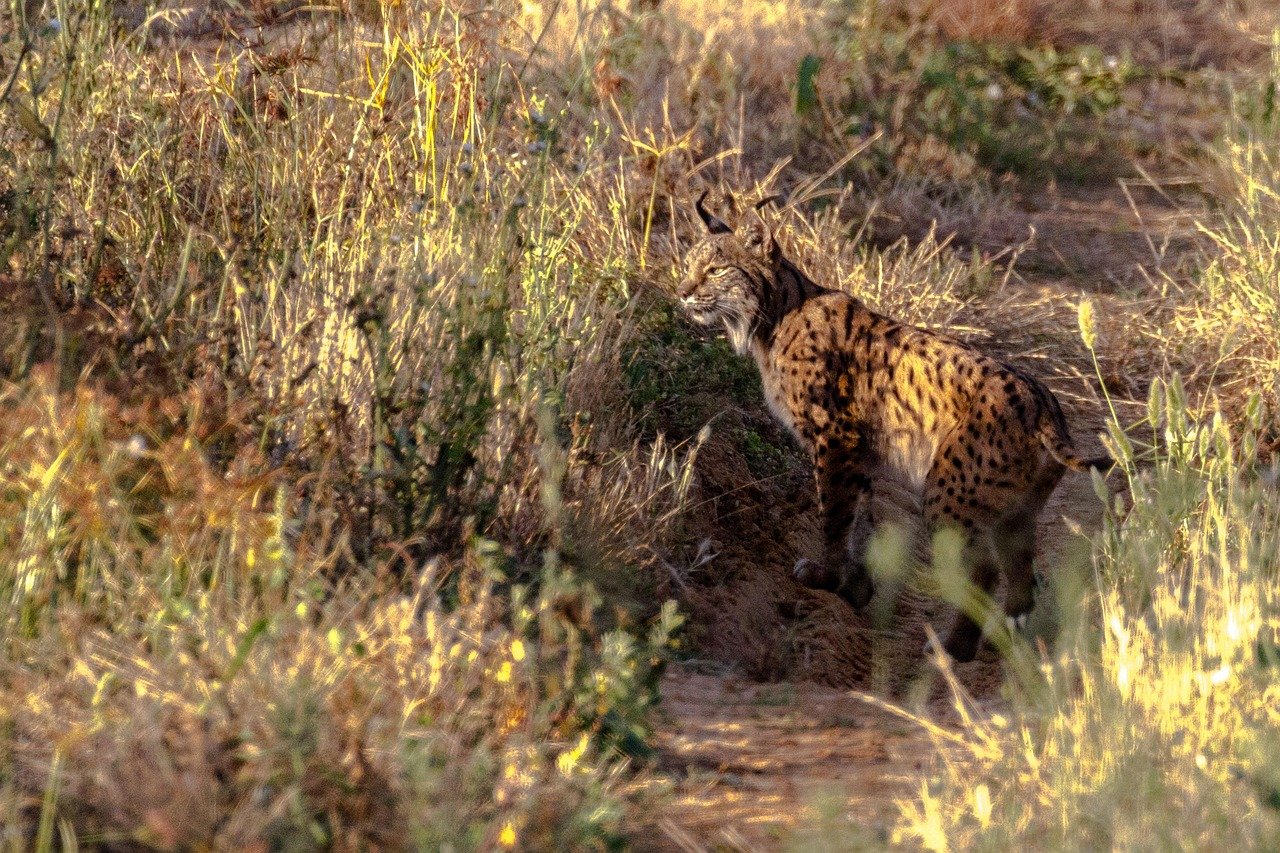
A few decades ago, the Iberian lynx was close to disappearing from the wild. By 2023, a coordinated census counted 2,021 across Spain and Portugal. In June 2024, the International Union for Conservation of Nature (IUCN) changed the cat’s Red List status from Endangered to Vulnerable—a major improvement, though not a declaration that the species is safe.
The turnaround is one of Europe’s clearest conservation success stories. It was built not on a single intervention, but on years of work to protect habitat, increase the lynx’s main prey, breed animals for release and reconnect populations. The remaining challenge is to make those gains durable across a landscape where roads, disease and fragmented habitat still pose risks.
A specialist with little room for error
The Iberian lynx (Lynx pardinus) is a wild cat native to the Iberian Peninsula. Unlike a generalist predator that can switch readily among many kinds of prey, it relies heavily on European rabbits. That specialization makes the lynx particularly sensitive to changes in rabbit numbers: when prey becomes scarce, the cats have fewer opportunities to feed and raise young.
By the early 2000s, habitat loss and fragmentation, depleted rabbit populations, illegal killing and collisions with vehicles had helped drive the lynx to a perilously low level. IUCN reports that the wild population had fallen to fewer than 100 animals. At that scale, local losses could erase an entire breeding group, and animals isolated from one another had fewer chances to find mates.
Conservation teams faced two connected problems. They had to give the cats places where they could live and breed, and they had to help them move between those places. A protected area alone could not sustain a population if it lacked enough prey or was cut off from other suitable habitat.
Rebuilding the conditions for a comeback
Recovery efforts brought together public agencies, researchers, landowners and conservation organizations in Spain and Portugal. Work included protecting and improving habitat, supporting rabbit populations and reducing dangers such as road mortality. Captive-breeding programs also produced lynx for release, while reintroductions helped establish populations beyond the few areas where the species had persisted.
The aim was not simply to put more animals into the landscape. A release can help only if the habitat can support the lynx and if conservation managers can monitor what happens afterward. Reintroduced animals need prey, cover and room to disperse; established populations need enough connectivity for animals to move and breed. The recovery has therefore depended on managing landscapes, not just counting cats.
Annual monitoring provides a way to assess progress. The 2023 census recorded 2,021 lynx in Spain and Portugal, a figure that includes animals at different ages. It is not directly interchangeable with estimates of breeding adults or earlier population counts, but it gives a clear indication of how far the species has come from its crisis point. The growing number of animals also reflects the establishment of breeding populations in more than one part of the peninsula.
In 2024, IUCN’s downlisting to Vulnerable recognized this sustained improvement. Conservation categories are based on the risk of extinction, so a move to a lower-risk category matters. But Vulnerable still means the species faces a meaningful risk, and the change does not remove the need for protection.
Why a better status is not the finish line
The lynx’s dependence on rabbits remains a vulnerability. Rabbit populations have been affected by disease as well as changes in habitat and land use. If prey numbers drop sharply in an area, lynx there may struggle even when the overall population looks healthier. Protecting the cat therefore means paying attention to the smaller animal at the center of its food supply, too.
Roads present another persistent hazard. As lynx move across the landscape, busy routes can kill animals and divide habitat. Measures such as safer crossings and efforts to reduce collision risk can help, but they need to be planned where animals actually travel. Maintaining links between populations is important not only for movement, but also for genetic diversity and the ability of the species to withstand future setbacks.
The broader lesson is that endangered species can recover when threats are addressed together and over time. Captive breeding may help rebuild numbers, but it cannot substitute for functioning habitat. Protected land may provide shelter, but it cannot solve prey shortages or make an isolated population connected. The Iberian lynx’s progress has depended on combining these pieces and continuing to monitor the results.
The change in status is a reason for optimism because it reflects a genuine improvement in the lynx’s prospects. It is also a reminder that conservation success is not a finish line. The next task is to protect the gains: keep suitable habitat connected, reduce avoidable deaths, and ensure that rabbit-rich landscapes can support self-sustaining groups of lynx. For a species once close to vanishing, that is a remarkable shift—from emergency rescue toward long-term coexistence.